
Normal Sugar Levels – How to Control Them with Home-Made Food


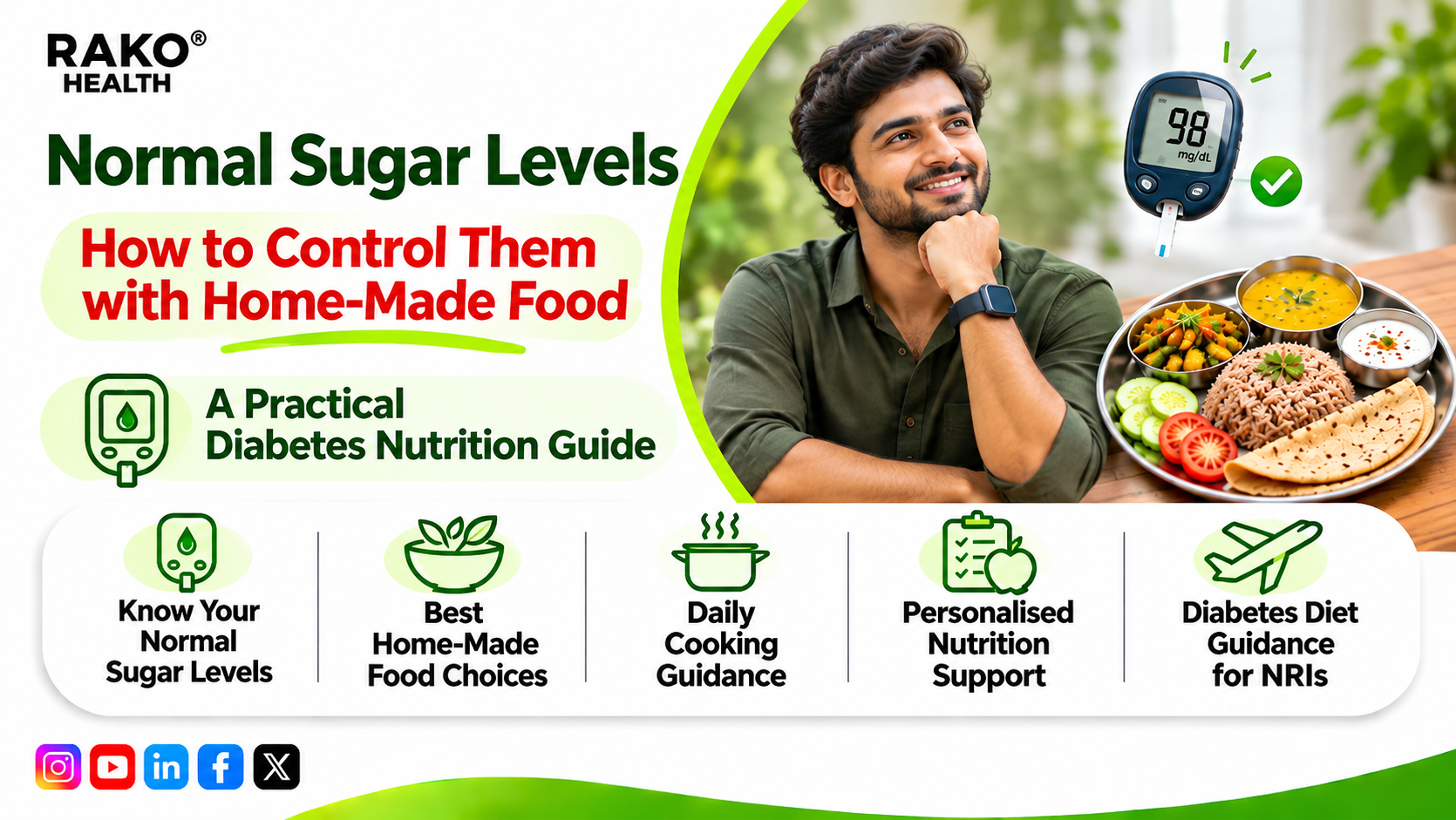
Normal sugar levels help you understand how your body manages glucose and maintains energy. However, food choices, physical activity, sleep, and health conditions can influence blood sugar. At RAKO Health, we focus on personalized nutrition using everyday home-made food. Explore our Best Dietician for Diabetes guidance to understand how practical meal planning can support healthier blood sugar management.
What Are Normal Sugar Levels?
Normal sugar levels refer to the amount of glucose present in your bloodstream. Your body uses glucose as its primary energy source.
However, blood sugar readings change throughout the day. Meal timings, food combinations, exercise, and medications can influence these readings.
Here are commonly used blood sugar reference ranges for non-pregnant adults:
| Blood sugar test | Normal range |
| Fasting blood sugar | 70–99 mg/dL |
| HbA1c | Below 5.7% |
| Two-hour OGTT | Below 140 mg/dL |
For people already diagnosed with diabetes, treatment targets may differ.
According to the American Diabetes Association, many non-pregnant adults with diabetes aim for:
- Before meals: 80–130 mg/dL.
- One to two hours after meals: Below 180 mg/dL.
- HbA1c: Below 7%, for many adults.
These targets require individual assessment. Your healthcare professional should determine suitable goals.
What Causes High Blood Sugar Levels?
Blood sugar fluctuations can happen for several reasons. Understanding these factors helps you make informed lifestyle changes.
Common contributing factors include:
- Frequent consumption of sugary foods and drinks.
- Excessive portions of refined carbohydrates.
- Physical inactivity.
- Poor sleep and ongoing stress.
- Insulin resistance.
- Certain medications and medical conditions.
- Family history and genetic factors.
Additionally, conditions such as thyroid disorders and other metabolic concerns may influence overall health.
Therefore, RAKO Health encourages understanding your health history before suggesting dietary changes.
How to Maintain Normal Sugar Levels with Home-Made Food?
Can you manage blood sugar through home-made food?
Yes, balanced home-cooked meals can play an important role in diabetes management.
You do not need expensive diet products or complicated recipes.
Instead, focus on familiar Indian ingredients and appropriate portions.
Some useful food choices include:
- Vegetables: Beans, spinach, gourds, carrots, and cauliflower.
- Protein: Dal, chickpeas, eggs, paneer, and fish.
- Whole grains: Millets, oats, and whole wheat.
- Healthy fats: Nuts, seeds, and moderate amounts of cooking oils.
- Fibre-rich foods: Vegetables, legumes, and suitable whole fruits.
Furthermore, combine carbohydrates with protein and fibre to support better post-meal glucose responses.
Explore our Diabetes Diet guide for more practical food recommendations.
Daily Cooking Guidance from RAKO Health
Knowing what to eat is important. However, knowing how to prepare everyday meals makes consistency easier.
RAKO Health focuses on completely home-made food recommendations.
We guide you on:
- What to prepare for breakfast, lunch, and dinner.
- Which ingredients to purchase.
- How much rice, roti, or millet to include.
- How to prepare balanced Indian meals.
- Which cooking methods suit your nutritional requirements.
- How to manage portions without skipping meals.
For example, breakfast could include vegetable pesarattu, vegetable oats, or a healthy Ragi Vegetable Dosa for Diabetes - Healthy Indian Breakfast Recipe.
Lunch might include dal, vegetables, curd, and appropriately portioned rice.
Similarly, dinner can include vegetable curry, protein-rich foods, and suitable whole grains.
Your actual meal plan depends on your health requirements, preferences, and glucose readings.
How RAKO Health Helps Support Healthy Blood Sugar Levels
A diabetes diet should not follow the same pattern for everyone.
At RAKO Health, we focus on understanding your individual health background before recommending nutritional changes.
Our approach considers:
- Existing blood sugar readings and HbA1c reports.
- Food habits and cooking preferences.
- Family history and medical background.
- Physical activity and sleeping patterns.
- Weight management goals.
- Digestive health and other nutritional concerns.
Additionally, our daily cooking guidance helps you make healthier choices using ingredients available in your kitchen.
Explore Online Dietician Consultation for Diabetes Management to learn about personalised nutritional support.
Diabetes, Prediabetes and Type 2 Diabetes: Why Personalised Nutrition Matters
Prediabetes and type 2 diabetes require appropriate lifestyle management.
For people with prediabetes, suitable dietary changes and physical activity can reduce the risk of developing type 2 diabetes.
For people with type 2 diabetes, nutrition planning can support glucose management and overall metabolic health.
However, never stop prescribed medication or insulin without medical advice.
Learn more through our Best Dietician for Prediabetes and Best Dietician for Type 2 Diabetes Reversal resources.
Diabetes Diet Guidance for NRIs
NRIs living in the USA, UK, Canada, Australia, and the Middle East often follow different food routines.
However, maintaining healthy blood sugar habits remains important wherever you live.
RAKO Health encourages practical meal planning using familiar Indian and locally available ingredients.
For example:
- Replace frequent sugary drinks with suitable unsweetened alternatives.
- Include vegetables and protein in everyday meals.
- Manage portions of rice, bread, and other carbohydrates.
- Prepare balanced home-cooked meals whenever possible.
- Maintain consistent meal timings where practical.
Whether you live abroad or visit Hyderabad, personalized nutrition guidance can help you build sustainable habits.
Frequently Asked Questions
1. What is the normal fasting sugar level?
For non-pregnant adults without diabetes, normal fasting blood glucose generally ranges from 70–99 mg/dL.
2. What is the normal sugar level after eating?
For people without diabetes, a two-hour oral glucose tolerance test result below 140 mg/dL is generally normal. This is different from an ordinary meal reading.
3. Can home-made food help control blood sugar?
Yes. Balanced home-made meals can support blood sugar management through suitable portions, fibre, protein, and healthier cooking practices.
4. Can I eat rice if I have diabetes?
Yes. You can include rice in your diet. However, portion size, meal combinations, and individual glucose responses matter.
5. Can RAKO Health provide daily cooking guidance?
RAKO Health focuses on practical home-cooking guidance, including meal suggestions, ingredient selection, and preparation recommendations.
6. Can NRIs get diabetes diet guidance?
Yes. NRIs can explore personalized dietary recommendations based on their location, food availability, and lifestyle.
7. Can diabetes be reversed through diet alone?
Some people with type 2 diabetes can achieve remission through sustained lifestyle and medical interventions. However, results vary, and diet alone cannot guarantee remission.
Explore Home-Made Diabetes Nutrition Support with RAKO Health
Managing blood sugar does not mean giving up your favourite Indian foods. Instead, it means understanding portions, choosing suitable ingredients, and preparing balanced meals.
RAKO Health focuses on practical home-made food guidance, personalized nutrition, and everyday cooking support.
If you want to understand your food habits and improve your diabetes management routine, explore the nutritional support available through RAKO Health.
Related Blogs
Average Blood Sugar Level Chart for Adults, Seniors, and Children: A Complete Guide
Insulin Resistance Symptoms: 10 Warning Signs You Should Never Ignore
What Is Insulin Resistance? Understanding Your Metabolic Health
Average Blood Sugar Level Chart for Adults, Seniors, and Children: A Complete Guide
Insulin Resistance Symptoms: 10 Warning Signs You Should Never Ignore
What Is Insulin Resistance? Understanding Your Metabolic Health
Average Blood Sugar Level Chart for Adults, Seniors, and Children: A Complete Guide
Insulin Resistance Symptoms: 10 Warning Signs You Should Never Ignore
What Is Insulin Resistance? Understanding Your Metabolic Health
Average Blood Sugar Level Chart for Adults, Seniors, and Children: A Complete Guide
Insulin Resistance Symptoms: 10 Warning Signs You Should Never Ignore