
Diabetes Diet: Best Indian Foods, Meal Plan and Blood Sugar Control


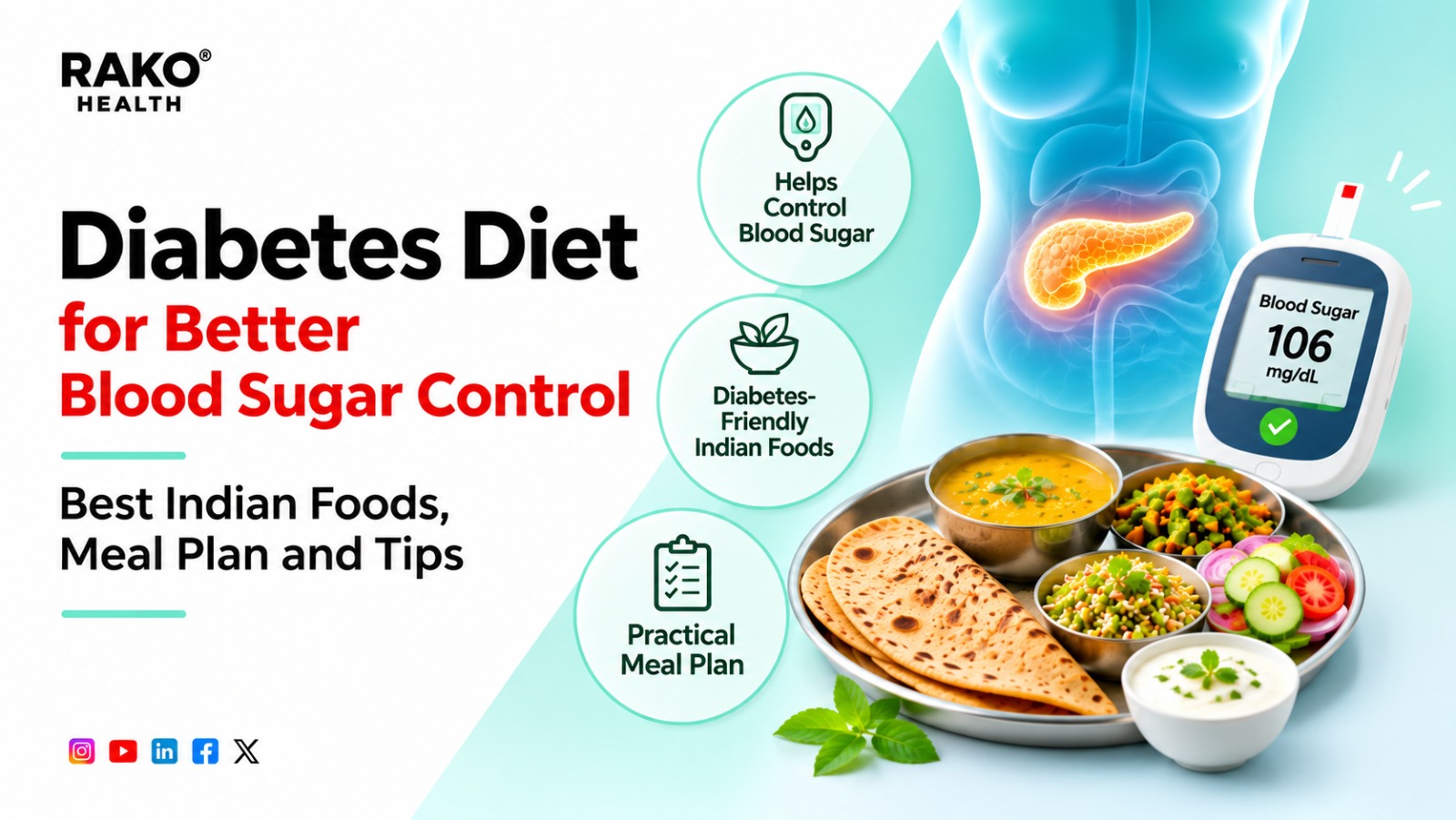
Diabetes Diet plays an important role in controlling blood sugar, improving insulin sensitivity, and supporting metabolic health. However, diabetes does not mean avoiding rice, roti, or fruits.
A balanced eating plan can include familiar Indian meals with appropriate portions. At RAKO Health, our personalized Type 2 Diabetes care services help individuals develop sustainable nutrition habits.
For people with type 2 diabetes and overweight or obesity, losing 5–10% of initial body weight may improve metabolic health.
What Is a Diabetes Diet?
A diabetes diet is a balanced eating pattern that supports blood glucose management and overall nutrition.
It focuses on:
- Appropriate carbohydrate portions.
- Protein for muscle maintenance.
- Healthy fats for cardiovascular health.
- Fibre for digestion and glucose regulation.
- Essential vitamins and minerals.
In type 2 diabetes, insulin resistance reduces the body's ability to regulate blood glucose effectively.
Best Macronutrients for Blood Sugar Control
Individual nutritional requirements depend on medications, activity, and medical history.
| Nutrient | Illustrative daily intake | Food sources |
| Carbohydrates | 40–50% calories | Rice, roti, oats, millets |
| Protein | 20–25% calories | Dal, eggs, paneer, fish |
| Fats | 25–35% calories | Nuts, seeds, vegetable oils |
| Fibre | 25–35 g | Vegetables, pulses, fruits |
These are general examples, not individual prescriptions. People with kidney disease may require different protein targets.
Best Indian Foods for Diabetes Management
Traditional Indian foods can provide fibre, protein, and essential nutrients.
| Food | Suggested quantity | Approximate calories |
| Cooked rice | 100 g | 130 kcal |
| Whole-wheat roti | 1 medium | 105 kcal |
| Cooked moong dal | 150 g | 160 kcal |
| Boiled chickpeas | 100 g | 165 kcal |
| Boiled egg | 1 large | 75 kcal |
| Low-fat paneer | 100 g | 150–200 kcal |
| Plain curd | 100 g | 60–100 kcal |
| Guava | 100 g | 68 kcal |
| Apple | 1 small | 62 kcal |
| Almonds | 15 g | 87 kcal |
Choose whole fruits instead of juices. Additionally, control portions and limit excess cooking oil.
Can Methi, Bitter Gourd and Cinnamon Help?
Methi, bitter gourd, and cinnamon contain compounds being studied for potential glucose-related benefits.
However, current evidence does not establish them as replacements for diabetes medication. Use concentrated supplements only with professional guidance.
Simple Indian Diabetes Diet Chart
The following options provide practical meal ideas. Choose one option per meal.
| Meal | Food options | Calories |
| Breakfast | Moong dal chilla with curd | 300–350 |
| Idli with vegetable sambar | 220–280 | |
| Vegetable oats with boiled egg | 280–330 | |
| Lunch | Rice, dal, vegetables and salad | 400–500 |
| Roti with paneer or tofu curry | 400–550 | |
| Brown rice with rajma | 400–480 | |
| Dinner | Roti with paneer and vegetables | 400–500 |
| Moong dal chilla with curd | 350–450 | |
| Vegetable dal khichdi with curd | 350–450 | |
| Snacks | Roasted chana, 30 g | 115 |
| Almonds, 15 g | 87 | |
| One small apple | 62 |
Calories are approximate and depend on preparation and oil quantities. These options are not a complete individualised calorie prescription.
How Does Weight Loss Improve Type 2 Diabetes?
Excess body fat can increase insulin resistance. Therefore, appropriate weight reduction may improve glucose regulation.
Potential benefits include:
- Improved insulin sensitivity.
- Better fasting glucose and HbA1c levels.
- Reduced liver fat.
- Improved blood pressure and triglycerides.
- Possible medication adjustments under medical supervision.
| Initial weight | 5% loss | 10% loss |
| 70 kg | 3.5 kg | 7 kg |
| 80 kg | 4 kg | 8 kg |
| 90 kg | 4.5 kg | 9 kg |
| 100 kg | 5 kg | 10 kg |
Weight loss is not necessary for everyone. Individual targets should reflect medical history and nutritional needs.
Foods to Limit in a Diabetes Diet
Reduce frequent consumption of:
- Sugary beverages and packaged juices.
- Sweets, biscuits, and bakery products.
- Excessive refined carbohydrates.
- Deep-fried and heavily processed foods.
- Foods containing trans fats.
Rice, roti, potatoes, and fruits do not need automatic elimination. Instead, manage portions and meal combinations.
Why Personalised Diabetes Nutrition Matters
Blood glucose responses differ between individuals because of insulin sensitivity, medications, activity, and body composition.
People taking insulin or sulfonylureas should consult healthcare professionals before making major dietary changes.
For tailored nutritional guidance, explore the best dietician for diabetes and discover practical approaches to sustainable meal planning.
Diabetes Diet Guidance for NRIs
Indians living in the USA, UK, Canada, and Australia may find it challenging to maintain familiar eating habits.
However, traditional Indian foods can remain part of a balanced eating plan.
- Choose suitable portions of rice, roti, and millets.
- Include dal, vegetables, and protein-rich foods.
- Prefer whole fruits over packaged juices.
- Check carbohydrate information on packaged foods.
- Maintain regular meal timings and physical activity.
At RAKO Health, Dr. Meram Chalamaiah supports personalised nutrition approaches that consider individual lifestyles and dietary preferences.
Scientific References
- Gong D, Lai WF. Dietary patterns and type 2 diabetes: A narrative review. Nutrition. 2025;140:112905. https://doi.org/10.1016/j.nut.2025.112905
- Petroni ML, Brodosi L, Marchignoli F, et al. Nutrition in Patients with Type 2 Diabetes: Present Knowledge and Remaining Challenges. Nutrients. 2021;13(8):2748. https://doi.org/10.3390/nu13082748
- Pires C. Superfoods for Type 2 Diabetes: A Narrative Review and Proposal for New International Recommendations. Medicina. 2023;59(7):1184. https://doi.org/10.3390/medicina59071184
- Nair A, Anish RJ, Moorthy SN. A review on the role of functional foods and derivatives for diabetes management. Journal of Food Science and Technology. 2025;62(5):799–809. https://doi.org/10.1007/s13197-025-06234-x
- Girbane V, Nagane Patil S, Nagane Patil S, Girbane S, Deshmukh M. From Fork to Function: A Comprehensive Review of Anti-Diabetic Foods. Journal of Emerging Technologies and Innovative Research. 2023;10(12), article JETIR2312524.
Medical Disclaimer: This article provides general educational information and is not a substitute for individualized medical or nutritional advice. Dietary changes, weight-loss targets and medication adjustments should be discussed with qualified healthcare professionals.
Frequently Asked Questions
1. Can people with diabetes eat rice?
Yes. Approximately 100 g cooked rice provides 130 kcal and 28 g carbohydrates. Portion size depends on individual glucose responses.
2. How many rotis can diabetics eat?
One medium whole-wheat roti provides approximately 105 kcal. One or two may suit some individuals, depending on their meal plan.
3. Can people with diabetes eat fruits daily?
Yes. Whole fruits such as guava, apple, and papaya can fit into balanced meals.
4. Is millet better than rice?
Millets may provide additional fibre and micronutrients. However, they still contain carbohydrates and require portion control.
5. Can type 2 diabetes go into remission?
Some individuals achieve remission through sustained weight loss and lifestyle changes. However, remission is not guaranteed and requires medical monitoring.
Explore Personalised Diabetes Nutrition with RAKO Health
Managing diabetes involves balanced meals, appropriate portions, regular activity, and sustainable lifestyle changes.
RAKO Health encourages evidence-based nutritional guidance to support better metabolic health and individual dietary needs.
Explore our diabetes care resources to understand how personalized nutrition can support your long-term health.
Related Blogs

Benefits of Online Dietician Consultation for Diabetes Management
Best Dietician for Diabetes: Personalized Nutrition for Better Blood Sugar Control

Best Dietician for Prediabetes: Personalized Nutrition for Healthy Blood Sugar
Benefits of Online Dietician Consultation for Diabetes Management
Best Dietician for Diabetes: Personalized Nutrition for Better Blood Sugar Control
Best Dietician for Prediabetes: Personalized Nutrition for Healthy Blood Sugar
Benefits of Online Dietician Consultation for Diabetes Management
Best Dietician for Diabetes: Personalized Nutrition for Better Blood Sugar Control
Best Dietician for Prediabetes: Personalized Nutrition for Healthy Blood Sugar
Benefits of Online Dietician Consultation for Diabetes Management
Best Dietician for Diabetes: Personalized Nutrition for Better Blood Sugar Control