
Ragi Vegetable Dosa for Diabetes – Healthy Indian Breakfast Recipe


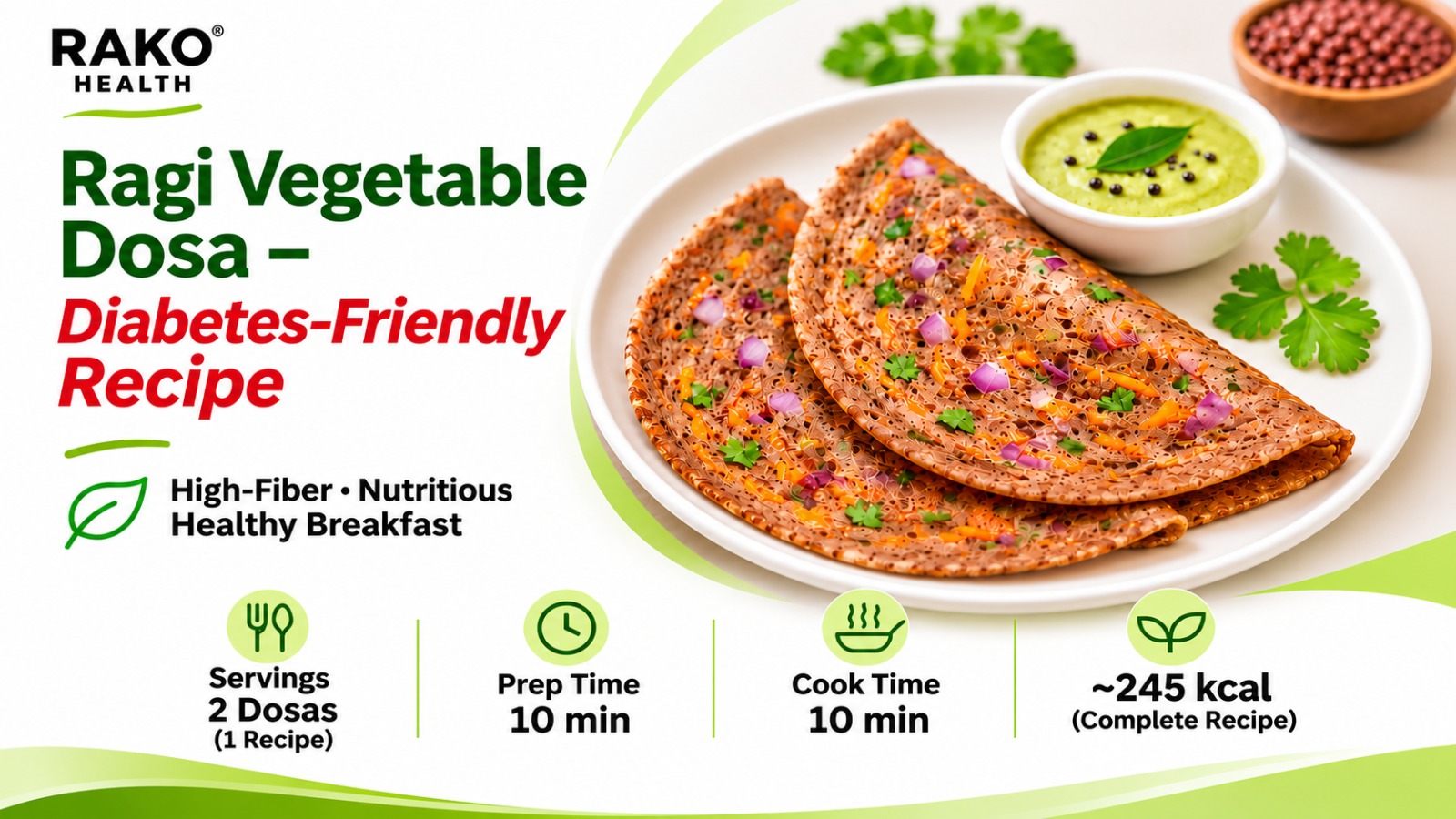
This Ragi Vegetable Dosa is a simple homemade recipe prepared with ragi flour, fresh vegetables, curd, and mild spices. It is a nutritious option for people who want to include fiber-rich ingredients and traditional Indian foods in their daily diet.
This easy homemade ragi dosa takes just 20–25 minutes to prepare and can be enjoyed as part of a balanced diabetes-friendly meal plan.
Recipe Overview
Servings: 1 Person
Preparation Time: 10 Minutes
Cooking Time: 10–15 Minutes
Total Time: 20–25 Minutes
Yield: Approximately 2 Small Dosas
Calories: Approximately 245 kcal
Protein: 5 g
Dietary Fiber: 4 g
Ingredients Required
Here are the simple ingredients needed to prepare this healthy homemade ragi vegetable dosa.
| Ingredients | Quantity |
| Ragi flour | 40 g |
| Rice flour | 10 g |
| Plain unsweetened curd | 2 tbsp |
| Grated carrot | 2 tbsp |
| Chopped onion | 2 tbsp |
| Cumin seeds | ¼ tsp |
| Water | As required |
| Salt | To taste |
| Oil | 1 tsp |
| Fresh coriander leaves (optional) | 1 tbsp, chopped |
How to Prepare Ragi Vegetable Dosa
Follow these simple steps to prepare a delicious homemade ragi vegetable dosa.
Step 1: Prepare the Flour Mixture
Add ragi flour and rice flour to a mixing bowl. Add plain unsweetened curd and mix well.
Step 2: Prepare the Batter
Gradually add water and mix until you get a smooth, thin, pourable batter without lumps.
Step 3: Add Vegetables and Spices
Add grated carrot, chopped onion, cumin seeds, salt, and fresh coriander leaves, if using. Mix everything well.
Step 4: Heat the Dosa Pan
Heat a non-stick dosa pan over medium heat. Make sure the pan is hot before pouring the batter.
Step 5: Pour the Batter
Pour a portion of the prepared batter onto the heated pan and spread gently into a thin dosa.
Step 6: Cook the Dosa
Cook until the underside becomes firm and lightly golden.
Step 7: Flip and Cook
Carefully flip the dosa and cook the other side until properly done. Use a portion of the measured one teaspoon of oil.
Step 8: Repeat the Process
Repeat the same process with the remaining batter to prepare approximately two small dosas.
Step 9: Serve Hot
Your healthy homemade ragi vegetable dosa is ready to serve! Enjoy it hot with peanut, chickpea, or vegetable chutney in an appropriate portion.
Nutritional Information
Here is the approximate nutritional breakdown for one serving (approximately 2 small dosas).
| Nutrient | Per Serving |
| Calories | 245 kcal |
| Protein | 5 g |
| Carbohydrates | 43 g |
| Total Fat | 7 g |
| Dietary Fiber | 4 g |
Serving Suggestions
Enjoy this healthy ragi vegetable dosa with suitable accompaniments for a balanced breakfast.
- Peanut chutney in an appropriate portion.
- Chickpea chutney for additional protein.
- Fresh vegetable chutney.
- A small serving of protein-rich sprouts.
Choose appropriate portions based on your individual calorie requirements and blood sugar management needs.
RAKO Health Nutrition Tip
Ragi provides dietary fiber and essential minerals, but it also contains carbohydrates. Enjoy this dosa in an appropriate portion, preferably with a protein-rich accompaniment to support balanced nutrition.
Individual blood sugar responses may vary depending on portion sizes and food combinations.
At RAKO Health, we provide personalized nutrition guidance to support people with Pre-Diabetes and Type 2 Diabetes through practical and sustainable dietary habits.
For more healthy eating ideas, explore our Diabetes Diet for helpful nutrition tips and diabetes-friendly recipes.
Frequently Asked Questions
1. Is ragi vegetable dosa good for people with diabetes?
Ragi vegetable dosa can be included in a diabetes-friendly diet with appropriate portion control. Individual blood sugar responses may vary.
2. How many calories are in two ragi vegetable dosas?
One serving of approximately two small dosas contains around 245 kcal.
3. Does ragi dosa contain carbohydrates?
Yes, ragi and rice flour contain carbohydrates. Portion control is important for blood sugar management.
4. What can I eat with ragi dosa for diabetes?
You can enjoy ragi dosa with peanut chutney, chickpea chutney, or other protein-rich accompaniments in suitable portions.
5. Can I eat ragi dosa for breakfast every day?
You can include ragi dosa in a varied and balanced breakfast routine. Rotating different nutritious meals helps provide a wider range of nutrients.
Make Healthy Eating a Lifestyle
Healthy eating doesn't have to be boring or complicated. This homemade ragi vegetable dosa is a nutritious Indian breakfast option that can be included in a balanced diabetes-friendly diet.
With appropriate portion sizes, personalized nutrition guidance, and consistent healthy habits, you can enjoy your favourite homemade foods while managing your blood sugar levels.
Eat healthy, stay consistent, and make every meal count with RAKO Health!
Related Blogs

Best Dietician for Type 2 Diabetes Reversal: Science-Based Nutrition Support for Better Health
Healthy Indian Paneer Curry for Weight Loss – High-Protein Vegetarian Recipe

Benefits of Online Dietician Consultation for Diabetes Management
Best Dietician for Type 2 Diabetes Reversal: Science-Based Nutrition Support for Better Health
Healthy Indian Paneer Curry for Weight Loss – High-Protein Vegetarian Recipe
Benefits of Online Dietician Consultation for Diabetes Management
Best Dietician for Type 2 Diabetes Reversal: Science-Based Nutrition Support for Better Health
Healthy Indian Paneer Curry for Weight Loss – High-Protein Vegetarian Recipe
Benefits of Online Dietician Consultation for Diabetes Management
Best Dietician for Type 2 Diabetes Reversal: Science-Based Nutrition Support for Better Health
Healthy Indian Paneer Curry for Weight Loss – High-Protein Vegetarian Recipe