
Balanced Diet for Fat Loss: A Practical Guide to Healthy Eating and Weight Management


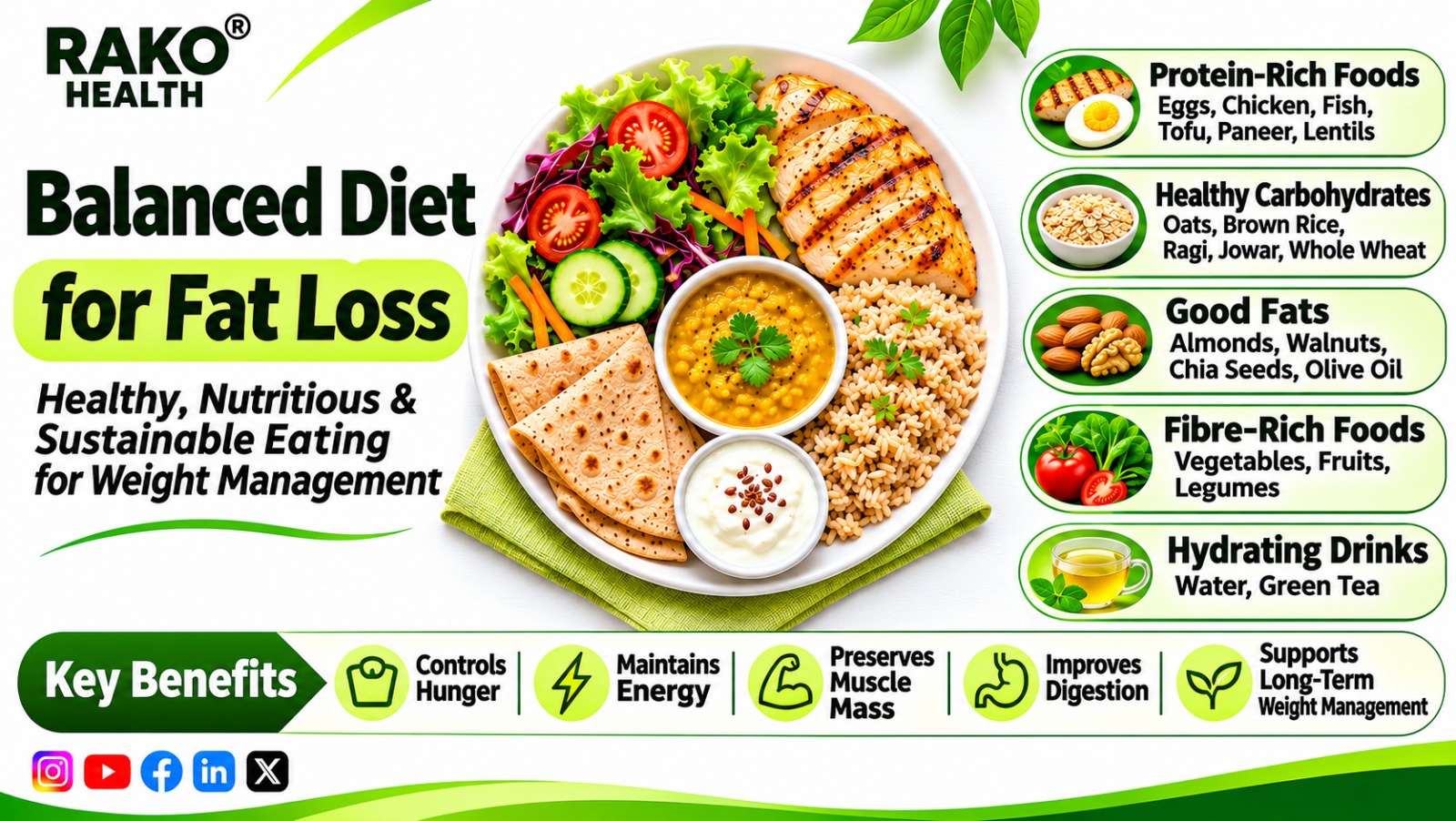
Balanced diet for fat loss focuses on choosing nutritious foods that help your body lose excess weight without missing essential nutrients. A healthy eating routine can improve energy, manage hunger, and support long-term fitness. At RAKO Health, we believe successful weight management begins with realistic food choices and personalised nutrition. Discover our Balanced Diet for Weight Loss programmes to take the first step towards healthier eating and sustainable results.
Understanding a Balanced Diet for Fat Loss
A balanced diet provides your body with essential nutrients through carefully selected food groups. It combines protein, carbohydrates, healthy fats, vitamins, minerals, and dietary fiber.
Rather than following strict food restrictions, choose meals that provide adequate nutrition. Additionally, maintaining an appropriate calorie deficit can help your body use stored energy.
Your everyday meals should contain:
- Protein-rich foods: Include eggs, chicken, fish, tofu, paneer, and lentils.
- Healthy carbohydrates: Choose oats, brown rice, ragi, jowar, and whole wheat.
- Good fats: Add moderate quantities of almonds, walnuts, chia seeds, and olive oil.
- Fibre-rich foods: Enjoy seasonal fruits, leafy vegetables, and legumes.
- Hydrating drinks: Drink sufficient water and limit sugar-sweetened beverages.
5 Effective Ways to Follow a Balanced Diet for Weight Loss
Building healthier eating habits does not require complicated recipes. Instead, make small improvements to your regular meals.
1. Make Breakfast Nutritious and Filling
Begin your morning with a combination of protein and fibre. Vegetable poha, moong dal dosa, boiled eggs, and idli with sambar are convenient choices.
2. Prioritise Protein Throughout the Day
Protein helps maintain muscle mass during weight reduction. Furthermore, protein-rich meals can improve fullness and reduce unnecessary snacking.
Include paneer, sprouts, dal, fish, eggs, or lean chicken in your meals.
3. Select Better Sources of Carbohydrates
Carbohydrates provide energy for everyday activities and exercise. However, prioritise minimally processed options over excessive refined foods.
Try ragi roti, brown rice, oats, quinoa, and whole wheat chapatis.
4. Include Healthy Fats Without Overeating
Your body needs dietary fats for several important functions. Therefore, include nuts, seeds, and suitable cooking oils in controlled quantities.
5. Increase Your Daily Fruit and Vegetable Intake
Colourful vegetables and whole fruits supply important micronutrients. Their fibre content also supports digestion and helps you feel satisfied.
Choose spinach, carrots, beans, cucumber, guava, oranges, and papaya regularly.
Balanced Diet for Fat Loss: A Simple Indian Daily Meal Schedule
You can prepare nutritious meals using familiar Indian ingredients. A healthy routine can also fit into busy working schedules.
| Meal timing | Suggested food options |
| Morning | Water and a small portion of almonds |
| Breakfast | Moong dal chilla or vegetable poha |
| Mid-morning | Seasonal fruit |
| Lunch | Roti, dal, mixed vegetables, and curd |
| Evening | Roasted makhana or chana |
| Dinner | Vegetable khichdi or paneer with chapati |
Remember to adjust quantities according to your nutritional requirements, activity, and health conditions.
Planning meals ahead can make healthy eating easier. Explore Healthy Meal Planning for additional ideas on organising nutritious meals around your daily routine.
Healthy Eating Strategies for Indians and NRIs
Moving abroad can change your eating habits. Many NRIs in the USA, UK, Canada, Australia, and other countries experience challenges finding familiar ingredients or maintaining regular meal schedules.
However, you can enjoy balanced Indian meals while living overseas.
Here are some practical recommendations:
- Purchase seasonal vegetables from nearby supermarkets.
- Prepare homemade dal, vegetable curries, and whole-grain rotis.
- Choose grilled or baked foods instead of frequent fried takeaways.
- Carry fruits, nuts, or homemade snacks to work.
- Prepare meals in advance during weekends.
- Maintain reasonable portions during family gatherings and celebrations.
Additionally, individuals managing conditions such as fatty liver may need specific nutritional guidance.
Explore Weight Loss for Fatty Liver to understand how appropriate food choices and lifestyle improvements support overall metabolic health.
Common Diet Mistakes That Can Slow Your Progress
Sometimes, unhealthy routines interfere with otherwise nutritious eating habits. Identifying these mistakes can help you make better decisions.
Avoid the following:
- Skipping meals without considering nutritional needs.
- Removing carbohydrates completely from your diet.
- Consuming sugary beverages regularly.
- Eating excessive portions of healthy but calorie-dense foods.
- Neglecting protein intake.
- Depending on unverified slimming products.
- Following extreme diets without professional guidance.
Instead, maintain consistent eating habits and focus on gradual improvements.
Why Choose RAKO Health for Personalised Weight Management?
Every individual has different nutritional requirements, food preferences, and health goals. Therefore, a personalized approach can make dietary changes easier to follow.
RAKO Health encourages practical nutrition strategies that support healthier lifestyles and sustainable weight management.
Under the professional guidance of Dr. Meram Chalamaiah, individuals can explore dietary approaches suited to their nutritional needs.
If you are looking for the best dietician for weight loss choose professional guidance that considers your health history, lifestyle, and personal goals.
RAKO Health focuses on:
- Personalised nutrition recommendations.
- Indian and international food preferences.
- Practical meal schedules.
- Sustainable weight management strategies.
- Lifestyle-based dietary guidance.
Visit our weight loss service page to explore how RAKO Health can support your health journey.
Daily Lifestyle Habits That Complement Your Diet
Food choices are important, but your everyday routine also influences weight management.
Follow these healthy practices:
- Stay hydrated throughout the day.
- Include walking, cycling, or other physical activities.
- Practise strength training regularly.
- Aim for seven to nine hours of sleep.
- Reduce frequent consumption of processed foods.
- Maintain consistent meal timings.
- Monitor your progress with realistic expectations.
The CDC notes that gradual weight reduction of around 1–2 pounds weekly is generally more sustainable for many adults. Individual results and suitable targets can vary.
Read more through the CDC Healthy Weight and Growth resource for evidence-based information.
Frequently Asked Questions
1. What should I eat daily for healthy fat loss?
Include vegetables, whole fruits, lean protein, whole grains, legumes, and healthy fats. Maintain portions that suit your individual energy requirements.
2. Can I include rice in a weight-loss diet?
Yes. Rice can remain part of a balanced eating routine. Combine moderate portions with dal, vegetables, curd, or protein-rich foods.
3. Which Indian breakfast is suitable for fat loss?
Moong dal chilla, vegetable poha, idli with sambar, vegetable oats, and eggs are nutritious options.
4. Can NRIs follow an Indian balanced diet abroad?
Yes. NRIs can prepare traditional Indian-inspired meals using ingredients available in local supermarkets. Meal preparation also helps manage busy schedules.
5. Does a balanced diet help reduce belly fat?
A balanced diet can support overall body-fat reduction when combined with an appropriate calorie deficit. However, no particular food targets belly fat specifically.
6. Is a balanced diet beneficial for fatty liver?
Healthy eating, regular physical activity, and appropriate weight management can support fatty liver care. Individual dietary recommendations should come from a qualified healthcare professional.
7. Why should I choose professional diet guidance?
A qualified professional can assess your nutritional needs, health conditions, and lifestyle. This helps create a realistic eating plan that supports long-term consistency.
8. How does RAKO Health support weight management?
RAKO Health offers nutrition-focused guidance and practical dietary approaches. Its goal is to help individuals develop healthier eating routines and sustainable lifestyle habits.
Related Blogs
Rice and Roti for Weight Loss: Can You Eat Both and Manage Your Weight?
Diet Plan for Busy Professionals: A Practical Guide to Healthy Weight Loss

How Can I Lose 10 kg in 30 Days? A Practical Guide from RAKO Health
Rice and Roti for Weight Loss: Can You Eat Both and Manage Your Weight?
Diet Plan for Busy Professionals: A Practical Guide to Healthy Weight Loss
How Can I Lose 10 kg in 30 Days? A Practical Guide from RAKO Health
Rice and Roti for Weight Loss: Can You Eat Both and Manage Your Weight?
Diet Plan for Busy Professionals: A Practical Guide to Healthy Weight Loss
How Can I Lose 10 kg in 30 Days? A Practical Guide from RAKO Health
Rice and Roti for Weight Loss: Can You Eat Both and Manage Your Weight?
Diet Plan for Busy Professionals: A Practical Guide to Healthy Weight Loss