
Weight Loss for Fatty Liver: How Much Weight Reduction Improves Liver Health?


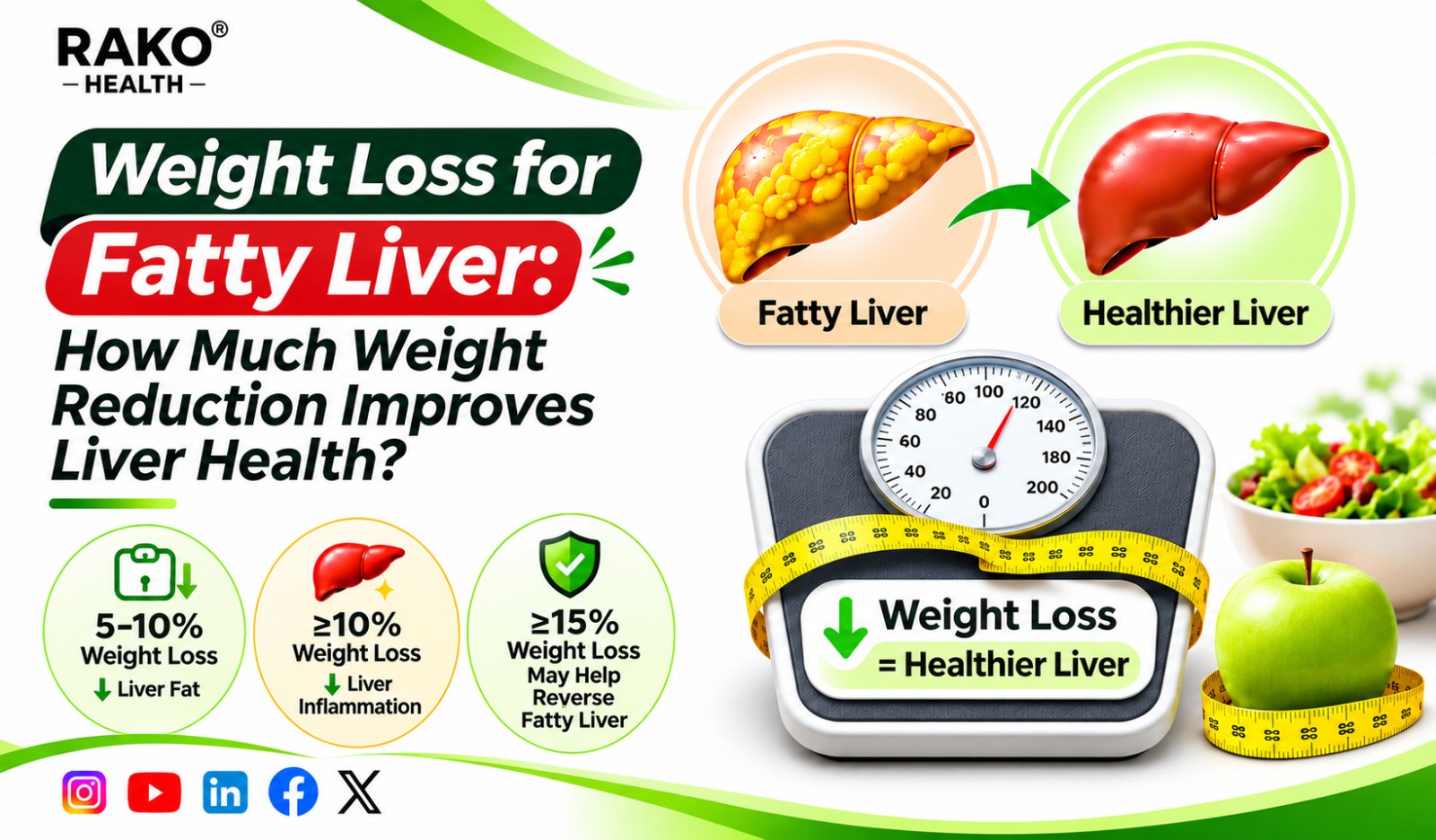
Weight Loss for Fatty Liver is one of the most common recommendations after a fatty liver diagnosis. However, many people wonder how much weight they actually need to lose. Is losing 3 kg enough, or does recovery require losing 10% of body weight? At RAKO Health, our fatty liver service page helps individuals understand their condition and explore personalised nutrition and lifestyle support.
The encouraging news is that even modest weight reduction can improve liver health. However, results depend on disease severity, metabolic health and individual circumstances.
Why Is Weight Loss Important for Fatty Liver?
Fatty liver disease often develops alongside insulin resistance and excess abdominal fat. Body fat also releases fatty acids and signalling molecules that influence metabolism and inflammation.
When insulin resistance increases, more fatty acids enter the bloodstream and reach the liver. Consequently, excess fat accumulates inside liver cells.
Reducing excess body fat can help:
- Improve insulin sensitivity.
- Reduce fatty acid delivery to the liver.
- Support healthier blood glucose levels.
- Improve triglyceride levels.
- Reduce metabolic inflammation.
Therefore, Weight Loss for Fatty Liver supports more than physical appearance. It can also improve important metabolic processes.
How Much Weight Loss Is Needed to Improve Fatty Liver?
Research suggests that different levels of weight reduction can produce different liver-related benefits.
| Weight reduction | Potential liver improvement |
| Around 3–5% | May reduce liver fat |
| Around 5–7% | May improve liver fat and inflammatory activity |
| Around 7–10% | Associated with greater improvements in inflammation and metabolic markers |
| 10% or more | May improve steatohepatitis and fibrosis in selected patients |
These percentages represent research-based estimates, not guaranteed treatment targets.
Example: How Much Weight Should You Lose?
Consider someone weighing 90 kg.
- A 3% reduction equals 2.7 kg.
- A 5% reduction equals 4.5 kg.
- A 10% reduction equals 9 kg.
However, the appropriate target depends on individual health conditions and liver disease severity.
What Happens Inside Your Liver During Weight Loss?
Weight reduction influences several processes that contribute to fatty liver development.
1. Reduced Fatty Acid Delivery
As excess body fat decreases, insulin sensitivity may improve. Consequently, fewer fatty acids may travel from adipose tissue towards the liver.
2. Lower Liver Fat Production
Improved energy balance and reduced added sugar consumption can decrease the liver's production of new fatty acids.
3. Better Metabolic Health
Weight reduction can improve blood glucose regulation, triglyceride levels and other metabolic risk factors.
4. Reduced Inflammatory Activity
Sustained weight reduction may decrease metabolic inflammation and liver-cell injury in some individuals.
However, reducing liver fat does not automatically mean existing fibrosis has disappeared.
Can Fatty Liver Improve Without Significant Weight Loss?
Yes. Improving food quality and physical activity can benefit liver health, even when body weight changes very little.
For example, you can:
- Replace excessive saturated fats with unsaturated fats.
- Reduce sugary beverages.
- Include fibre-rich foods.
- Improve protein intake.
- Increase regular physical activity.
This approach is particularly important for individuals with fatty liver and normal BMI.
Instead of pursuing unnecessary weight loss, they may benefit from improving abdominal fat distribution, muscle fitness and metabolic health.
How to Lose Weight Safely With Fatty Liver
Successful Weight Loss for Fatty Liver requires consistent habits rather than extreme dieting.
1. Follow Balanced Meals
Include vegetables, suitable grain portions, adequate protein and healthy fats.
Avoid crash diets and prolonged starvation. Instead, choose meals that support your nutritional requirements.
2. Protect Muscle Mass
During weight reduction, preserving muscle is important.
Include suitable protein sources such as:
- Dal, chana and rajma.
- Eggs and fish.
- Tofu and soy foods.
- Milk and curd, where suitable.
Additionally, resistance exercises can support muscle preservation when medically appropriate.
3. Reduce Excess Calories
Limit frequent consumption of sugary beverages, sweets, fried snacks and oversized portions.
Small dietary improvements often prove easier to maintain than restrictive eating plans.
4. Monitor Your Metabolic Health
Body weight alone cannot confirm liver recovery.
Your healthcare professional may recommend monitoring:
- Liver enzymes.
- Blood glucose levels.
- Lipid profile.
- Body weight and waist measurements.
- Non-invasive liver fibrosis assessments when indicated.
For practical meal planning, explore our diet for fatty liver programme at RAKO Health.
Fatty Liver Diet Indian Food: What Should You Eat?
Traditional Indian foods can support healthy weight management without complicated meal plans.
Consider these everyday options:
| Food category | Suitable choices |
| Grains | Whole-wheat roti, oats, millets, moderate rice portions |
| Protein | Dal, rajma, chana, eggs, fish, tofu |
| Vegetables | Spinach, gourds, beans, carrots |
| Fruits | Guava, apples, oranges and other whole fruits |
| Healthy fats | Almonds, walnuts, seeds and moderate unsaturated oils |
Furthermore, control portions according to your energy requirements and metabolic health.
Our Fatty Liver Diet Indian Food guide provides additional ideas for building balanced meals with familiar ingredients.
Weight Management Tips for NRIs
Indian NRIs often face challenges involving busy schedules, restaurant meals and unfamiliar food choices.
Whether you live in the USA, UK, Canada, Australia or the Middle East, maintaining healthy habits remains possible.
Try these practical strategies:
- Prepare simple Indian meals at home.
- Choose whole grains over refined carbohydrates.
- Limit sugary coffee and packaged beverages.
- Include protein and vegetables in everyday meals.
- Walk regularly and maintain consistent exercise habits.
At RAKO Health, we recognise that nutritional recommendations should match cultural preferences and everyday routines. Working with the best dietician for fatty liver can help you develop a sustainable plan suited to your lifestyle.
Is Rapid Weight Loss Better for Fatty Liver?
Not necessarily. Extremely restrictive diets can cause muscle loss, nutritional deficiencies and other complications.
Moreover, rapid weight reduction may increase gallstone risk in susceptible individuals.
The appropriate weight-loss approach depends on starting weight, medications, nutritional status and existing medical conditions.
People with advanced liver disease need specialist nutritional guidance.
Scientific References
- Zelber-Sagi S, Godos J, Salomone F. Lifestyle changes for the treatment of nonalcoholic fatty liver disease: a review of observational studies and intervention trials. Therapeutic Advances in Gastroenterology. 2016;9:392–407. https://doi.org/10.1177/1756283X16638830
- Semmler G, Datz C, Trauner M. Eating, diet, and nutrition for the treatment of non-alcoholic fatty liver disease. Clinical and Molecular Hepatology. 2023;29(Suppl)–S260. https://doi.org/10.3350/cmh.2022.0364
- George ES, Forsyth A, Itsiopoulos C, et al. Practical Dietary Recommendations for the Prevention and Management of Nonalcoholic Fatty Liver Disease in Adults. Advances in Nutrition. 2018;9:30–40. https://doi.org/10.1093/advances/nmx007
- Tsompanaki E, Thanapirom K, Papatheodoridi M, Parikh P, Chotai de Lima Y, Tsochatzis EA. Systematic Review and Meta-analysis: The Role of Diet in the Development of Nonalcoholic Fatty Liver Disease. Clinical Gastroenterology and Hepatology. 2023;21:1462–1474. https://doi.org/10.1016/j.cgh.2021.11.026
Frequently Asked Questions
1. Can losing 5 kg improve fatty liver?
Yes, it may help. However, percentage weight reduction provides more useful context than kilograms alone.
2. Does losing belly fat help fatty liver?
Yes. Reducing excess abdominal fat may improve insulin sensitivity and overall metabolic health.
3. Can fatty liver improve without exercise?
Dietary improvements and weight reduction can reduce liver fat. However, physical activity provides additional metabolic benefits.
4. Can someone with normal BMI develop fatty liver?
Yes. People with normal BMI can develop fatty liver due to visceral fat, insulin resistance and genetic factors.
5. Does everyone need to lose 10% body weight?
No. Smaller reductions may improve liver fat. Greater reductions may provide additional benefits for some people.
6. Can fatty liver return after gaining weight?
Yes. Liver fat may accumulate again when excess adiposity and metabolic risk factors return.
7. Do normal ALT levels confirm fatty liver recovery?
No. Normal liver enzymes do not always rule out fatty liver or significant fibrosis.
Take the Next Step Towards Better Liver Health
Weight management is an important part of fatty liver care, but extreme dieting is unnecessary. Sustainable nutrition, appropriate physical activity and regular medical monitoring offer a more practical approach.
At RAKO Health, we encourage personalized nutrition strategies that consider your health conditions, food preferences and lifestyle.
Explore our nutritional services to discover how the right dietary approach can support your long-term liver health.
Related Blogs
Rice and Roti for Weight Loss: Can You Eat Both and Manage Your Weight?

Diet Plan for Busy Professionals: A Practical Guide to Healthy Weight Loss
How Can I Lose 10 kg in 30 Days? A Practical Guide from RAKO Health
Rice and Roti for Weight Loss: Can You Eat Both and Manage Your Weight?
Diet Plan for Busy Professionals: A Practical Guide to Healthy Weight Loss
How Can I Lose 10 kg in 30 Days? A Practical Guide from RAKO Health
Rice and Roti for Weight Loss: Can You Eat Both and Manage Your Weight?
Diet Plan for Busy Professionals: A Practical Guide to Healthy Weight Loss
How Can I Lose 10 kg in 30 Days? A Practical Guide from RAKO Health
Rice and Roti for Weight Loss: Can You Eat Both and Manage Your Weight?
Diet Plan for Busy Professionals: A Practical Guide to Healthy Weight Loss