
Diet for Fatty Liver: 7-Day Indian Diet Plan


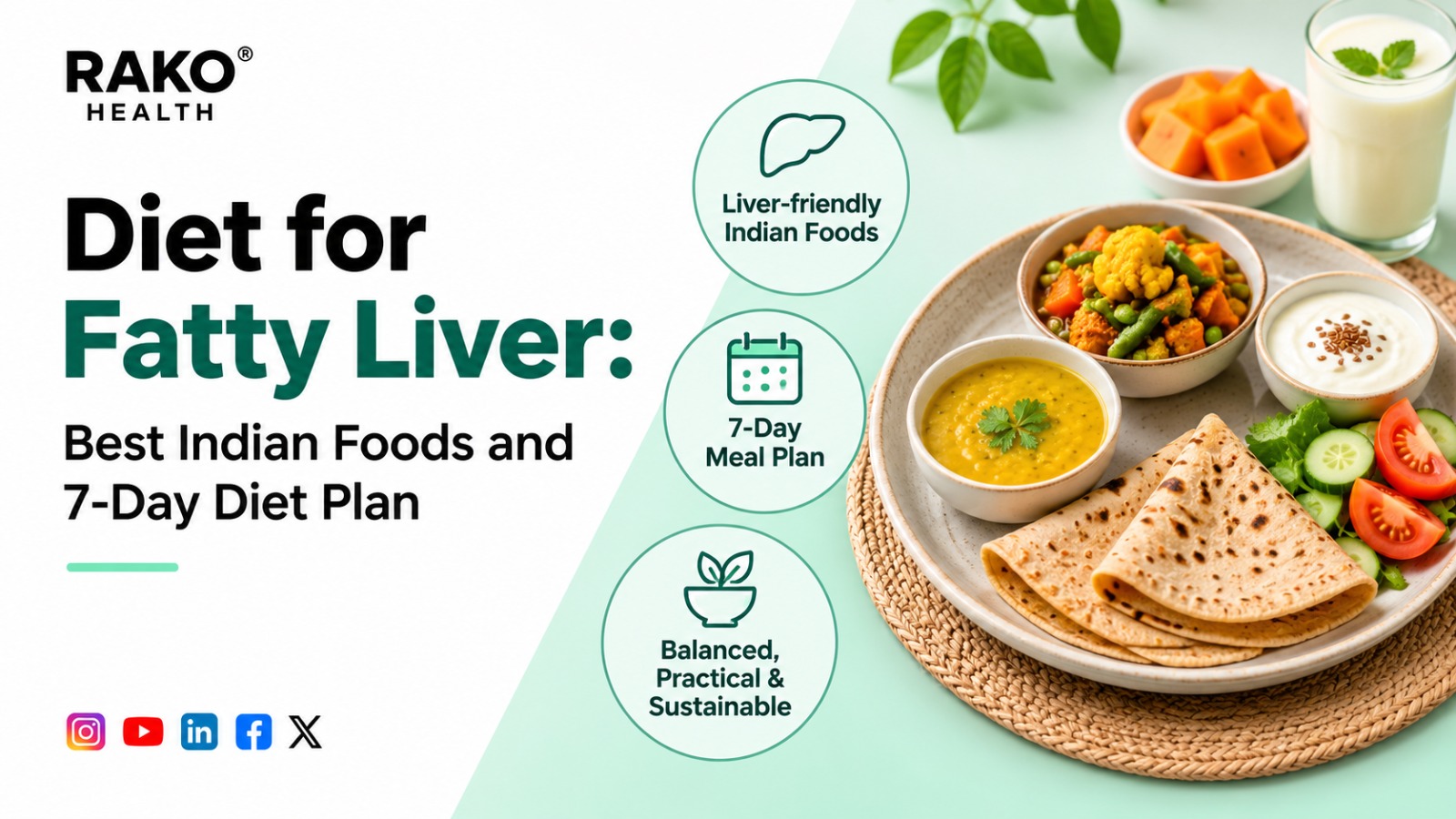
Diet for Fatty Liver plays an important role in reducing liver fat and improving metabolic health. If you have fatty liver, you may wonder whether rice, fruits, potatoes, or cooking oils belong in your meals. Fortunately, you don't need to eliminate familiar Indian foods. A balanced approach can support liver health without extreme restrictions. Explore RAKO Health's Fatty Liver Nutrition Services for personalized dietary guidance.
What Is Fatty Liver Disease?
Fatty liver occurs when excess fat accumulates inside liver cells. It often develops alongside insulin resistance, abdominal obesity, type 2 diabetes, and abnormal cholesterol levels.
Doctors now commonly use the term metabolic dysfunction-associated steatotic liver disease (MASLD). This condition was previously called non-alcoholic fatty liver disease (NAFLD).
However, some individuals develop liver inflammation and scarring. Early dietary improvements and lifestyle changes can help reduce liver fat and support metabolic health.
How Does Diet for Fatty Liver Improve Liver Health?
Your liver processes fats and carbohydrates to produce energy. However, consistently consuming more energy than your body needs can increase liver fat.
A balanced Diet for Fatty Liver supports health through several mechanisms:
- Better insulin sensitivity: Balanced meals support healthier blood glucose regulation.
- Reduced fat production: Limiting sugary drinks can reduce factors contributing to liver fat.
- Healthier fat metabolism: Unsaturated fats can replace excessive saturated fats.
- Improved gut health: Fibre-rich foods support digestive and metabolic health.
Furthermore, sustainable weight management can improve liver health when medically appropriate.
Best Indian Foods for Fatty Liver
Include these everyday foods in your Diet for Fatty Liver:
- Vegetables: Spinach, amaranth, bottle gourd, beans, carrots, and cabbage provide fibre and antioxidants.
- Protein foods: Dal, chickpeas, rajma, eggs, fish, tofu, and unsweetened curd support protein requirements.
- Whole grains: Roti, oats, millets, and rice provide energy and varying amounts of fibre.
- Whole fruits: Guava, papaya, apples, and oranges provide vitamins and dietary fibre.
- Healthy fats: Almonds, walnuts, flaxseeds, and unsaturated vegetable oils provide beneficial fats.
Importantly, rice does not need complete elimination. Combine moderate rice portions with dal, vegetables, and protein.
7-Day Diet Plan for Fatty Liver: Indian Meal Chart
This 7-Day Diet Plan for fatty liver uses familiar Indian meals and practical ingredients.
Day | Breakfast | Lunch | Dinner |
| Monday | Idli with sambar | Rice, dal, spinach and curd | Phulkas, vegetables and moong dal |
| Tuesday | Vegetable oats upma | Chapati, chana and salad | Vegetable khichdi and curd |
| Wednesday | Pesarattu | Rice, sambar and beans | Pulkas with tofu or egg curry |
| Thursday | Vegetable poha | Chapati, rajma and salad | Rice, dal and bottle gourd |
| Friday | Dosa with sambar | Rice, fish or chickpea curry | Chapati, vegetables and curd |
| Saturday | Vegetable dalia | Millet or rice, dal and greens | Moong dal khichdi |
| Sunday | Vegetable uthappam | Chapati, egg or tofu curry | Rice, dal and mixed vegetables |
Healthy snack options:
- One portion of seasonal fruit.
- A small handful of unsalted nuts.
- Roasted chana.
- Unsweetened buttermilk.
This is an illustrative meal plan, not a calorie-specific prescription. Adjust portions according to age, activity, diabetes, medications, and liver disease severity. Advanced liver disease may require specialised nutrition.
Foods to Limit in a Fatty Liver Diet
Although no single food determines liver health, certain eating habits can make metabolic management harder.
Limit | Better alternative |
| Sugary drinks | Water or unsweetened beverages |
| Packaged fruit juices | Whole fruits |
| Deep-fried snacks | Roasted chana |
| Processed meats | Dal, fish, eggs or tofu |
| Excess butter and ghee | Moderate unsaturated oils |
| Cakes and biscuits | Fruit or plain curd |
Additionally, avoid alcohol, particularly when liver injury or fibrosis is present. Discuss alcohol consumption with your treating doctor.
Which Diet Is Best for Fatty Liver?
A 2022 systematic review published in Frontiers in Nutrition compared low-carbohydrate and low-fat diets.
Both approaches showed benefits when they supported weight reduction and appropriate energy intake. However, researchers did not establish one universally superior diet.
Therefore, you do not need to eliminate rice or severely restrict dietary fats. Focus instead on sustainable eating habits.
How Much Weight Loss Helps Fatty Liver?
For people with overweight or obesity, weight reduction can improve liver health.
Research suggests:
- 3–5% weight loss: May reduce liver fat.
- 7–10% weight loss: Can improve liver inflammation and metabolic health.
- More than 10%: May improve fibrosis in selected individuals.
These figures represent research-based ranges, not guaranteed outcomes. People with normal body weight may benefit from improving dietary quality instead.
Fatty Liver Nutrition Support for Indians and NRIs
Managing fatty liver can become challenging when living abroad. NRIs may have different food availability, work schedules, and eating habits.
However, a healthy Indian eating pattern can adapt to international lifestyles. You can combine familiar meals with locally available vegetables, whole grains, lean proteins, and healthy fats.
At RAKO Health, we focus on personalized nutrition plans that consider liver health, metabolic conditions, body weight, and individual food preferences.
Explore our Best Dietician for Fatty Liver and learn more about Dr. Meram Chalamaih for professional nutrition guidance.
Scientific References
- Semmler G, Datz C, Trauner M. Eating, diet, and nutrition for the treatment of non-alcoholic fatty liver disease. Clinical and Molecular Hepatology. 2023;29(Suppl)–S260. https://doi.org/10.3350/cmh.2022.0364
- Montemayor S, García S, Monserrat-Mesquida M, Tur JA, Bouzas C. Dietary Patterns, Foods, and Nutrients to Ameliorate Non-Alcoholic Fatty Liver Disease: A Scoping Review. Nutrients. 2023;15(18):3987. https://doi.org/10.3390/nu15183987
- George ES, Forsyth A, Itsiopoulos C, et al. Practical Dietary Recommendations for the Prevention and Management of Nonalcoholic Fatty Liver Disease in Adults. Advances in Nutrition. 2018;9(1):30–40. https://doi.org/10.1093/advances/nmx007
- Varkaneh HK, Poursoleiman F, Al Masri MK, et al. Low fat diet versus low carbohydrate diet for management of non-alcohol fatty liver disease: A systematic review. Frontiers in Nutrition. 2022;9:987921. https://doi.org/10.3389/fnut.2022.987921
- Kargulewicz A, Stankowiak-Kulpa H, Grzymisławski M. Dietary recommendations for patients with nonalcoholic fatty liver disease. Przegląd Gastroenterologiczny. 2014;9(1):18–23. https://doi.org/10.5114/pg.2014.40845
Frequently Asked Questions
1. What is the best Indian breakfast for fatty liver?
Idli with sambar, vegetable poha, pesarattu, eggs, oats, and vegetable dalia are suitable options.
2. Can fatty liver patients eat rice daily?
Yes. Moderate rice portions can fit into a balanced diet alongside dal, vegetables, and protein.
3. Is curd good for fatty liver?
Plain, unsweetened curd provides protein and calcium. However, it is not a specific fatty liver treatment.
4. Which fruits are best for fatty liver?
Guava, apples, pears, papaya, and oranges provide fibre and essential nutrients. Enjoy whole fruits instead of sugary juices.
5. Are millets better than rice for fatty liver?
Some millets provide more fibre and micronutrients than polished rice. However, portion sizes and overall dietary quality matter most.
6. Can fatty liver improve through diet alone?
Dietary changes can reduce liver fat. Physical activity and appropriate medical management can provide additional benefits.
7. How long should I follow a fatty liver diet?
Fatty liver management requires sustainable, long-term eating habits. Regular medical follow-ups help monitor progress.
Final Thoughts
For additional information, explore the American Liver Foundation and discuss your dietary needs with a qualified healthcare professional. You can also explore personalised liver nutrition support at RAKO Health.
Related Blogs
Best Dietician for Fatty Liver: Personalized Nutrition for Better Liver Health
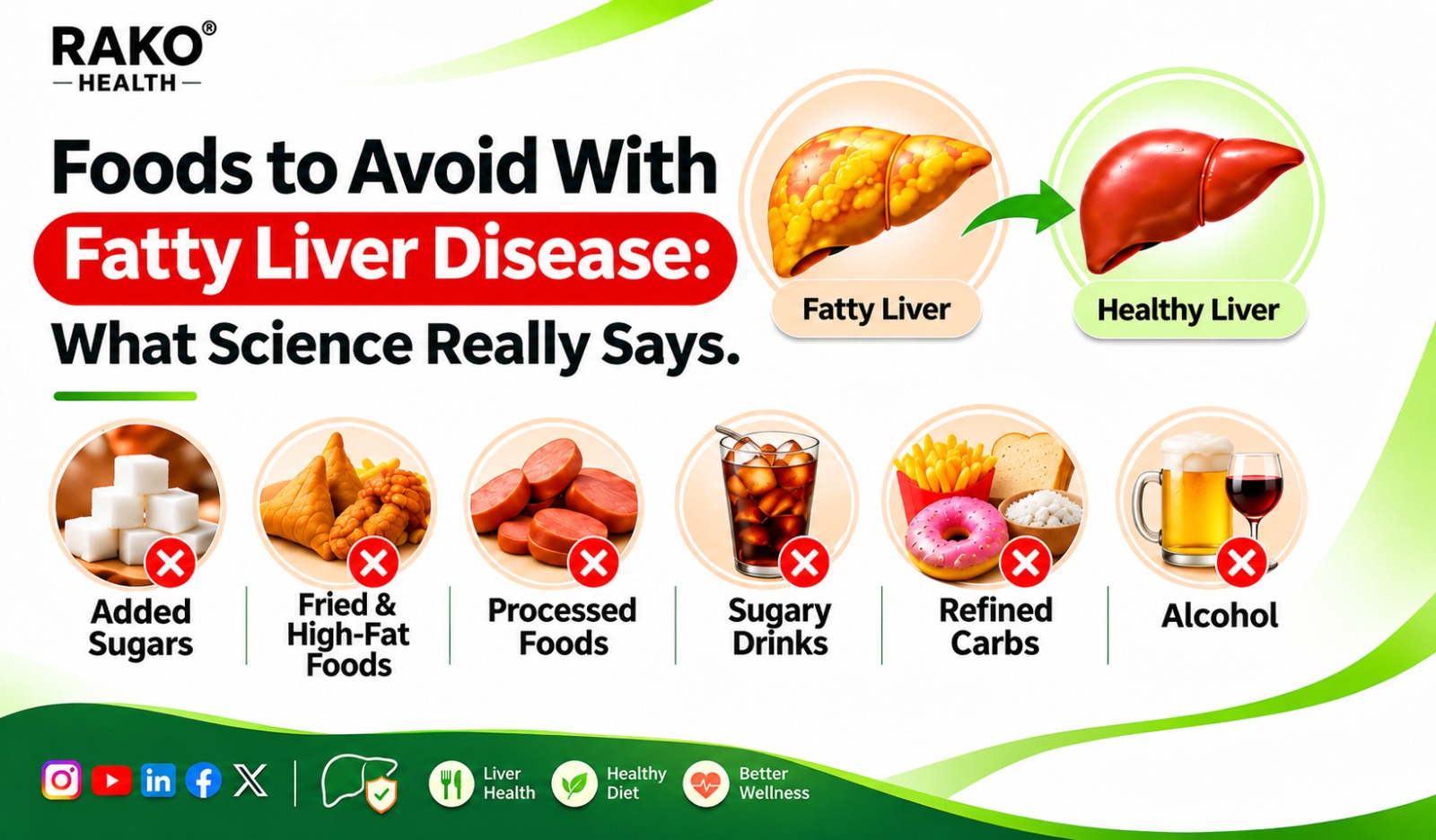
Foods to Avoid With Fatty Liver Disease: What Science Really Says
Online Dietitian for Fatty Liver: Personalised Diet Consultation in India
Best Dietician for Fatty Liver: Personalized Nutrition for Better Liver Health
Foods to Avoid With Fatty Liver Disease: What Science Really Says
Online Dietitian for Fatty Liver: Personalised Diet Consultation in India
Best Dietician for Fatty Liver: Personalized Nutrition for Better Liver Health
Foods to Avoid With Fatty Liver Disease: What Science Really Says
Online Dietitian for Fatty Liver: Personalised Diet Consultation in India
Best Dietician for Fatty Liver: Personalized Nutrition for Better Liver Health
Foods to Avoid With Fatty Liver Disease: What Science Really Says