
Foods to Avoid With Fatty Liver Disease: What Science Really Says


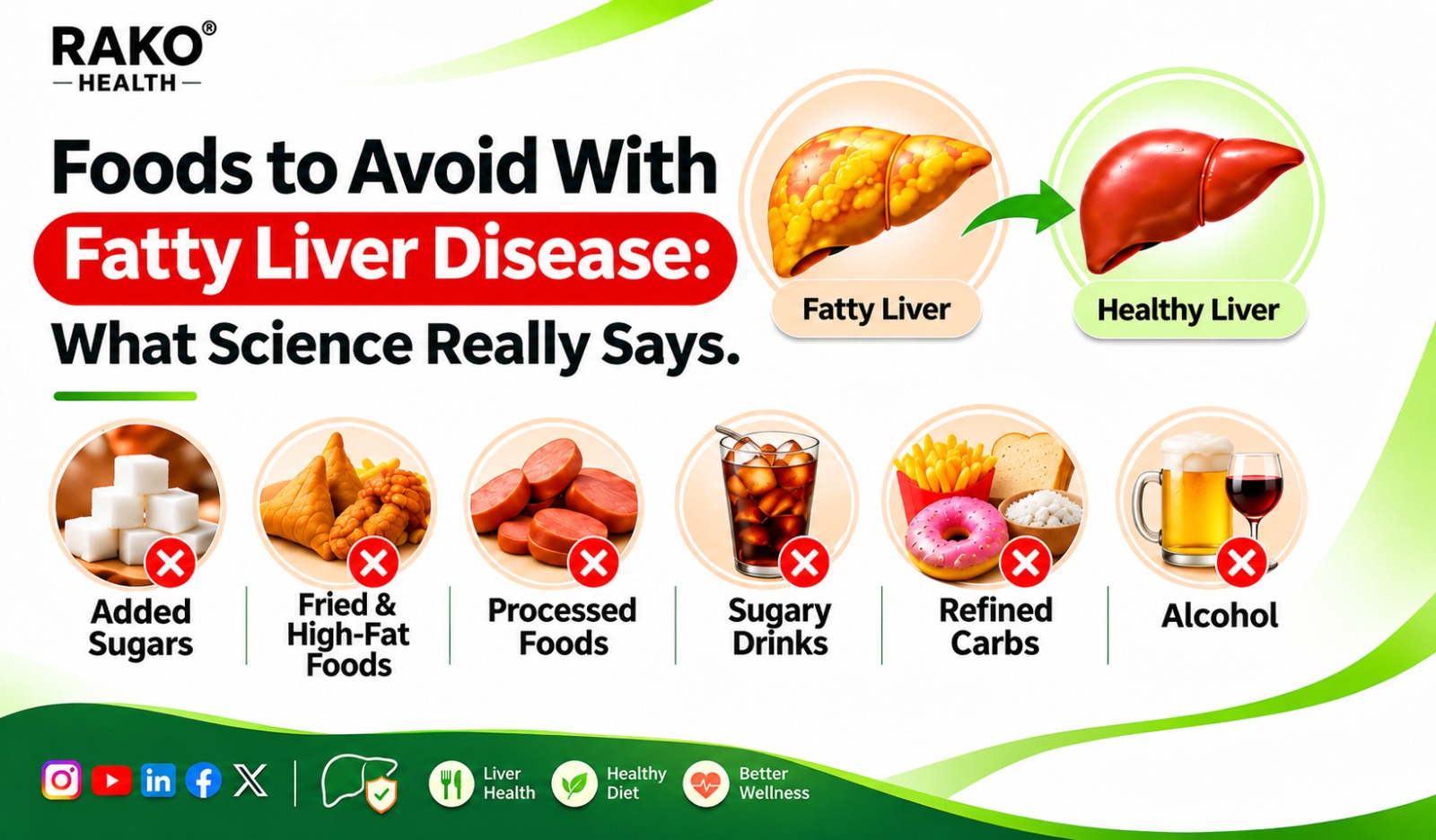
Foods to Avoid With Fatty Liver Disease are a common concern after receiving a fatty liver diagnosis. Many people worry about everyday foods like rice, bananas, potatoes and dairy products. However, scientific evidence does not support eliminating every carbohydrate or dietary fat. Instead, reducing added sugars, excessive saturated fats and highly processed foods matters more. At RAKO Health, our fatty liver service page helps individuals explore personalised nutritional guidance and sustainable lifestyle strategies.
Whether you live in India or abroad, understanding which foods to limit can help protect your metabolic and liver health.
Why Do Certain Foods Increase Liver Fat?
Your liver processes carbohydrates, fats and other nutrients to maintain metabolic balance. However, consistently consuming more energy than your body needs can increase liver fat.
Two important processes contribute to this condition:
1. Increased Fat Production
The liver converts excess carbohydrates into fatty acids through a process called de novo lipogenesis.
Consequently, frequent consumption of added sugars, particularly sugary beverages, can encourage fat production.
2. Insulin Resistance and Fat Accumulation
Insulin resistance increases fatty acid release from body fat. These fatty acids travel through the bloodstream and reach the liver.
Additionally, excessive saturated fat consumption may negatively affect metabolic health and increase liver-cell stress.
5 Foods to Avoid With Fatty Liver Disease
Understanding Foods to Avoid With Fatty Liver Disease helps you make healthier choices without unnecessary restrictions.
1. Sugar-Sweetened Beverages
Soft drinks, packaged fruit juices and sweetened energy drinks contain substantial added sugar.
Moreover, liquid calories often provide less fullness than solid foods. Therefore, frequent consumption may increase overall calorie intake.
Better alternatives:
- Plain water.
- Unsweetened tea.
- Unsweetened buttermilk.
- Plain coffee, if tolerated.
2. Sweets and Commercial Bakery Products
Indian sweets, cakes, pastries, doughnuts and sweet biscuits often contain refined carbohydrates, added sugars and fats.
Frequent consumption can contribute to excessive calorie intake. However, occasional treats differ from making these foods everyday staples.
Better alternatives:
- Whole fruits.
- Small portions of nuts.
- Roasted chana.
- Homemade snacks with limited added sugar.
3. Foods High in Saturated Fat
Fatty meat, processed meats, butter and excessive ghee contain significant saturated fat.
Replacing some saturated fats with unsaturated fats generally supports better cardiometabolic health.
Instead, include:
- Almonds and walnuts.
- Flaxseeds and chia seeds.
- Fish.
- Moderate amounts of unsaturated vegetable oils.
Remember, your body still needs appropriate amounts of healthy dietary fats.
4. Deep-Fried and Highly Processed Snacks
Regular consumption of chips, samosas, pakoras and fried namkeen can increase calorie intake.
Furthermore, commercial fried foods may contain less favourable fat profiles.
Consider these healthier cooking methods:
- Steaming.
- Roasting.
- Boiling.
- Grilling.
- Cooking with moderate amounts of oil.
5. Excess Alcohol
Alcohol can damage the liver through mechanisms different from metabolic fatty liver disease.
Therefore, discuss alcohol consumption with your healthcare professional. Abstinence becomes particularly important for people with advanced fibrosis or cirrhosis.
Foods to Limit With Fatty Liver and Their Healthier Alternatives
| Foods to limit | Better alternatives | Potential benefit |
| Sugary soft drinks | Water, unsweetened beverages | Reduces added sugar |
| Packaged fruit drinks | Whole fruits | Provides dietary fibre |
| Sweet biscuits | Roasted chana | Improves snack quality |
| Deep-fried snacks | Steamed or roasted snacks | Helps moderate calories |
| Processed meats | Dal, fish, eggs or tofu | Improves protein choices |
| Excess ghee or butter | Moderate unsaturated oils | Improves fat quality |
Are Rice, Bananas and Potatoes Bad for Fatty Liver?
No. These everyday foods do not automatically cause fatty liver.
Rice provides carbohydrates, bananas contain fibre and micronutrients, and potatoes can fit into balanced meals.
However, portion sizes and preparation methods matter.
For example, moderate rice portions with dal and vegetables create a different nutritional balance from oversized rice servings with fried snacks.
Similarly, whole fruits offer more fibre than fruit juices. Therefore, you do not need to eliminate nutritious foods unnecessarily.
Is Coffee Good for Fatty Liver?
Some observational studies associate coffee consumption with favourable liver outcomes.
However, coffee does not treat or reverse fatty liver independently. Also, everyone does not need to start drinking coffee.
People with caffeine sensitivity, acid reflux or sleep difficulties should consider their individual tolerance.
For more personalized nutritional advice, explore our diet for fatty liver programme at RAKO Health.
Fatty Liver Diet Tips for NRIs
Indian NRIs often face different dietary challenges while living in the USA, UK, Canada, Australia and the Middle East.
Busy schedules, restaurant meals and frequent consumption of packaged foods can make healthy eating difficult.
Nevertheless, familiar Indian foods can support better liver health.
Try these practical changes:
- Choose whole-wheat roti instead of refined-flour products.
- Include dal, chana and vegetables in regular meals.
- Replace sugary beverages with water or unsweetened drinks.
- Prepare home-cooked meals whenever possible.
- Choose roasted snacks instead of frequent fried foods.
- Maintain appropriate portions when eating outside.
At RAKO Health, we understand the importance of culturally appropriate nutrition. Working with the best dietician for fatty liver can help NRIs follow practical dietary recommendations while maintaining their familiar food preferences.
How to Build a Healthy Fatty Liver Diet
A sustainable eating pattern should focus on food quality rather than strict food restrictions.
Follow these simple principles:
- Reduce added sugars and sweetened beverages.
- Limit excessive saturated fat.
- Include vegetables and whole fruits.
- Choose whole grains and fibre-rich foods.
- Include suitable protein sources.
- Maintain appropriate portions and regular physical activity.
You can also explore our Diets for Fatty Liver Disease guide to understand how different eating patterns compare scientifically.
For additional medical information, visit the National Institute of Diabetes and Digestive and Kidney Diseases.
Scientific References
- Kargulewicz A, Stankowiak-Kulpa H, Grzymisławski M. Dietary recommendations for patients with nonalcoholic fatty liver disease. Przegląd Gastroenterologiczny. 2014;9:18–23. https://doi.org/10.5114/pg.2014.40845
- George ES, Forsyth A, Itsiopoulos C, et al. Practical Dietary Recommendations for the Prevention and Management of Nonalcoholic Fatty Liver Disease in Adults. Advances in Nutrition. 2018;9:30–40. https://doi.org/10.1093/advances/nmx007
- Montemayor S, García S, Monserrat-Mesquida M, Tur JA, Bouzas C. Dietary Patterns, Foods, and Nutrients to Ameliorate Non-Alcoholic Fatty Liver Disease: A Scoping Review. Nutrients. 2023;15:3987. https://doi.org/10.3390/nu15183987
- Tsompanaki E, Thanapirom K, Papatheodoridi M, Parikh P, Chotai de Lima Y, Tsochatzis EA. Systematic Review and Meta-analysis: The Role of Diet in the Development of Nonalcoholic Fatty Liver Disease. Clinical Gastroenterology and Hepatology. 2023;21:1462–1474. https://doi.org/10.1016/j.cgh.2021.11.026
Frequently Asked Questions
1. Is white rice bad for fatty liver?
No. Rice can remain part of a balanced diet. Portion sizes and overall dietary quality matter more than avoiding rice completely.
2. Should people with fatty liver avoid bananas?
No. Whole bananas provide fibre and nutrients. They can fit into an appropriate eating pattern.
3. Is ghee completely prohibited for fatty liver?
No. However, ghee contains saturated fat. Therefore, avoid consuming large amounts frequently.
4. Can I eat eggs with fatty liver?
Yes. Eggs provide protein and can fit into a balanced diet. Individual nutritional needs and cholesterol levels should guide intake.
5. Is fruit juice as healthy as whole fruit?
No. Whole fruits generally provide more fibre and greater fullness than fruit juices.
6. Does avoiding sugar alone reverse fatty liver?
No. Reducing added sugar helps, but overall dietary quality, energy balance and metabolic health also influence recovery.
Take the Next Step Towards Better Liver Health
Managing fatty liver does not mean giving up every favourite food. Instead, focus on reducing frequent consumption of sugary beverages, processed snacks and excessive saturated fats.
At RAKO Health, we encourage practical nutrition strategies that support long-term metabolic and liver health.
Explore our nutritional services to discover how personalised dietary guidance can fit your health needs, cultural preferences and everyday lifestyle.
Related Blogs
How to Reverse Fatty Liver: What Science Says About Diet and Recovery
What Is a Liver Detox Diet? Foods to Eat, Foods to Avoid, and Common Myths
Best Dietician for Fatty Liver: Personalized Nutrition for Better Liver Health
How to Reverse Fatty Liver: What Science Says About Diet and Recovery
What Is a Liver Detox Diet? Foods to Eat, Foods to Avoid, and Common Myths
Best Dietician for Fatty Liver: Personalized Nutrition for Better Liver Health
How to Reverse Fatty Liver: What Science Says About Diet and Recovery
What Is a Liver Detox Diet? Foods to Eat, Foods to Avoid, and Common Myths
Best Dietician for Fatty Liver: Personalized Nutrition for Better Liver Health
How to Reverse Fatty Liver: What Science Says About Diet and Recovery
What Is a Liver Detox Diet? Foods to Eat, Foods to Avoid, and Common Myths