
Diets for Fatty Liver Disease: Which Eating Pattern Works Best?


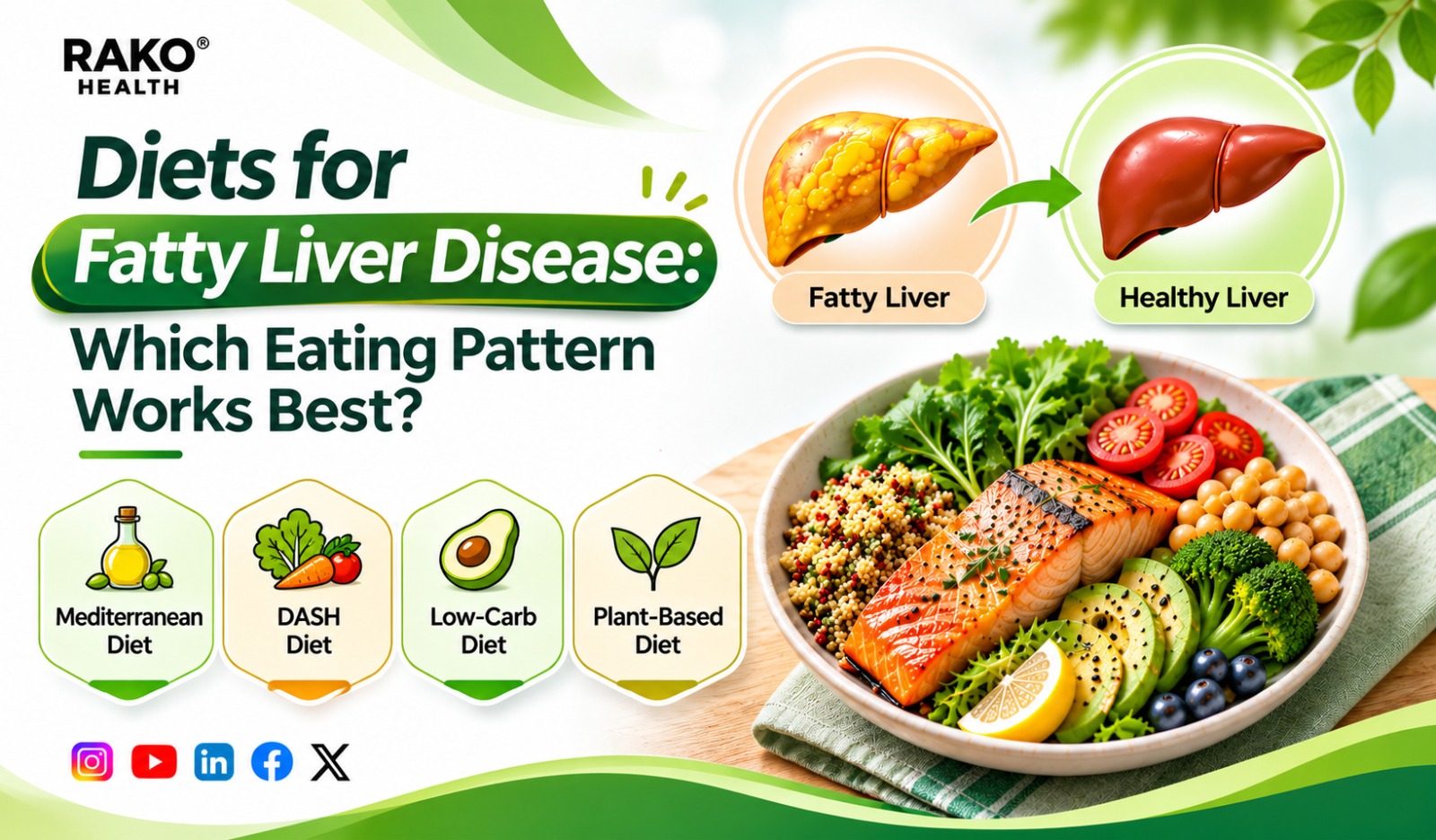
Diets for Fatty Liver Disease often create confusion because different eating plans promise better liver health. Some recommend cutting carbohydrates, while others promote low-fat diets or intermittent fasting. However, scientific research suggests that overall food quality and sustainable eating habits matter most. At RAKO Health, we help individuals manage their nutritional needs through our fatty liver service page, offering guidance on suitable dietary and lifestyle approaches.
Whether you live in India or abroad, choosing the right diet can support liver health and improve metabolic function.
Why Do Diets for Fatty Liver Disease Matter?
Fatty liver develops when the liver receives or produces more fat than it can process effectively. Several factors influence this process, including insulin resistance, excess calorie intake and abdominal fat.
Moreover, everyday food choices affect blood glucose, cholesterol, inflammation and body weight. Therefore, researchers increasingly focus on complete dietary patterns rather than individual foods.
A suitable diet should support:
- Better blood sugar regulation.
- Healthy cholesterol levels.
- Reduced excess liver fat.
- Sustainable weight management.
- Improved overall metabolic health.
1. Mediterranean Diet for Fatty Liver
The Mediterranean diet is among the most researched eating patterns for metabolic health.
It focuses on:
- Vegetables and whole fruits.
- Whole grains and legumes.
- Nuts and seeds.
- Olive oil and other unsaturated fats.
- Fish and suitable protein sources.
Additionally, it limits processed foods and excessive saturated fat.
Research reviews suggest that Mediterranean-style eating can improve liver fat and cardiometabolic health. Some studies also indicate benefits beyond weight reduction. However, researchers need further evidence to establish the independent effects.
Can Indians Follow a Mediterranean-Style Diet?
Absolutely! You do not need expensive imported foods to follow its principles.
An Indian adaptation can include:
- Dal, chana and rajma.
- Whole-wheat roti and portion-controlled rice.
- Seasonal vegetables and whole fruits.
- Almonds, walnuts and seeds.
- Fish, tofu or other suitable protein sources.
Thus, traditional Indian home-cooked meals can support a Mediterranean-inspired eating pattern.
2. Low-Carbohydrate Diet for Fatty Liver
Low-carbohydrate diets reduce daily carbohydrate consumption. Consequently, some individuals experience better blood glucose control and reduced calorie intake.
Reducing excess refined carbohydrates may also lower the liver's fat production.
However, carbohydrate restriction does not automatically make a diet healthy.
Avoid replacing carbohydrates with excessive:
- Butter and saturated fats.
- Processed meats.
- High-fat processed foods.
- Low-fibre food choices.
Instead, prioritise vegetables, legumes, healthy fats and adequate protein.
3. Low-Fat Diet for Fatty Liver
A low-fat diet reduces the amount of fat consumed daily. When appropriately planned, it can help control calorie intake, body weight and liver enzymes.
A systematic review of 15 clinical trials reported benefits from both low-fat and low-carbohydrate interventions.
Although some findings favoured low-fat diets for liver enzymes, research has not established one universally superior approach.
Importantly, avoid replacing healthy fats with excessive refined carbohydrates or added sugars.
4. Intermittent Fasting for Fatty Liver
Intermittent fasting involves eating within specific time windows or reducing food intake on selected days.
Some individuals find this approach useful for managing calorie intake and body weight. Researchers are also studying its possible effects on liver fat metabolism.
However, long-term evidence remains insufficient to recommend fasting over other sustainable dietary patterns.
People taking insulin or certain diabetes medications should seek medical advice before fasting.
Comparing Different Diets for Fatty Liver Disease
| Eating pattern | Potential benefits | Limitations |
| Mediterranean | Supports metabolic health and dietary quality | Requires portion awareness |
| Low-carbohydrate | May improve glucose control | Can lack fibre or contain excess saturated fat |
| Low-fat | Supports calorie reduction | Replacement food quality matters |
| Intermittent fasting | May help manage eating habits | Long-term benefits remain uncertain |
| Balanced Indian diet | Familiar, flexible and sustainable | Requires individual planning |
What Does Scientific Research Say About the Best Diet for Fatty Liver?
A 2023 meta-analysis examined 60 studies involving 100,621 participants.
Researchers found higher average energy consumption among people with fatty liver than healthy comparison groups.
However, carbohydrate, fat and protein proportions did not consistently differ.
This observational finding does not prove that excess calories alone cause fatty liver. Nevertheless, it highlights the importance of overall energy balance.
For further scientific reading, explore this research on dietary patterns and fatty liver management.
How to Choose the Right Diet for Fatty Liver
The ideal eating pattern depends on individual health conditions and nutritional requirements.
Consider these factors before selecting a diet:
- Body weight: Determine whether weight reduction is medically appropriate.
- Diabetes: Adjust carbohydrate portions and monitor blood glucose.
- Cholesterol: Consider fat quality and overall dietary balance.
- Food preferences: Choose meals you can maintain consistently.
- Medical conditions: Account for kidney health, medications and liver disease severity.
People with advanced liver disease need specialised nutritional assessment.
For personalised dietary guidance, explore our diet for fatty liver programme at RAKO Health. Our approach focuses on practical food choices, balanced nutrition and sustainable lifestyle changes.
Fatty Liver Diet Tips for NRIs
Indian NRIs often manage busy schedules, international food choices and irregular meal timings. Nevertheless, maintaining healthy eating habits is possible without abandoning familiar Indian foods.
Here are some practical suggestions:
- Choose whole grains instead of refined bread and cereals.
- Prepare dal, vegetables and protein-rich meals at home.
- Limit sugary coffee, packaged juices and soft drinks.
- Choose healthier options when eating at restaurants.
- Keep nuts and whole fruits available for convenient snacks.
- Maintain consistent meal timings and regular physical activity.
Whether you live in the USA, UK, Canada, Australia or the Middle East, a culturally appropriate diet can support long-term consistency.
At RAKO Health, we encourage practical nutritional strategies that accommodate individual lifestyles and food preferences. Working with the best dietician for fatty liver can also help you follow a personalized eating pattern that suits your health requirements.
Scientific References
- Varkaneh HK, Poursoleiman F, Al Masri MK, et al. Low fat diet versus low carbohydrate diet for management of non-alcohol fatty liver disease: A systematic review. Frontiers in Nutrition. 2022;9:987921. https://doi.org/10.3389/fnut.2022.987921
- Semmler G, Datz C, Trauner M. Eating, diet, and nutrition for the treatment of non-alcoholic fatty liver disease. Clinical and Molecular Hepatology. 2023;29(Suppl)–S260. https://doi.org/10.3350/cmh.2022.0364
- Montemayor S, García S, Monserrat-Mesquida M, Tur JA, Bouzas C. Dietary Patterns, Foods, and Nutrients to Ameliorate Non-Alcoholic Fatty Liver Disease: A Scoping Review. Nutrients. 2023;15:3987. https://doi.org/10.3390/nu15183987
- Tsompanaki E, Thanapirom K, Papatheodoridi M, Parikh P, Chotai de Lima Y, Tsochatzis EA. Systematic Review and Meta-analysis: The Role of Diet in the Development of Nonalcoholic Fatty Liver Disease. Clinical Gastroenterology and Hepatology. 2023;21:1462–1474. https://doi.org/10.1016/j.cgh.2021.11.026
Frequently Asked Questions
1. Which diet works best for grade 2 fatty liver?
A balanced, energy-appropriate eating pattern generally supports liver health. However, individual treatment should consider fibrosis risk and metabolic conditions.
2. Is keto better than a low-fat diet for fatty liver?
Current evidence does not establish ketogenic diets as superior for long-term fatty liver outcomes.
3. Can vegetarians follow a fatty liver diet?
Yes. Dal, beans, soy, tofu, dairy where suitable, nuts and whole grains provide useful nutrients.
4. Is the Mediterranean diet suitable for people with diabetes?
Yes. However, carbohydrate portions and blood glucose management require individual consideration.
5. Does intermittent fasting repair liver cells?
Current clinical evidence has not established that intermittent fasting directly repairs liver cells.
6. Should people with fatty liver completely avoid carbohydrates?
No. Carbohydrate quality, portion sizes and overall dietary balance matter more than eliminating carbohydrates completely.
Explore Better Nutrition with RAKO Health
Choosing between different Diets for Fatty Liver Disease does not require extreme food restrictions. Instead, focus on nutritional quality, sustainable habits and individual health requirements.
At RAKO Health, we believe effective nutrition guidance should fit your medical needs, cultural food preferences and everyday routine.
Explore our nutritional services to understand which eating pattern may suit your health goals and support your journey towards better liver health.
Related Blogs
What Is a Liver Detox Diet? Foods to Eat, Foods to Avoid, and Common Myths
Diet for Fatty Liver: 7-Day Indian Diet Plan
Online Dietitian for Fatty Liver: Personalised Diet Consultation in India
What Is a Liver Detox Diet? Foods to Eat, Foods to Avoid, and Common Myths
Diet for Fatty Liver: 7-Day Indian Diet Plan
Online Dietitian for Fatty Liver: Personalised Diet Consultation in India
What Is a Liver Detox Diet? Foods to Eat, Foods to Avoid, and Common Myths
Diet for Fatty Liver: 7-Day Indian Diet Plan
Online Dietitian for Fatty Liver: Personalised Diet Consultation in India
What Is a Liver Detox Diet? Foods to Eat, Foods to Avoid, and Common Myths
Diet for Fatty Liver: 7-Day Indian Diet Plan