
Normal Blood Glucose Levels: How to Maintain Healthy Blood Sugar


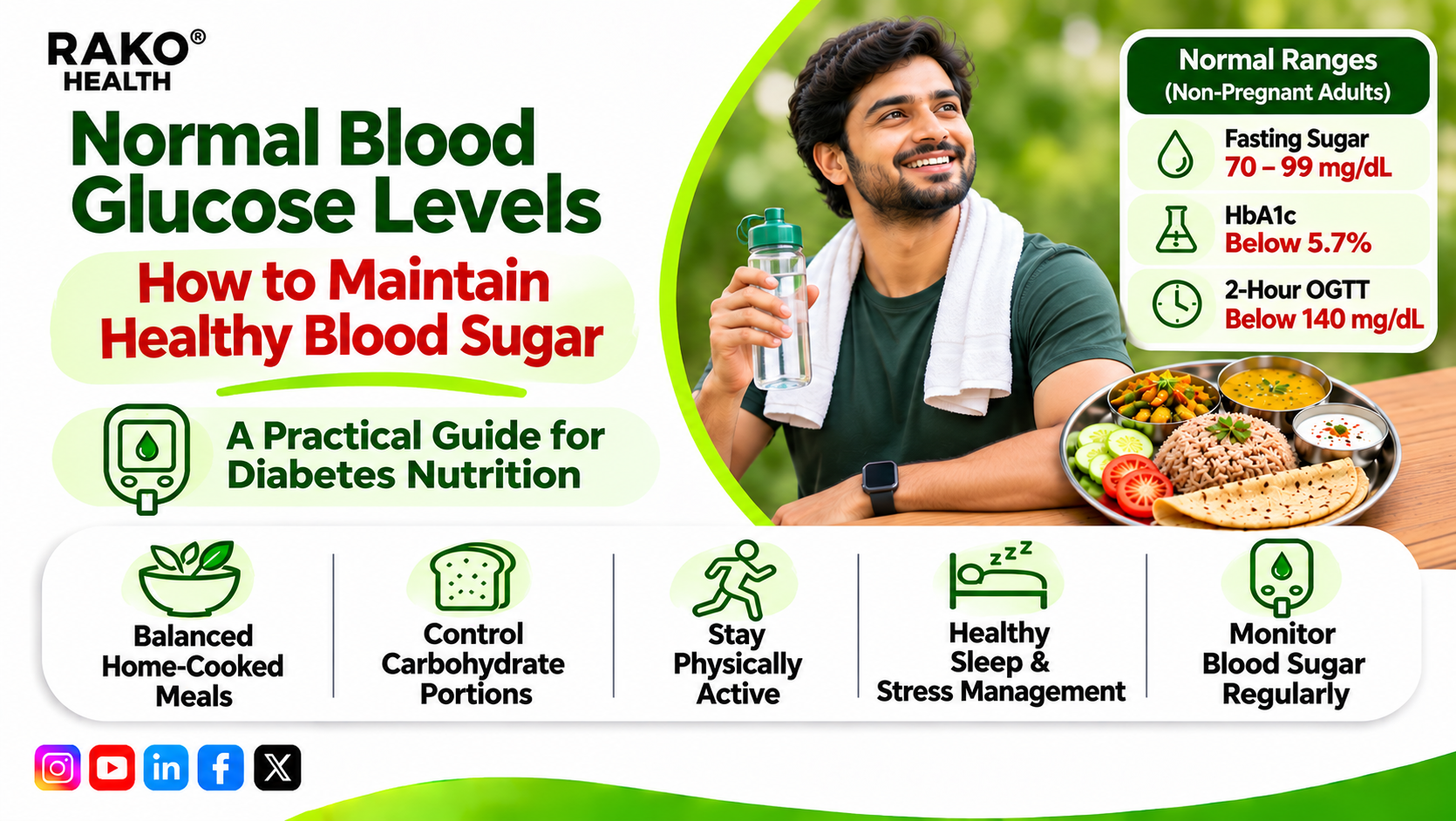
Normal blood glucose levels are important for maintaining energy and supporting overall health. However, food choices, physical activity, sleep, and stress can influence blood sugar. At RAKO Health, we encourage practical diabetes nutrition through everyday home-made food. Our personalized approach includes daily cooking guidance and ingredient recommendations. Explore our Best Dietician for Diabetes resource to understand how suitable nutrition can support healthier glucose management.
What Are Normal Blood Glucose Levels?
Blood glucose refers to the amount of sugar circulating in your bloodstream. Your body uses glucose to produce energy.
However, readings change depending on meal timings and individual health conditions.
Here are commonly accepted reference ranges for non-pregnant adults without diabetes:
| Blood glucose test | Normal range |
| Fasting blood sugar | 70–99 mg/dL |
| HbA1c | Below 5.7% |
| Two-hour oral glucose tolerance test | Below 140 mg/dL |
For people with diabetes, treatment targets differ according to individual requirements.
Many non-pregnant adults with diabetes have these general targets:
- Before meals: 80–130 mg/dL.
- One to two hours after starting meals: Below 180 mg/dL.
- HbA1c: Below 7% for many adults.
Always consult your healthcare professional for personalised targets.
7 Expert Health Tips to Maintain Normal Blood Glucose Levels
Maintaining healthy blood sugar requires consistent habits rather than temporary dietary restrictions.
Here are seven practical strategies.
1. Choose Balanced Home-Cooked Meals
Prepare meals using vegetables, whole grains, protein sources, and suitable healthy fats.
For example, combine dal, vegetable curry, curd, and appropriately portioned rice.
Additionally, include protein-rich foods such as eggs, paneer, fish, or chickpeas.
2. Control Your Carbohydrate Portions
Rice, roti, dosa, and other carbohydrates can remain part of your meals.
However, portion sizes and overall meal composition matter.
Therefore, combine carbohydrate foods with protein and fibre-rich vegetables.
Explore our Diabetes Diet recommendations for practical Indian meal ideas.
3. Avoid Frequent Sugary Drinks
Sweetened beverages can increase blood glucose quickly.
Instead, choose water or suitable unsweetened drinks. Also, limit packaged juices and sugary beverages.
4. Stay Physically Active
Regular movement supports insulin sensitivity and overall metabolic health.
For many adults, 150 minutes of moderate physical activity weekly provides a useful general target.
Furthermore, short walks after meals may help manage post-meal glucose.
5. Maintain Consistent Meal Timings
Skipping meals or eating irregularly can complicate glucose management, particularly when taking certain diabetes medications.
Therefore, follow meal timings suited to your treatment plan.
6. Prioritise Sleep and Stress Management
Poor sleep and ongoing stress can influence blood glucose regulation.
Consequently, maintain a consistent sleep routine and practise relaxing activities.
7. Monitor Your Blood Sugar Regularly
Glucose monitoring helps you understand how your body responds to different meals.
Additionally, HbA1c testing provides information about average blood glucose over approximately three months.
Follow your healthcare professional's recommended testing schedule.
How RAKO Health Helps Maintain Normal Blood Glucose Levels with Home Food
Healthy diabetes management should fit into your everyday kitchen.
At RAKO Health, we focus on completely home-made food recommendations rather than expensive special diet products.
Our approach includes:
- Understanding your existing food habits.
- Reviewing relevant medical reports and nutritional needs.
- Identifying lifestyle factors affecting your health.
- Recommending suitable everyday ingredients.
- Providing daily guidance on what to cook.
- Explaining healthier cooking methods and portion sizes.
For example, we can guide you on preparing balanced breakfasts, vegetable-rich lunches, and suitable dinners using familiar Indian ingredients.
Moreover, our recommendations consider individual health conditions and food preferences.
Discover Online Dietician Consultation for Diabetes Management to explore personalised nutritional support.
Diabetes and Prediabetes: Why Understanding Your Health Matters
Blood glucose management differs between people with normal readings, prediabetes, and diagnosed diabetes.
Prediabetes indicates higher-than-normal glucose levels without meeting diabetes diagnostic criteria.
Meanwhile, type 2 diabetes requires ongoing medical management and individualised nutrition.
RAKO Health considers relevant health information before recommending dietary changes.
We also consider associated concerns, including weight management, thyroid conditions, high blood pressure, fatty liver, and digestive health.
Learn more through our Best Dietician for Prediabetes and Best Dietician for Type 2 Diabetes Reversal resources.
Importantly, never discontinue prescribed medication without consulting your doctor.
Diabetes Nutrition Guidance for NRIs
NRIs living in the USA, UK, Canada, Australia, and the Middle East often follow different food routines.
However, maintaining normal blood glucose levels remains important wherever you live.
RAKO Health encourages practical meal planning using Indian and locally available ingredients.
Our nutritional approach can consider:
- Different cooking facilities and food availability.
- Indian and international meal preferences.
- Work schedules and irregular eating habits.
- Travel-related dietary challenges.
- Suitable portion sizes and balanced meals.
Whether you live abroad or visit Hyderabad, consistent home-cooking habits can support your nutritional goals.
Frequently Asked Questions
1. What are normal blood glucose levels in the morning?
For non-pregnant adults without diabetes, normal fasting blood glucose generally ranges from 70–99 mg/dL.
2. How can I maintain normal blood glucose levels naturally?
Choose balanced meals, exercise regularly, maintain healthy sleep habits, and monitor glucose as recommended. People with diabetes should continue prescribed treatment.
3. Can home-made Indian food help control blood sugar?
Yes. Balanced home-cooked meals can support glucose management through suitable portions, fibre, protein, and healthier cooking methods.
4. Can I eat rice while managing diabetes?
Yes. Rice can fit into a balanced diabetes diet. However, portion sizes and individual glucose responses matter.
5. Does RAKO Health provide daily cooking guidance?
RAKO Health focuses on practical home-food recommendations, including what to cook, which ingredients to select, and how to prepare balanced meals.
6. Can NRIs consult RAKO Health for diabetes nutrition?
NRIs can explore nutritional guidance based on their location, food preferences, lifestyle, and available ingredients.
7. How often should I check my blood glucose?
Testing frequency depends on your diabetes status, medication, and treatment plan. Follow your healthcare professional's recommendations.
Explore Personalised Diabetes Nutrition with RAKO Health
Maintaining healthy blood glucose does not require giving up every favourite Indian food. Instead, focus on understanding your body and making suitable everyday food choices.
RAKO Health brings together personalized nutrition, home-made food guidance, ingredient recommendations, and practical cooking support.
Whether you are managing diabetes, addressing prediabetes, or improving your family's eating habits, explore how our approach can fit into your daily routine.
Related Blogs
Average Blood Sugar Level Chart for Adults, Seniors, and Children: A Complete Guide
Insulin Resistance Symptoms: 10 Warning Signs You Should Never Ignore
What Is Insulin Resistance? Understanding Your Metabolic Health
Average Blood Sugar Level Chart for Adults, Seniors, and Children: A Complete Guide
Insulin Resistance Symptoms: 10 Warning Signs You Should Never Ignore
What Is Insulin Resistance? Understanding Your Metabolic Health
Average Blood Sugar Level Chart for Adults, Seniors, and Children: A Complete Guide
Insulin Resistance Symptoms: 10 Warning Signs You Should Never Ignore
What Is Insulin Resistance? Understanding Your Metabolic Health
Average Blood Sugar Level Chart for Adults, Seniors, and Children: A Complete Guide
Insulin Resistance Symptoms: 10 Warning Signs You Should Never Ignore