
Probiotics for Gut Health: Benefits, Best Foods and What Science Says


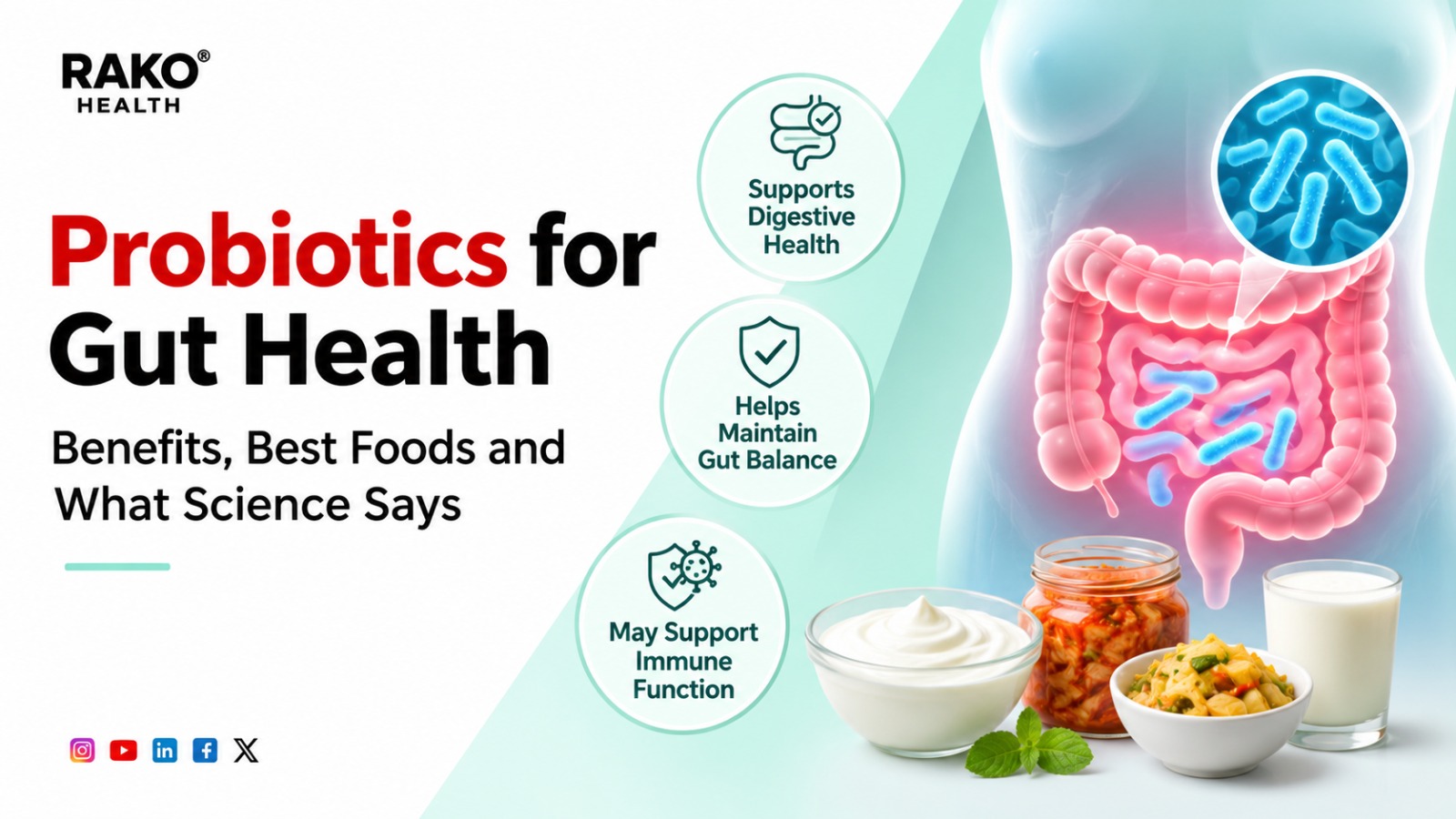
Probiotics for Gut Health play an important role in supporting digestion and maintaining a balanced gut microbiome. These beneficial microorganisms may support intestinal function, immune regulation, and digestive comfort. However, their benefits depend on the specific strain and individual health needs.
Your digestive system contains trillions of microorganisms, including bacteria, fungi, and viruses. Together, they form the gut microbiome, which influences digestion, nutrient absorption, and overall health. When this microbial balance changes, digestive problems such as bloating, constipation, and diarrhea may develop.
Understanding probiotics can help you make informed dietary choices. At RAKO Health, our gut health helps individuals explore personalised approaches to digestive wellness.
What Are Probiotics?
Probiotics are live microorganisms that provide health benefits when consumed in adequate amounts.
Commonly studied probiotic microorganisms include:
- Lactobacillus: Certain bacterial strains may support digestion and intestinal health.
- Bifidobacterium: These beneficial bacteria help maintain microbial balance.
- Saccharomyces boulardii: A beneficial yeast studied for its potential digestive health benefits.
However, not every microorganism found in fermented foods qualifies as a scientifically established probiotic. Benefits depend on the specific strain, dosage, product quality, and health condition.
How Do Probiotics Support Gut Health?
Scientific research identifies several ways probiotics for gut health may influence digestive function.
1. Support the Intestinal Barrier
The intestinal lining protects the body from potentially harmful substances. Certain probiotic strains may support this barrier by influencing mucus production and proteins that regulate intestinal permeability.
2. Maintain Gut Microbiome Balance
Probiotics interact with existing microorganisms in the digestive system. Additionally, some strains compete with harmful microbes for nutrients and attachment sites.
3. Support Immune Regulation
The gut plays an important role in immune function. Certain probiotics may influence immune signalling and inflammatory responses. However, not every probiotic product strengthens immunity or prevents disease.
4. Influence Beneficial Gut Metabolites
Gut microorganisms ferment dietary carbohydrates to produce short-chain fatty acids (SCFAs).
These include:
- Acetate
- Propionate
- Butyrate
These compounds contribute to intestinal function, immune regulation, and gut barrier maintenance. Probiotics may influence these microbial processes, although their effects vary between strains.
What Are the Potential Benefits of Probiotics?
Scientific studies suggest that selected probiotic strains may provide benefits for particular digestive conditions.
Potential benefits include:
- Antibiotic-associated diarrhea: Certain strains may reduce the risk of diarrhea associated with antibiotic use.
- Infectious diarrhea: Some probiotics may reduce symptom duration in selected populations, although findings remain inconsistent.
- Irritable bowel syndrome (IBS): Certain strains may improve bloating, abdominal pain, and overall symptoms.
- Constipation: Selected probiotics may improve stool frequency and consistency in some individuals.
- Inflammatory bowel disease (IBD): Some formulations show potential benefits, but evidence varies by condition.
Importantly, probiotics do not provide identical benefits for everyone. They should never replace prescribed IBD treatment.
Which Foods Contain Probiotics?
Several traditional Indian and international foods contain live microorganisms that may contribute to gut health.
Consider including these foods in a balanced diet:
- Curd (Dahi): May contain live lactic acid bacteria, depending on preparation and storage.
- Yogurt with live cultures: Contains microorganisms that may support digestive health.
- Kefir: This fermented milk drink contains a mixture of microorganisms.
- Fermented vegetables: Certain unpasteurised varieties contain live lactic acid bacteria.
- Probiotic-fortified foods: Manufacturers add specific microbial strains to selected products.
However, heating, processing, and storage can reduce microbial survival. Therefore, not every fermented food provides clinically established probiotic benefits.
Prebiotics vs Probiotics: What Is the Difference?
Although these terms sound similar, they perform different functions.
Probiotics:
- Live microorganisms that provide demonstrated health benefits.
- Examples include selected Lactobacillus and Bifidobacterium strains.
- May influence intestinal microbial activity and digestive function.
Prebiotics:
- Substances selectively used by beneficial microorganisms.
- Examples include inulin, fructooligosaccharides, and galactooligosaccharides.
- Support beneficial microbial growth and activity.
When probiotics and prebiotics work together in a formulation designed to provide health benefits, they are called synbiotics.
Prebiotic-rich foods include garlic, onions, asparagus, and whole grains. However, some contain fermentable carbohydrates that may trigger digestive symptoms in people with IBS.
Read more about the Low-FODMAP Diet for IBS: Foods to Eat, Avoid and How It Works to understand food triggers and suitable dietary choices.
Are Probiotic Supplements Necessary for Everyone?
No. Probiotic supplements are not automatically necessary for everyone seeking better gut health.
Scientific evidence highlights three important considerations:
- Probiotic benefits depend on individual microbial strains.
- Higher colony-forming units (CFUs) do not automatically mean better results.
- More bacterial species do not necessarily provide greater benefits.
Instead, a varied diet that supports beneficial gut microorganisms provides an important foundation for digestive health.
Probiotic supplements may help in specific situations with appropriate professional guidance.
For personalized nutritional recommendations, working with the best dietician for gut health can help you understand your dietary requirements, identify potential food triggers, and make informed nutrition choices. Individuals also exploring the best dietician for weight loss can benefit from sustainable nutrition planning through RAKO Health.
Are Probiotics Safe?
Most healthy individuals tolerate probiotics well. However, some people experience temporary gas, bloating, or digestive discomfort.
Certain individuals need additional caution, including:
- People with severely weakened immune systems.
- Individuals who are seriously ill.
- People with central venous catheters.
These individuals should seek medical advice before using probiotic supplements.
Additionally, product safety, strain identification, and manufacturing quality are important considerations.
Probiotics for Gut Health: Guidance for NRIs
Indians living in the USA, UK, Canada, Australia, and other countries may experience dietary challenges when adapting to different food environments.
Traditional Indian foods such as curd, fermented vegetables, and other fermented preparations can provide dietary variety. However, individual digestive tolerance varies.
NRIs can consider these practical approaches:
- Include suitable fermented foods in balanced meals.
- Choose yogurt containing clearly identified live cultures.
- Introduce probiotic-rich foods gradually.
- Monitor bloating and other digestive symptoms.
- Seek professional advice before starting supplements.
- Maintain familiar Indian food habits while making suitable nutritional adjustments.
At RAKO Health, we recognise that dietary requirements differ across individuals and lifestyles. Under the guidance of Dr. Meram Chalamaiah, individuals can explore personalized nutrition approaches that consider their food preferences, digestive needs, and health goals.
Scientific References
- Rau S, Gregg A, Yaceczko S, Limketkai B. Prebiotics and Probiotics for Gastrointestinal Disorders. Nutrients. 2024;16(6):778. https://doi.org/10.3390/nu16060778
- Ranjha MMA Nawaz, et al. Nutritional and Health Potential of Probiotics: A Review. Applied Sciences. 2021;11(23):11204. https://doi.org/10.3390/app112311204
- Sarita B, Samadhan D, Hassan MZ, Kovaleva EG. A Comprehensive Review of Probiotics and Human Health: Current Prospective and Applications. Frontiers in Microbiology. 2025;15:1487641. https://doi.org/10.3389/fmicb.2024.1487641
Additional Scientific Resource: NIH – Probiotics: Health Professional Fact Sheet
Medical Disclaimer: This article provides general educational information. It does not replace individual medical assessment, diagnosis, or treatment.
Frequently Asked Questions
1. What are the main benefits of probiotics for gut health?
Selected probiotic strains may support intestinal barrier function, influence gut microorganisms, and help manage certain digestive conditions, including some types of diarrhea.
2. Can probiotics reduce bloating and gas?
Some probiotics may improve bloating in certain individuals, particularly those with IBS. However, other products may increase gas and digestive discomfort.
3. Are probiotics good for IBS?
Certain probiotics may improve IBS symptoms, including bloating and abdominal pain. However, scientific findings remain inconsistent, and benefits vary between strains.
4. Is curd a good source of probiotics?
Curd may contain live lactic acid bacteria. However, its microbial composition varies depending on preparation and storage.
5. How long does it take for probiotics to improve gut health?
There is no universal timeline. Results depend on the probiotic strain, dosage, duration, and individual health condition.
6. Can probiotics permanently change the gut microbiome?
Not necessarily. Many supplemented microorganisms do not establish permanent residence in the digestive system. Their effects may be temporary.
7. Are probiotics and prebiotics the same?
No. Probiotics are beneficial live microorganisms, whereas prebiotics are substances that beneficial microorganisms selectively use.
Explore Personalised Gut Health Support with RAKO Health
Probiotics for gut health offer promising possibilities for supporting digestive wellness. However, their effectiveness depends on the specific microorganism, dosage, and individual health requirements.
A balanced diet, appropriate food choices, and evidence-based nutritional guidance remain essential.
Explore RAKO Health's personalised nutrition programmes to understand your digestive requirements and make informed dietary choices. With expert-led guidance, you can work towards sustainable eating habits that support long-term digestive wellness.
Related Blogs
Best Dietician for Gut Health: Personalized Nutrition for Better Digestion
How to Improve Gut Health Naturally with Indian Foods
Fermented Foods for Gut Health: Best Indian Foods, Benefits and Science
Best Dietician for Gut Health: Personalized Nutrition for Better Digestion
How to Improve Gut Health Naturally with Indian Foods
Fermented Foods for Gut Health: Best Indian Foods, Benefits and Science
Best Dietician for Gut Health: Personalized Nutrition for Better Digestion
How to Improve Gut Health Naturally with Indian Foods
Fermented Foods for Gut Health: Best Indian Foods, Benefits and Science
Best Dietician for Gut Health: Personalized Nutrition for Better Digestion
How to Improve Gut Health Naturally with Indian Foods