
Low-FODMAP Diet for IBS: Foods to Eat, Avoid and How It Works


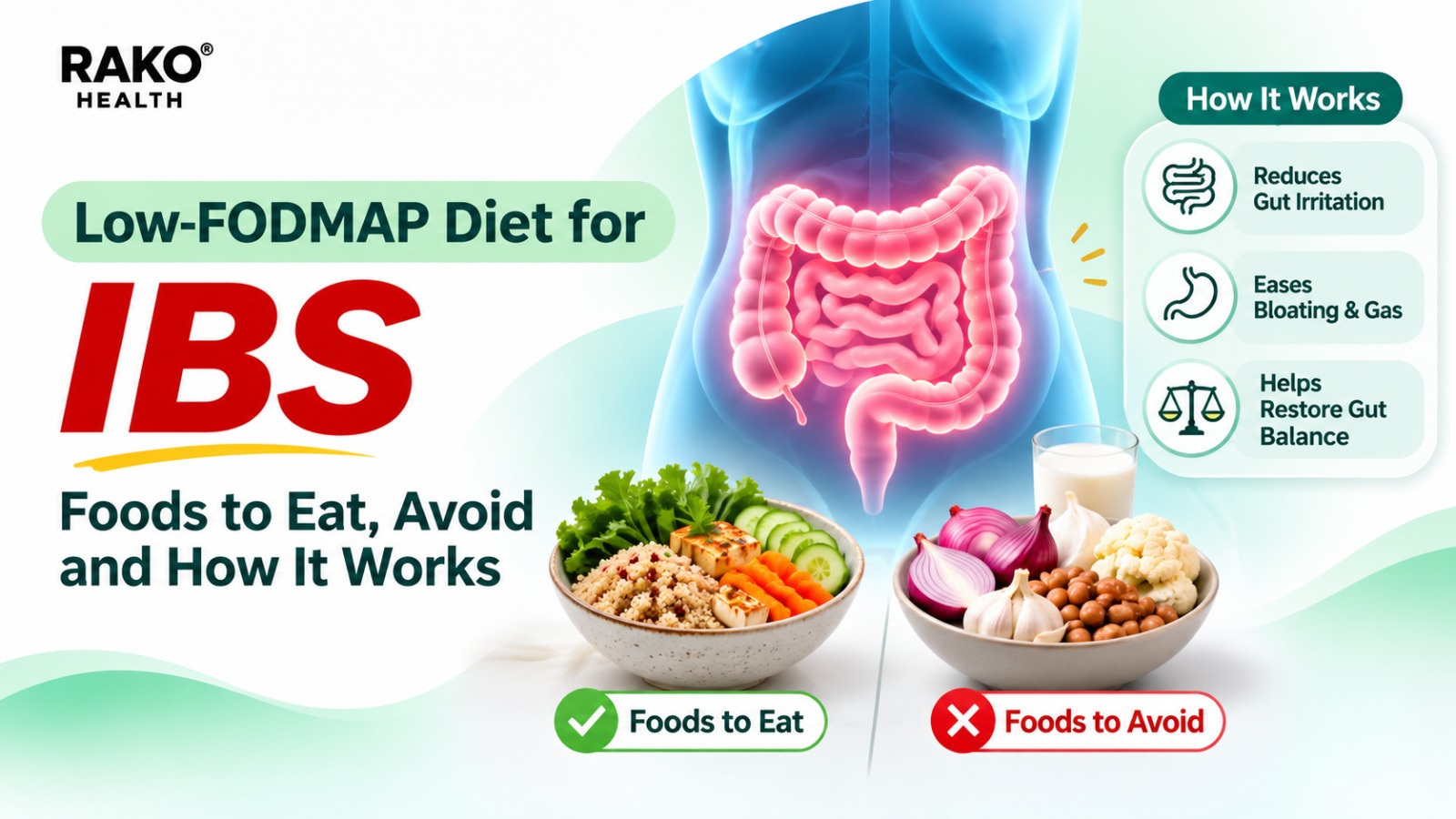
Low-FODMAP Diet for IBS can help manage bloating, abdominal pain, gas, and irregular bowel movements. For people living with Irritable Bowel Syndrome (IBS), everyday meals can sometimes trigger digestive discomfort. However, choosing suitable foods can make a meaningful difference.
At RAKO Health, we focus on personalized nutrition and sustainable digestive wellness. Our Gut Health Services help individuals understand their digestive concerns and make informed dietary choices. With expert dietary guidance, managing IBS can become easier without unnecessarily eliminating nutritious foods.
Can the Right Foods Help Relieve IBS Symptoms?
Do you experience bloating, stomach pain, excessive gas, or unpredictable bowel movements after eating? These symptoms commonly affect people with IBS.
Research suggests that a Low-FODMAP Diet for IBS may reduce abdominal pain, bloating, and diarrhoea. However, permanent food restriction is not the objective.
Instead, the approach identifies individual food triggers and suitable alternatives. Consequently, individuals can enjoy a balanced diet while managing digestive symptoms.
What Is a Low-FODMAP Diet?
FODMAP stands for Fermentable Oligosaccharides, Disaccharides, Monosaccharides and Polyols.
These short-chain carbohydrates occur naturally in several everyday foods. Some are poorly absorbed in the small intestine. Consequently, they reach the large intestine, where gut bacteria ferment them.
This process produces gas and attracts additional water into the bowel. For people with IBS, these changes can trigger:
- Abdominal bloating and discomfort.
- Excessive gas and stomach pain.
- Diarrhoea or altered bowel movements.
Importantly, FODMAP-containing foods are not unhealthy. Many provide essential nutrients and support beneficial gut bacteria.
Which Foods Are High or Low in FODMAPs?
Understanding food categories helps people make better dietary decisions. The following table highlights common higher-FODMAP foods and suitable lower-FODMAP alternatives.
| FODMAP category | Higher-FODMAP foods | Lower-FODMAP alternatives |
| Excess fructose | Apples, pears, mangoes, watermelon, honey | Oranges, kiwi, pineapple, strawberries |
| Lactose | Regular milk, yogurt, ice cream | Lactose-free milk, yogurt, suitable hard cheeses |
| Fructans | Onion, garlic, wheat bread, rye, wheat pasta | Spring onion greens, rice, oats, quinoa, potatoes |
| GOS | Chickpeas, lentils, kidney beans, cashews | Green beans, peanuts, walnuts, sesame seeds |
| Sorbitol | Apples, pears, peaches, plums | Oranges, kiwi, strawberries |
| Mannitol | Cauliflower, mushrooms | Carrots, spinach, cucumber, potatoes |
Important: FODMAP content depends on serving size, ripeness, preparation, and processing. Some foods contain multiple FODMAP categories. Therefore, higher-FODMAP foods do not require permanent elimination.
How Does a Low-FODMAP Diet Work?
A structured FODMAP Diet for IBS generally involves three stages.
- Short-term restriction: Reduce higher-FODMAP foods for approximately 2–6 weeks while monitoring symptoms.
- Systematic reintroduction: Introduce individual FODMAP groups gradually to identify triggers and tolerated quantities.
- Personalisation: Develop a balanced, flexible diet using foods that suit individual digestive tolerance.
Ultimately, personalisation matters most. It helps prevent unnecessary restrictions and supports long-term nutritional health.
What Does Scientific Research Show?
Clinical studies support the Low-FODMAP Diet for IBS as an effective option for short-term symptom management. However, individual responses vary.
Research also highlights potential changes in beneficial gut bacteria, particularly Bifidobacterium, during restriction.
Therefore, professional guidance and systematic food reintroduction remain important. The diet does not cure IBS or suit everyone.
Does a Low-FODMAP Diet Affect Gut Bacteria?
The gut microbiota contains trillions of microorganisms. These support digestion, nutrient metabolism, and intestinal health.
Many FODMAP-containing foods provide fermentable carbohydrates that nourish beneficial bacteria. However, restricting these foods can reduce fermentation and gas production.
Although this may improve IBS symptoms, studies have reported reductions in certain beneficial bacteria.
So, how can individuals manage symptoms while supporting gut health?
The answer involves avoiding prolonged restriction and gradually restoring tolerated foods. Personalised nutrition can help maintain dietary diversity and microbial balance.
Why Should a Low-FODMAP Diet Not Be Followed Permanently?
The strict restriction phase is not designed for lifelong use. Prolonged food avoidance may contribute to:
- Reduced dietary fibre and prebiotic intake.
- Lower intake of certain vitamins and minerals.
- Reduced food variety and diversity.
- Changes in beneficial gut bacteria.
- Difficulty maintaining balanced eating habits.
Therefore, individuals should progress towards reintroduction and personalisation. If symptoms do not improve, reassessing the dietary approach is important.
Do All People with IBS Need a Low-FODMAP Diet?
No. IBS affects everyone differently. Some individuals improve through simpler dietary adjustments.
These include:
- Maintaining regular meal timings.
- Identifying individual food triggers.
- Adjusting fibre intake appropriately.
- Reducing consistently problematic foods.
However, others may benefit from a structured low-FODMAP approach.
For NRIs living in the USA, UK, Canada, Australia, and other countries, dietary changes can present additional challenges. Traditional Indian meals often include onion, garlic, wheat, lentils, and dairy. These ingredients may contain higher FODMAP levels.
With appropriate substitutions and portion adjustments, individuals can adapt familiar Indian meals. RAKO Health encourages personalised dietary guidance rather than unnecessary restrictions.
People seeking the best dietician for gut health or the best dietician for weight loss can explore professional nutrition support.
For expert-led nutritional guidance, learn more about Dr. Mearam Chalamaiah and RAKO Health's approach to personalized wellness.
Scientific References
- Molina-Infante J, et al. The low-FODMAP diet for irritable bowel syndrome: Lights and shadows. Gastroenterología y Hepatología. 2016;39(2):55–65. https://doi.org/10.1016/j.gastrohep.2015.07.009
- Bertin L, et al. The Role of the FODMAP Diet in IBS. Nutrients. 2024;16:370. https://doi.org/10.3390/nu16030370
- Zhang H, Su Q. Low-FODMAP Diet for Irritable Bowel Syndrome: Insights from Microbiome. Nutrients. 2025;17:544. https://doi.org/10.3390/nu17030544
Medical disclaimer: This article provides general educational information. It does not replace individual medical assessment, diagnosis, or treatment.
Frequently Asked Questions
1. How long should I follow a low-FODMAP diet?
The initial restriction phase generally lasts 2–6 weeks under professional guidance. Reintroduction and personalisation follow when symptoms improve.
2. Is rice suitable for people with IBS?
Yes. Plain rice is naturally low in FODMAPs and generally well tolerated. However, onion and garlic in accompanying dishes may trigger symptoms.
3. Can a low-FODMAP diet cure IBS?
No. It can help manage symptoms, but it does not cure IBS.
4. Should I completely stop eating lentils and pulses?
No. Tolerance depends on the type, preparation, and serving size. Suitable portions may be reintroduced gradually.
5. Is a low-FODMAP diet the same as a gluten-free diet?
No. Low-FODMAP eating restricts certain fermentable carbohydrates. Gluten-free eating excludes gluten proteins. Wheat products may be restricted because of their fructan content.
Final Thoughts
A Low-FODMAP Diet for IBS offers a scientifically studied approach to managing digestive discomfort. However, successful management requires more than eliminating foods.
Identifying individual triggers, maintaining nutritional balance, and supporting gut bacteria are equally important.
Whether you live in India or abroad, personalised dietary planning can make IBS management more practical. Explore RAKO Health's gut health resources to learn more about sustainable digestive wellness.
Medical note: Follow a low-FODMAP diet under qualified dietitian guidance. Persistent or concerning digestive symptoms require medical evaluation.
Related Blogs
Online Dietician Consultation for IBS: Managing Bloating and Gas Naturally
Best Dietician for Irritable Bowel Syndrome (IBS): Personalized Nutrition at RAKO Health
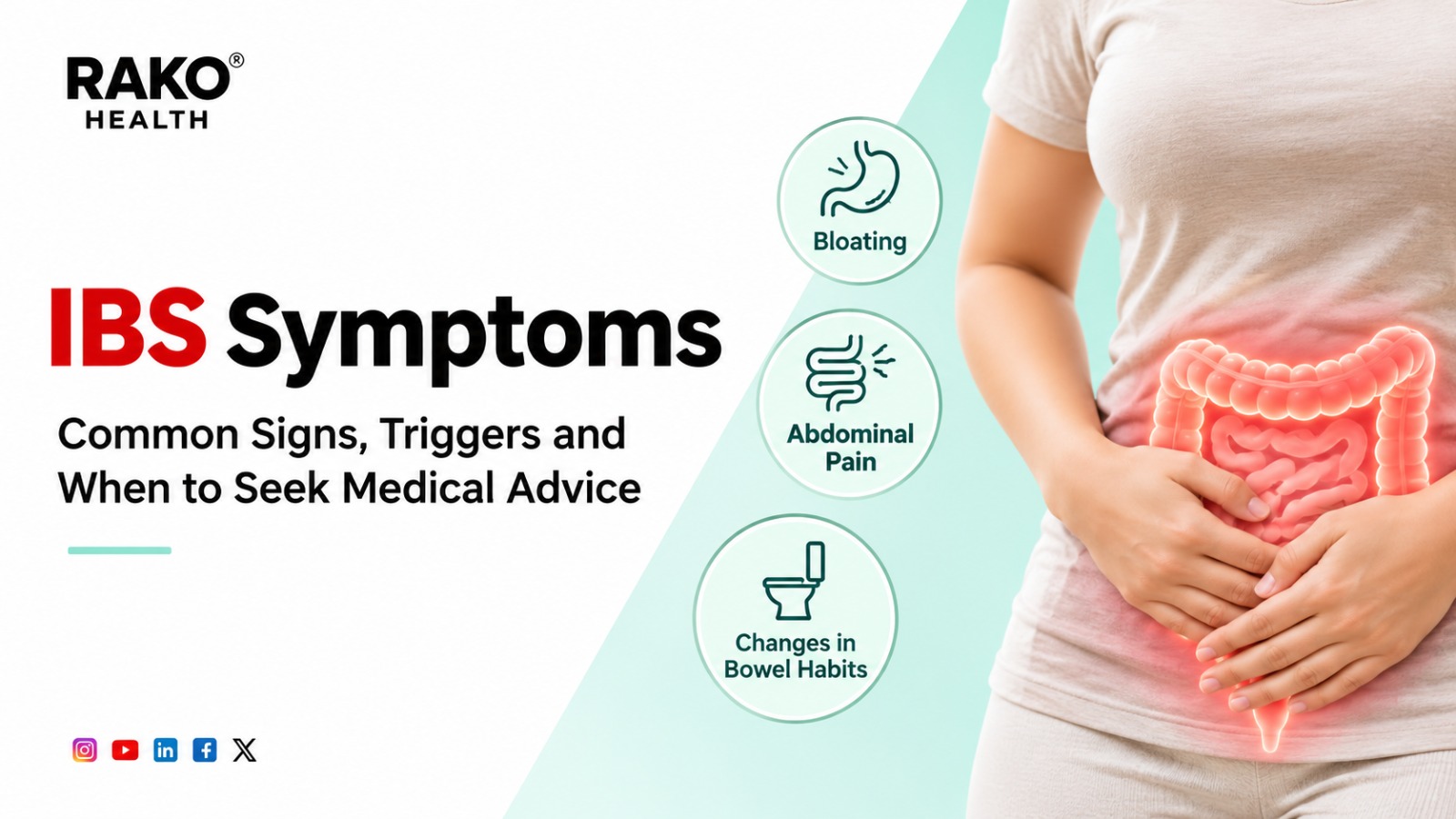
IBS Symptoms: Common Signs, Causes and When to Seek Help
Online Dietician Consultation for IBS: Managing Bloating and Gas Naturally
Best Dietician for Irritable Bowel Syndrome (IBS): Personalized Nutrition at RAKO Health
IBS Symptoms: Common Signs, Causes and When to Seek Help
Online Dietician Consultation for IBS: Managing Bloating and Gas Naturally
Best Dietician for Irritable Bowel Syndrome (IBS): Personalized Nutrition at RAKO Health
IBS Symptoms: Common Signs, Causes and When to Seek Help
Online Dietician Consultation for IBS: Managing Bloating and Gas Naturally
Best Dietician for Irritable Bowel Syndrome (IBS): Personalized Nutrition at RAKO Health