
Fermented Foods for Gut Health: Best Indian Foods, Benefits and Science


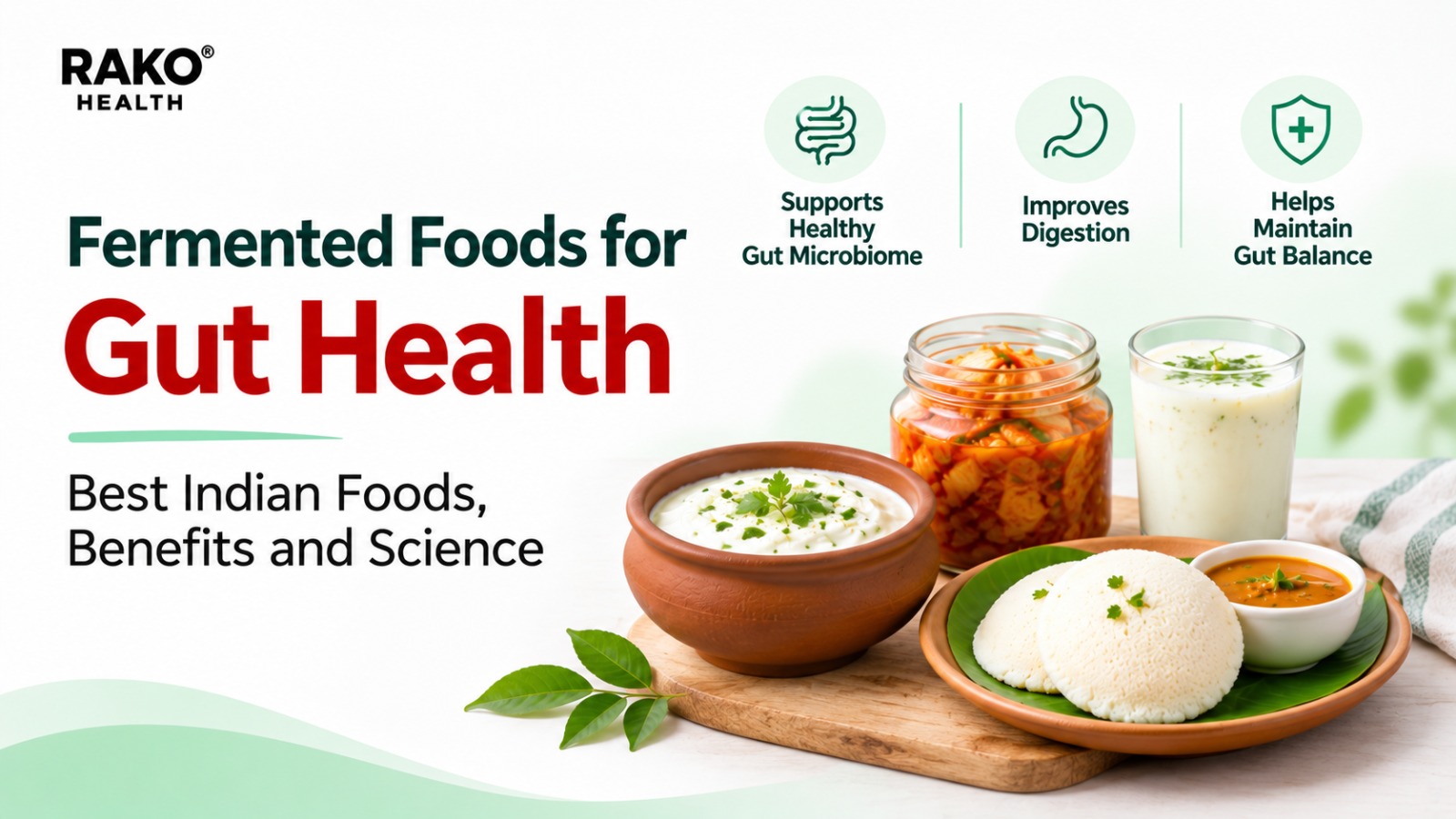
Fermented Foods for Gut Health offer a traditional way to support digestion and improve dietary diversity. From homemade curd to idli and fermented rice, Indian cuisine includes several naturally fermented foods. These foods contain fermentation-derived compounds that may influence digestion, nutrient availability, and gut microorganisms.
Scientific research increasingly explores how fermented foods affect the gut microbiome. However, their benefits depend on preparation methods, microbial composition, and individual digestive tolerance.
At RAKO Health, our gut health services help individuals explore personalised nutrition approaches for better digestive wellness.
What Are Fermented Foods and How Do They Support Gut Health?
Fermented foods develop through the activity of microorganisms such as bacteria and yeasts. These microorganisms transform carbohydrates, proteins, and other food components.
During fermentation, microorganisms produce organic acids, enzymes, and biologically active compounds. Consequently, fermentation can improve food preservation, digestibility, and nutrient availability.
Some fermented foods contain live microorganisms when consumed. However, cooking and processing can destroy these microorganisms.
How Do Fermented Foods Support Gut Health?
Research suggests several possible ways fermented foods influence digestive wellness.
- Support gut microbiome diversity: Certain fermented foods introduce live microorganisms that interact with existing intestinal bacteria. Some human studies report improvements in microbial diversity.
- Improve digestibility: Microbial enzymes break down certain food components. For example, fermentation reduces some lactose in dairy products.
- Improve nutrient availability: Fermentation can reduce phytates, which interfere with mineral absorption. Therefore, certain nutrients become more accessible.
- Produce beneficial compounds: Fermentation generates organic acids, bioactive peptides, and microbial metabolites. These compounds may influence intestinal function and immune signalling.
However, researchers still need larger human studies to confirm several potential benefits.
Best Traditional Indian Fermented Foods for Gut Health
India offers a wide variety of fermented foods prepared from milk, rice, lentils, millets, and soybeans.
Some popular options include:
- Curd (Dahi): Provides protein, calcium, and live lactic acid bacteria when properly prepared and stored.
- Idli: Fermented rice and urad dal batter may improve digestibility and nutrient availability. However, steaming destroys most live microorganisms.
- Dosa: Fermentation changes the nutritional characteristics of rice and lentil batter. Cooking reduces microbial survival.
- Dhokla: Fermented cereal and pulse batter may offer improved digestibility. Steaming reduces live microorganisms.
- Fermented rice (Pazhaya Sadam or Pakhala): Traditional preparations contain fermentation-associated microorganisms. Their composition depends on preparation and storage.
- Ragi Ambali: Fermented finger millet preparations may improve nutrient availability and digestibility.
- Kambu Koozh: This traditional pearl millet preparation contains fermentation-derived compounds.
- Kinema and Hawaijar: These fermented soybean foods contain microbial enzymes and protein-derived compounds.
Curd remains a practical everyday choice because it provides valuable nutrients alongside fermentation-associated microorganisms.
Importantly, idli, dosa, and dhokla offer nutritional benefits but are not reliable sources of live probiotics after cooking.
For more information about live beneficial microorganisms, explore our article on Probiotics for Gut Health: Benefits, Best Foods and What Science Says.
International Fermented Foods That Support Digestive Health
Fermentation also plays an important role in international food traditions.
Consider these examples:
- Kefir: Originating from the Caucasus region, this fermented milk drink contains different bacteria and yeasts.
- Kimchi: This Korean fermented vegetable preparation may contain live lactic acid bacteria.
- Sauerkraut: This fermented cabbage dish contains live microorganisms when unpasteurised.
- Tempeh: This Indonesian fermented soybean food offers protein and modified nutritional characteristics.
- Miso: This Japanese fermented soybean paste contains fermentation-derived compounds. However, it can contain considerable sodium.
- Kombucha: This fermented tea contains organic acids. Its sugar, alcohol, and microbial content vary.
Nevertheless, international fermented foods are not automatically better than traditional Indian options.
Are All Fermented Foods Probiotic Foods?
No. Fermented foods and probiotics have different scientific definitions.
- Fermented foods: Foods transformed through microbial activity. They may provide nutritional and digestive benefits.
- Probiotics: Live microorganisms that demonstrate health benefits when consumed in adequate amounts.
For example, ordinary curd and fermented rice may contain beneficial microorganisms. However, they cannot automatically qualify as clinically validated probiotic products.
Similarly, cooked idli and dosa retain fermentation-related nutritional changes despite losing most live microorganisms.
Can Fermented Foods Help with IBS and Bloating?
Fermented foods may affect people with Irritable Bowel Syndrome (IBS) differently.
Some individuals tolerate curd or yogurt better than regular milk. Others experience bloating, abdominal discomfort, or diarrhea.
These differences may depend on:
- Lactose content.
- Fermentable carbohydrates.
- Individual food sensitivities.
- Serving sizes.
- Existing digestive conditions.
Therefore, identifying personally tolerated foods is more useful than consuming every fermented food.
If you experience recurring digestive discomfort, read IBS Symptoms: Common Signs, Causes and When to Seek Help to understand symptoms that may require medical evaluation.
Additionally, individuals with IBS may benefit from learning about the Low-FODMAP Diet for IBS: Foods to Eat, Avoid and How It Works before making major dietary changes.
How to Include Fermented Foods in Your Daily Diet
A gradual approach helps you understand how your digestive system responds to fermented foods.
Follow these practical steps:
- Start with familiar foods such as plain curd or properly prepared idli.
- Introduce one new fermented food at a time.
- Choose unsweetened products whenever possible.
- Monitor bloating, gas, and bowel changes.
- Consider sodium content when choosing fermented products.
- Maintain proper food hygiene and refrigeration.
Home fermentation requires careful preparation and safe storage. In particular, improperly stored cooked rice can create foodborne illness risks.
Fermented Foods for Gut Health: Dietary Guidance for NRIs
Indians living in the USA, UK, Canada, Australia, and other countries may find it challenging to maintain familiar food habits.
However, several traditional Indian fermented foods remain accessible through Indian grocery stores and local food markets.
NRIs can consider these practical options:
- Choose plain curd or yogurt containing live cultures.
- Prepare idli and dosa using traditional fermentation methods.
- Explore suitable fermented millet preparations.
- Check product labels for added sugar and sodium.
- Introduce unfamiliar fermented foods gradually.
At RAKO Health, we recognise that nutritional needs vary with lifestyle, location, and food preferences. With guidance from Dr. Meram Chalamaiah, individuals can explore personalized nutrition approaches that support digestive wellness.
Working with the best dietician for gut health can also help identify suitable fermented foods and create sustainable dietary plans.
Scientific References
- Sampsell K, Marcolla CS, Tapping S, et al. Current Research in Fermented Foods: Bridging Tradition and Science. Advances in Nutrition. 2025;16:100554.
- Park I, Mannaa M. Fermented Foods as Functional Systems: Microbial Communities and Metabolites Influencing Gut Health and Systemic Outcomes. Foods. 2025;14(13):2292.
- Raali R, Sampath N, Guruganesan RS, et al. Unlocking the Health Potential of Fermented Foods: Insights from Traditional Indian Diets. Frontiers in Microbiology. 2026;17:1860268.
Medical Disclaimer: This article provides general educational information. It does not replace individual medical assessment, diagnosis, or treatment.
Frequently Asked Questions
1. Which Indian fermented food is best for gut health?
Plain curd is a practical choice for many people. It provides protein, calcium, and live starter microorganisms. However, no single fermented food suits everyone.
2. Are idli and dosa good for gut health?
Yes. Fermentation may improve their digestibility and nutritional characteristics. However, cooking destroys most live microorganisms, so they are not reliable probiotic sources.
3. Is fermented rice good for gut bacteria?
Traditional fermented rice may contain microorganisms with potential beneficial properties. However, strong human clinical evidence remains limited. Safe preparation and storage are essential.
4. Can fermented foods reduce bloating and constipation?
Some fermented foods may support digestive function in certain individuals. However, others may increase bloating, particularly in people with IBS or food intolerances.
5. Can fermented foods improve diabetes or support weight loss?
Research explores possible connections between fermented foods and metabolic health. However, current evidence cannot establish that fermented foods independently cause weight loss or reverse diabetes.
6. Can I eat fermented foods every day?
Many people can enjoy properly prepared fermented foods regularly. However, consider your nutritional needs, digestive tolerance, added sugar, sodium, and food safety.
7. Are Indian fermented foods better than international fermented foods?
Neither category is universally superior. Indian foods such as curd and idli offer familiar dietary options. International foods such as kefir and kimchi provide different microbial and nutritional characteristics.
Explore Personalised Gut Health Support with RAKO Health
Traditional fermented foods offer an interesting combination of cultural knowledge, nutritional diversity, and emerging scientific evidence.
However, choosing suitable foods requires understanding individual digestive needs and food tolerance.
RAKO Health encourages balanced nutrition and personalised dietary approaches rather than unnecessary food restrictions. Explore our digestive wellness resources to discover practical ways to support your gut health.
Related Blogs
Online Dietitian for Fatty Liver: Personalised Diet Consultation in India

Probiotics for Gut Health: Benefits, Best Foods and What Science Says

Best Dietician for Gut Health: Personalized Nutrition for Better Digestion
Online Dietitian for Fatty Liver: Personalised Diet Consultation in India
Probiotics for Gut Health: Benefits, Best Foods and What Science Says
Best Dietician for Gut Health: Personalized Nutrition for Better Digestion
Online Dietitian for Fatty Liver: Personalised Diet Consultation in India
Probiotics for Gut Health: Benefits, Best Foods and What Science Says
Best Dietician for Gut Health: Personalized Nutrition for Better Digestion
Online Dietitian for Fatty Liver: Personalised Diet Consultation in India
Probiotics for Gut Health: Benefits, Best Foods and What Science Says