
How to Improve Gut Health Naturally with Indian Foods


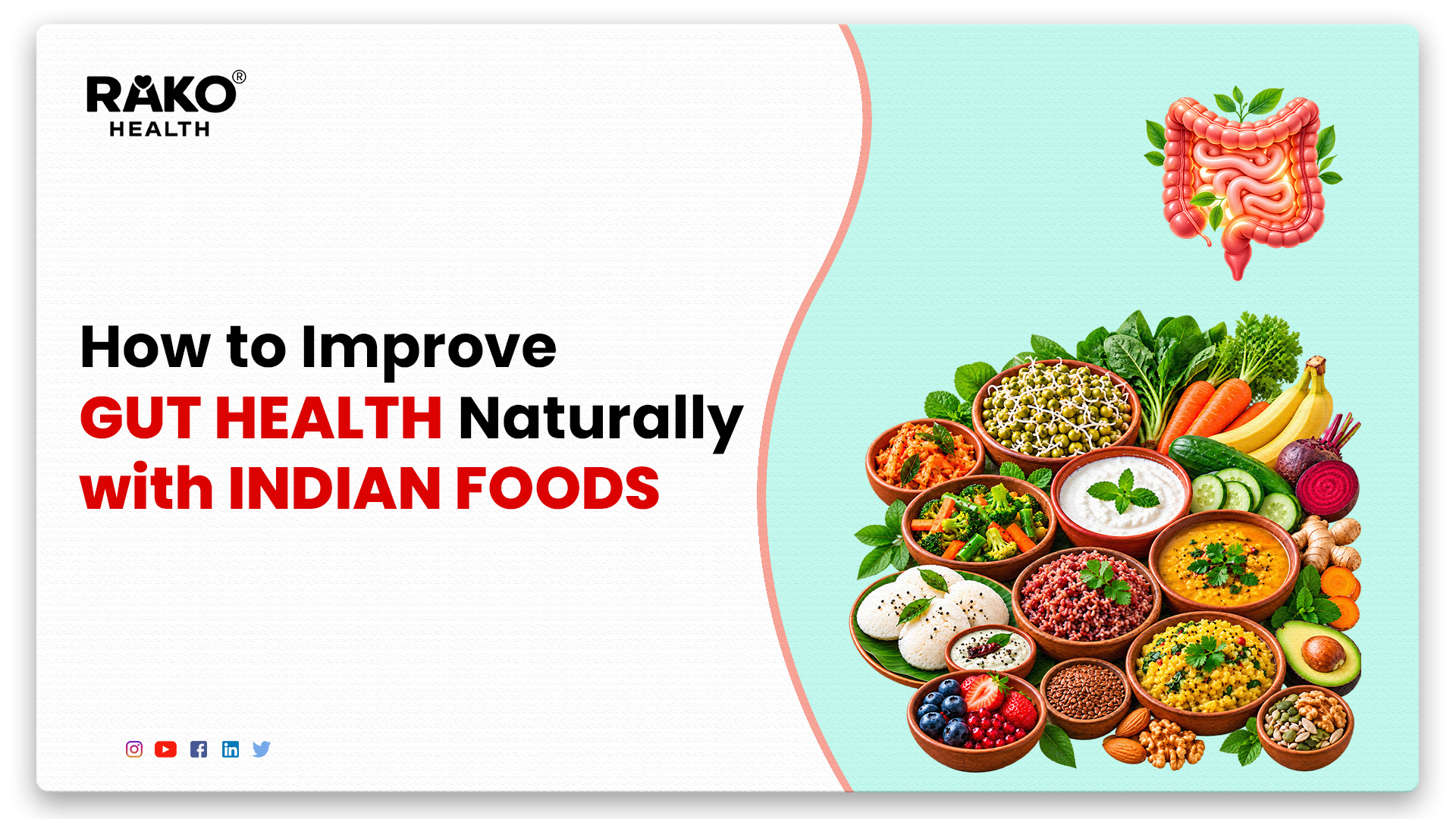
How to Improve Gut Health Naturally starts with understanding how everyday food choices influence the trillions of microorganisms living inside your digestive system.
Your gut does much more than digest food. It helps your body absorb nutrients, supports immune function, and communicates with other organs.
If you frequently experience bloating, gas, constipation, or digestive discomfort, understanding your gut health is an important starting point.
The good news is that supporting your gut does not necessarily require expensive supplements, imported superfoods, or complicated diets. Many everyday Indian foods can contribute to a gut-friendly eating pattern, including for Non-Resident Indians (NRIs) living abroad.
What Is Gut Health and Why Is It Important?
Your digestive tract contains a large community of microorganisms, including bacteria, viruses, and fungi. Together, they form the gut microbiome.
Many of these microorganisms perform useful functions. They help break down certain food components, produce beneficial substances, and interact with your immune system.
A healthy gut microbiome is not simply about having more bacteria. Instead, it involves maintaining a functioning, diverse microbial community suited to your body.
When the composition or function of these microorganisms becomes disturbed, it is sometimes called gut dysbiosis. Research has linked gut dysbiosis with digestive disorders, obesity, diabetes, and inflammatory conditions. However, an association does not necessarily mean dysbiosis directly causes these diseases.
For personalized nutrition guidance, explore the RAKO Health Gut Health Program.
How Does Food Influence Your Gut Bacteria?
Every time you eat, you feed your body and some of the microorganisms living in your intestine.
Certain food components, especially dietary fibre and resistant starch, escape complete digestion in the small intestine. When they reach the large intestine, gut bacteria can ferment them and produce substances called short-chain fatty acids (SCFAs).
One important SCFA is butyrate, which provides energy to cells lining the colon and helps support intestinal barrier function.
Research published in the International Journal of Molecular Sciences explains how dietary fibre, proteins, and fats can influence gut microorganisms and their metabolic activities (Zhang et al., 2022). Therefore, food quality and dietary variety matter, not just calorie intake.
7 Everyday Indian Foods That Can Support Gut Health
1. Vegetables
Vegetables provide fibre and plant compounds that support digestive health.
Include a variety of vegetables, such as carrots, beans, leafy greens, bottle gourd, and pumpkin. Different vegetables contain different types of fibre, making variety useful.
2. Fruits
Fruits provide fibre, water, and naturally occurring plant compounds.
Guava, papaya, oranges, apples, and bananas can be part of a gut-friendly diet. Whole fruits are generally preferable to fruit juices because they retain more fibre.
3. Dal and Legumes
Moong dal, masoor dal, chickpeas, and other pulses provide protein along with fibre.
They can support a balanced diet while supplying nutrients used by intestinal microorganisms. If legumes cause excessive gas, begin with smaller portions, soak them properly, and cook them thoroughly.
4. Whole Grains
Whole wheat, oats, millets, and other whole grains provide dietary fibre.
Rice can also remain part of a healthy Indian diet. There is no need to eliminate rice solely to improve gut health. Instead, consider portion sizes, preparation methods, and overall meal composition.
5. Curd and Other Fermented Foods
Curd containing live cultures can provide microorganisms commonly used in fermented foods.
Traditional foods such as idli and dosa are also prepared through fermentation, although cooking changes the number of live microorganisms present. However, not every fermented food qualifies as a clinically proven probiotic.
6. Nuts and Seeds
Almonds, walnuts, flaxseeds, and other seeds provide fibre, healthy fats, and plant compounds.
Small portions can be included as part of a varied eating pattern.
7. Cooked and Cooled Starchy Foods
Cooking and cooling some starchy foods, including rice and potatoes, can increase their resistant starch content.
Resistant starch can serve as a substrate for certain gut microorganisms. However, this does not make rice or potatoes calorie-free or automatically suitable in unlimited quantities. Refrigerate cooked rice promptly and handle leftovers safely.
Foods and Habits That May Negatively Affect Gut Health
Research suggests that diets consistently high in highly processed foods and low in dietary fibre may be associated with less favourable gut microbial patterns.
Consider limiting frequent consumption of:
- Sugary drinks and excessive sweets
- Deep-fried snacks
- Processed meats
- Low-fibre convenience foods
- Highly repetitive diets with very little plant-food variety
Occasional consumption of these foods does not automatically damage your gut. Instead, focus on your overall dietary pattern.
How to Improve Gut Health Naturally with Indian Foods
Follow these practical steps to support your digestive health:
- Include a variety of vegetables and whole fruits in your meals.
- Add dal, legumes, and other fibre-rich foods regularly.
- Choose whole grains according to your nutritional needs.
- Include curd or other suitable fermented foods if you tolerate them.
- Increase fibre gradually and drink adequate fluids.
- Observe individual food triggers rather than eliminating entire food groups unnecessarily.
Gut Health Tips for NRIs Living Abroad
NRIs can maintain familiar Indian eating habits while living in the United States or other countries.
For example, choose available lentils, vegetables, oats, plain yogurt, nuts, and whole grains. Moreover, adapt traditional meals to local availability instead of relying on expensive imported supplements or restrictive diets.
For personalized nutrition guidance, explore the Best Dietician for Gut Health
Hyderabad residents and NRIs seeking nutrition guidance can also explore the Best Dietician in Hyderabad.
Can Improving Gut Health Help with Bloating and Constipation?
Dietary changes can improve some digestive symptoms, but the right approach depends on the underlying problem.
For example, gradually increasing fibre and drinking adequate fluids may help some people with constipation. However, people with irritable bowel syndrome (IBS) may experience increased bloating when consuming certain fermentable carbohydrates.
For recurring bloating, abdominal pain, or changes in bowel habits, individualised nutrition guidance may help manage symptoms. Explore the RAKO Health IBS Management Program.
Foods considered healthy for one person may cause discomfort in another. Therefore, persistent symptoms should not be dismissed as simply having bad gut bacteria.
Do You Need Probiotic Supplements?
Not everyone needs probiotics. Different probiotic strains have different effects, and benefits depend on the condition being treated.
A probiotic that helps one digestive condition may not help another. For many healthy adults, a food-first approach is a reasonable starting point. Consider supplements according to individual needs and available evidence.
For additional information, consult the National Institutes of Health Office of Dietary Supplements — Probiotics Fact Sheet.
How RAKO Health Approaches Gut Health
At RAKO Health, we believe nutrition should be personalized rather than based on one diet chart for everyone.
Our nutrition-focused approach considers food habits, digestive symptoms, medical history, nutritional requirements, and individual food tolerance.
Whether you live in Hyderabad, elsewhere in India, or abroad as an NRI, the aim is to help you develop practical, sustainable eating habits using familiar foods.
Better gut health starts with understanding your body and making informed food choices, rather than blindly eliminating entire food groups.
Explore the RAKO Health Gut Health Program to learn more about personalised nutrition guidance.
Scientific References
- Dietary Fibre and Gut Microbiota: Research exploring interactions between dietary fibre and gut microorganisms. Read the scientific review on PubMed Central.
- Resistant Starch and Gut Health: Research discussing resistant starch, microbial fermentation, and potential health effects. Read the review on PubMed.
- National Institutes of Health — Probiotics: Information about probiotic microorganisms, potential benefits, and supplement considerations. Read the NIH fact sheet.
- Resistant Starch and the Gut Microbiome: Research examining the relationship between resistant starch and gut microorganisms. Read the review on PubMed Central.
- Gut Microbiome Responses to Resistant Starch: Research exploring how microbial communities respond to resistant starch. Read the research article.
Reference verification: Confirm each paper's exact title, authors, publication details, and relevance before publishing. These links cover related scientific topics and should not automatically be attributed to Zhang et al. (2022).
Frequently Asked Questions
Can I eat rice if I have digestive problems?
Yes, many people can include rice. The appropriate portion and preparation depend on individual symptoms and health conditions.
Is curd good for gut health?
Curd with live cultures may contribute useful microorganisms, but it is not a treatment for every digestive disorder.
How quickly can gut bacteria change after changing my diet?
Research shows that microbial composition can respond within days or weeks, but lasting health benefits depend on several factors, including long-term eating habits.
Can gut health improve without supplements?
Many people can support gut health through a varied, fibre-containing diet without routine supplementation.
Related Blogs
Best Dietician for Gut Health: Personalized Nutrition for Better Digestion
Best Dietician for Leaky Gut: Personalized Nutrition for Better Gut Health
Dr. Meram Chalamaiah is the Best Dietician in Hyderabad - Transform Your Health with Evidence-Based Nutrition
Best Dietician for Gut Health: Personalized Nutrition for Better Digestion
Best Dietician for Leaky Gut: Personalized Nutrition for Better Gut Health
Dr. Meram Chalamaiah is the Best Dietician in Hyderabad - Transform Your Health with Evidence-Based Nutrition
Best Dietician for Gut Health: Personalized Nutrition for Better Digestion
Best Dietician for Leaky Gut: Personalized Nutrition for Better Gut Health
Dr. Meram Chalamaiah is the Best Dietician in Hyderabad - Transform Your Health with Evidence-Based Nutrition
Best Dietician for Gut Health: Personalized Nutrition for Better Digestion
Best Dietician for Leaky Gut: Personalized Nutrition for Better Gut Health