
10 Best Weight Loss Protein Foods: Expert Nutrition Tips for Beginners


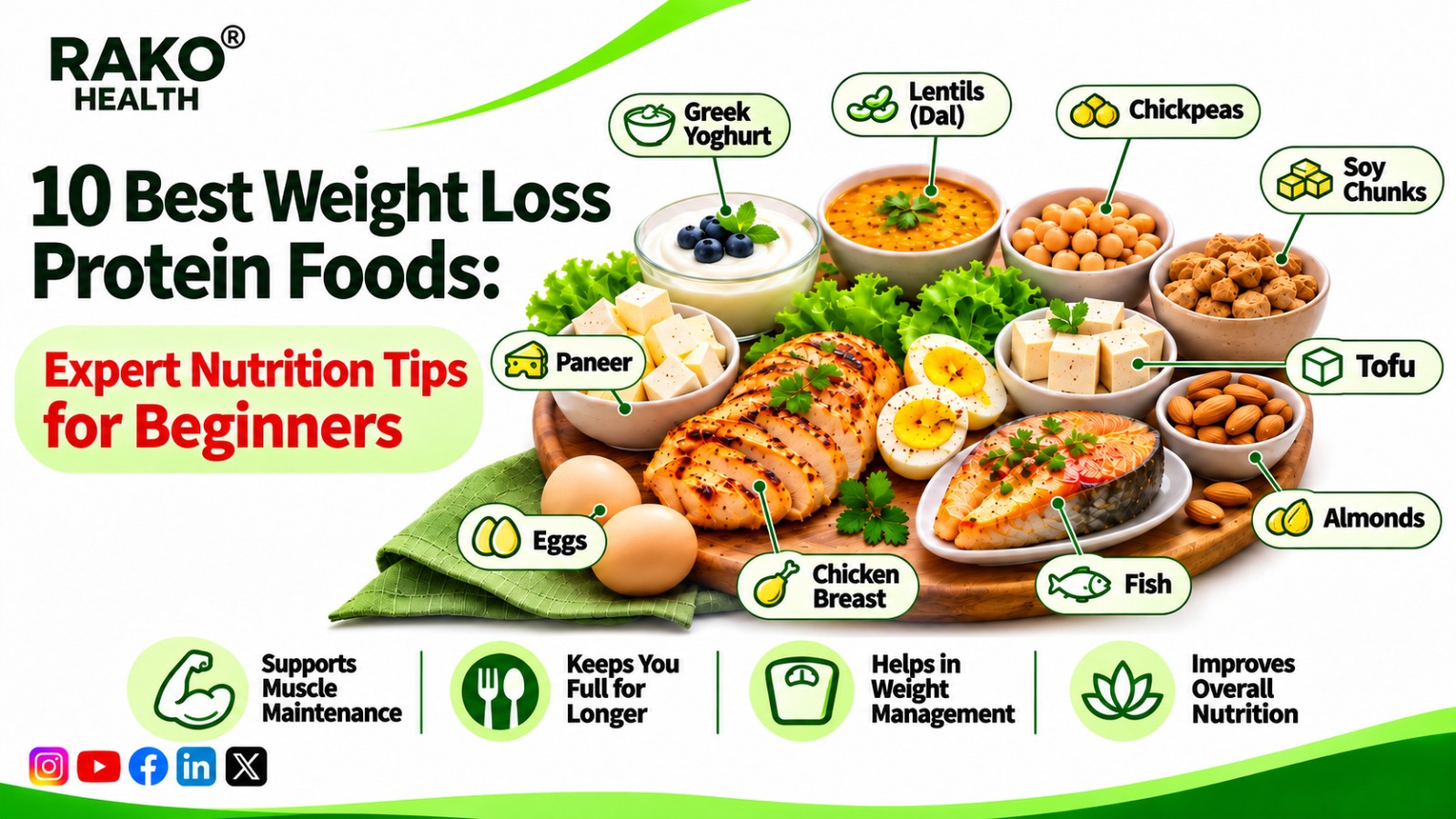
Weight loss protein foods help beginners build balanced meals, maintain muscle, and manage hunger. Choosing the right protein sources makes healthy eating easier and more enjoyable. At RAKO Health, we believe sustainable weight management starts with practical nutrition choices. If you enjoy traditional Indian meals, explore our guide to Rice and Roti for Weight Loss to understand healthy carbohydrate portions.
Why Are Protein Foods Important for Weight Loss?
Protein plays an important role in maintaining muscle and supporting overall health. Moreover, protein-rich meals can help you feel satisfied for longer.
Including suitable protein foods in your diet can:
- Support muscle maintenance during weight loss.
- Help manage hunger and unnecessary snacking.
- Support recovery after physical activity.
- Improve the nutritional balance of everyday meals.
- Help maintain a consistent eating routine.
However, protein alone does not guarantee weight loss. Your overall calorie intake, activity level, and lifestyle also matter.
10 Best Weight Loss Protein Foods to Include in Your Diet
Indian kitchens offer several affordable and nutritious protein sources. Here are ten excellent options for beginners.
1. Eggs
Protein content: Approximately 6–7 grams per large egg.
Eggs provide high-quality protein and essential nutrients. Enjoy boiled eggs, omelettes, or vegetable egg bhurji. Additionally, they make a convenient breakfast option.
2. Chicken Breast
Protein content: Approximately 30–31 grams per 100 grams of cooked chicken.
Chicken breast offers substantial protein with relatively little fat. Choose grilled, roasted, or lightly cooked preparations. It also works well in salads and homemade wraps.
3. Paneer
Protein content: Approximately 15–20 grams per 100 grams.
Paneer works well for vegetarian diets. It provides protein and calcium. However, choose suitable portions because its fat content varies.
4. Greek Yoghurt
Protein content: Approximately 8–10 grams per 100 grams.
Greek yoghurt offers protein and calcium. Choose plain, unsweetened varieties for everyday meals. Moreover, it makes a convenient breakfast or snack.
5. Lentils (Dal)
Protein content: Approximately 9 grams per 100 grams of cooked lentils.
Toor dal, moong dal, and masoor dal provide plant-based protein. Additionally, they contain fibre that supports digestive health. Include them regularly in balanced Indian meals.
6. Chickpeas
Protein content: Approximately 9 grams per 100 grams of cooked chickpeas.
Chickpeas make nutritious salads, curries, and snacks. They also provide fibre and important minerals. Try homemade chana chaat for a satisfying snack.
7. Soy Chunks
Protein content: Approximately 50–52 grams per 100 grams of dry soy chunks.
Soy chunks offer concentrated plant protein. Therefore, they are useful for vegetarians seeking affordable protein options. Add them to curries, pulao, or vegetable preparations.
8. Tofu
Protein content: Approximately 8–15 grams per 100 grams.
Tofu provides plant-based protein and suits different cooking styles. Add it to stir-fries, curries, and salads. Furthermore, it offers a useful alternative to paneer.
9. Fish
Protein content: Approximately 20–25 grams per 100 grams of cooked fish.
Fish provides protein and, depending on the variety, beneficial omega-3 fats. Prefer grilled, steamed, or baked preparations. Indian fish varieties can make nutritious meal options.
10. Almonds
Protein content: Approximately 6 grams per 30 grams.
Almonds provide protein, fibre, and healthy fats. Nevertheless, practise portion control because they contain considerable calories. Enjoy a small handful as a snack.
Protein values are approximate and vary with preparation, variety, and brand.
How to Include Protein Foods in Your Daily Diet
A simple meal routine helps beginners include protein consistently.
| Meal | Protein-rich food choices |
| Breakfast | Boiled eggs or moong dal chilla |
| Mid-morning | Greek yoghurt |
| Lunch | Dal, paneer, chicken, or fish |
| Evening snack | Roasted chickpeas or almonds |
| Dinner | Tofu, soy chunks, or grilled chicken |
Additionally, combine protein with vegetables, fruits, and suitable carbohydrate portions.
Best Dietician for Weight Loss: Why Expert Guidance Matters
Finding the Best dietician for weight loss can help you understand your individual nutritional requirements. A qualified professional considers your lifestyle, food preferences, activity, and health history.
At RAKO Health, we encourage personalized nutrition guidance instead of restrictive meal plans.
Explore our Weight Loss Service to discover available weight management support.
You can also explore Dr. Meram Chalamaiah for further professional health insights.
Protein-Rich Diet Tips for NRIs
For Non-Resident Indians (NRIs), maintaining traditional Indian food habits abroad can feel challenging. However, nutritious protein options remain widely accessible.
- USA: Choose eggs, Greek yoghurt, chicken, tofu, and lentils.
- UK: Include cottage cheese, beans, fish, and yoghurt.
- Australia: Try eggs, seafood, legumes, and lean meats.
- Middle East: Prepare homemade dal, grilled chicken, and chickpea dishes.
Furthermore, prepare meals in advance to reduce dependence on restaurant food. Frozen vegetables and canned beans can also simplify meal preparation.
7 Healthy Habits for Better Weight Management
Protein-rich meals work best alongside consistent lifestyle habits.
- Eat balanced meals with protein and fibre.
- Drink enough water throughout the day.
- Include regular physical activity.
- Maintain seven to nine hours of sleep.
- Practise mindful portion control.
- Manage everyday stress.
- Monitor your progress consistently.
Discover more practical advice through 7 Healthy Weight Management Habits.
For additional evidence-based nutrition information, explore the World Health Organization's Healthy Diet Guidelines.
Looking for reliable nutrition guidance? Explore more expert health insights from RAKO Health and take practical steps towards healthier everyday choices.
Frequently Asked Questions
1. Which protein foods are best for weight loss?
Eggs, chicken, fish, paneer, tofu, lentils, chickpeas, and Greek yoghurt are excellent options.
2. Can vegetarians get enough protein for weight loss?
Absolutely. Include paneer, tofu, soy chunks, lentils, chickpeas, beans, and dairy products.
3. How much protein should I consume daily?
Protein requirements depend on body weight, activity, and health. A common adult reference intake is 0.8 grams per kilogram daily. Individual needs may differ.
4. Can I eat rice and roti with protein foods?
Yes. Combine moderate portions of rice or roti with dal, vegetables, curd, or other protein sources.
5. Are protein supplements necessary for weight loss?
Not necessarily. Many people meet their requirements through regular foods. Supplements may help when dietary intake falls short.
6. Can NRIs follow an Indian high-protein diet?
Yes. NRIs can prepare balanced Indian meals using locally available lentils, eggs, yoghurt, tofu, and lean meats.
Related Blogs
Diet Programs for Weight Loss: A Complete Guide
Balanced Diet for Weight Loss: A Science-Based Guide to Healthy Eating
7 Day Meal Plan for Fatty Liver: What to Eat and Avoid
Diet Programs for Weight Loss: A Complete Guide
Balanced Diet for Weight Loss: A Science-Based Guide to Healthy Eating
7 Day Meal Plan for Fatty Liver: What to Eat and Avoid
Diet Programs for Weight Loss: A Complete Guide
Balanced Diet for Weight Loss: A Science-Based Guide to Healthy Eating
7 Day Meal Plan for Fatty Liver: What to Eat and Avoid
Diet Programs for Weight Loss: A Complete Guide
Balanced Diet for Weight Loss: A Science-Based Guide to Healthy Eating