
What Causes Insulin Resistance? Understanding the Root Causes


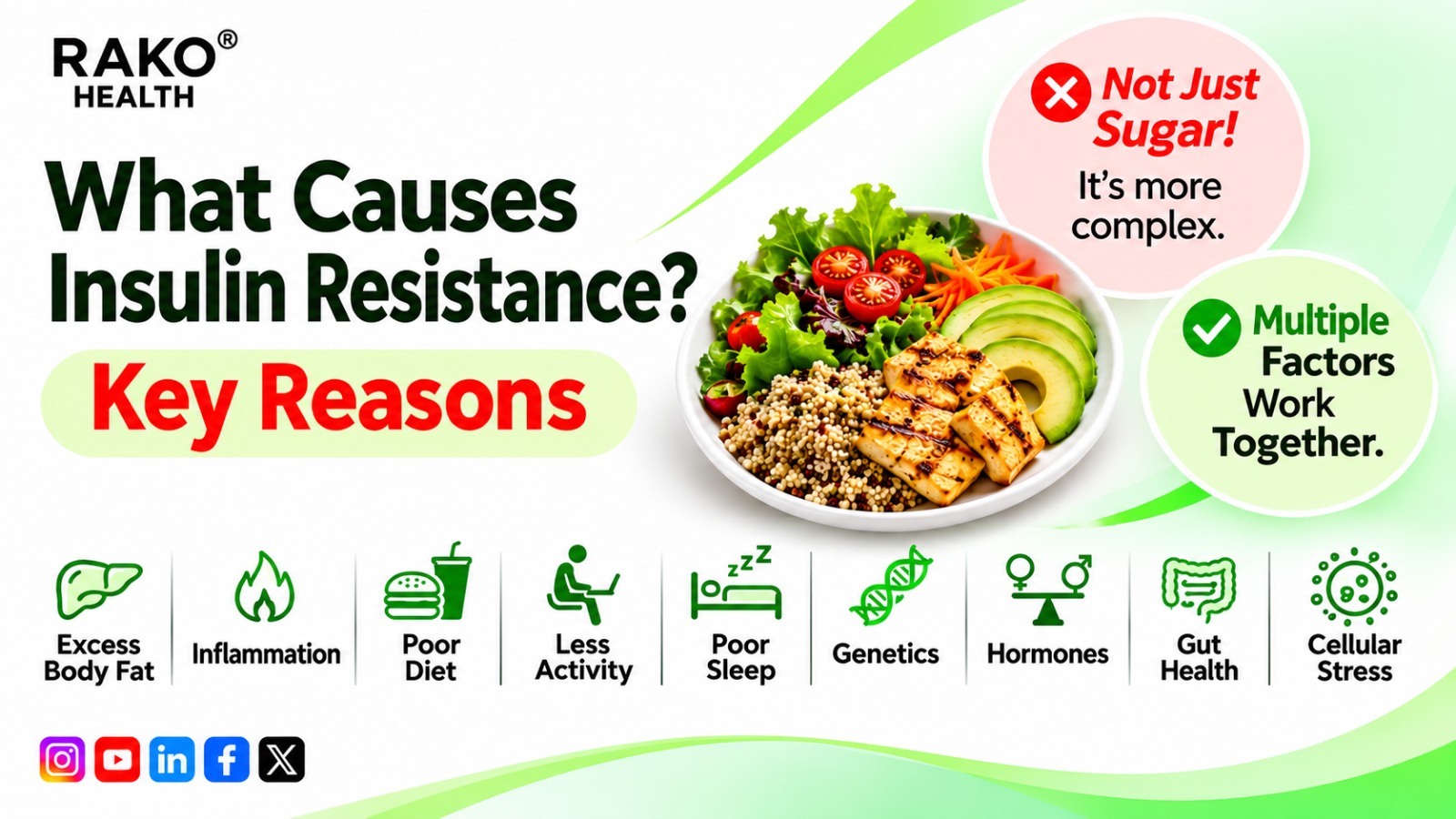
What Causes Insulin Resistance is an important question for people concerned about blood sugar regulation and long-term metabolic health. Although excessive sugar consumption often receives the blame, insulin resistance develops through several interconnected biological processes. Understanding What Is Insulin Resistance Can help explain how genetics, body fat, inflammation, hormones, and lifestyle habits affect the body's response to insulin.
Insulin resistance rarely develops because of one isolated factor. Instead, different metabolic changes can gradually reduce the effectiveness of insulin. Recognising these underlying causes can help individuals make informed decisions about their health.
What Are the Main Causes of Insulin Resistance?
Several biological, hormonal, and lifestyle factors can contribute to reduced insulin sensitivity. Here are nine important causes.
1. Excess Fat Accumulation in the Liver and Muscles
One major contributor to insulin resistance is excessive fat accumulation inside metabolic organs.
Normally, adipose tissue stores surplus energy. However, when its storage capacity becomes overwhelmed, fatty acids may accumulate in the liver and skeletal muscles. This process is called ectopic fat accumulation.
Certain fat-derived compounds, including ceramides and diacylglycerols, can interfere with insulin signalling.
Consequently, muscle cells may absorb less glucose, while the liver may continue releasing excessive glucose into the bloodstream.
This explains how abnormal fat distribution can affect glucose regulation.
2. Chronic Low-Grade Inflammation
Inflammation protects the body against infections and tissue damage. However, persistent low-grade inflammation can disturb normal metabolic functions.
As fat tissue expands, immune cells may accumulate within it and release inflammatory substances called cytokines.
Some cytokines interfere with insulin receptor signalling. For example, JNK and IKK inflammatory pathways can affect insulin receptor substrate proteins, which transmit insulin's signals inside cells.
Therefore, chronic inflammation may contribute to the relationship between excess body fat and insulin resistance.
3. Excessive Energy Intake and Unbalanced Nutrition
Regularly consuming more energy than the body requires can encourage excessive fat accumulation.
Frequent intake of sugary beverages, refined carbohydrates, and highly processed foods may contribute to metabolic dysfunction.
Additionally, excessive saturated fat consumption can influence lipid metabolism and insulin sensitivity.
However, no single nutrient explains every case of insulin resistance. Overall dietary quality, energy balance, and individual susceptibility also matter.
A balanced Insulin Resistance Diet containing vegetables, adequate protein, fibre-rich carbohydrates, and appropriate unsaturated fats can support healthier metabolic function.
4. Lack of Regular Physical Activity
Skeletal muscles are among the body's major glucose-consuming tissues. During exercise, muscle contractions increase glucose uptake and support metabolic flexibility.
However, prolonged inactivity can reduce the body's ability to use available energy efficiently.
Furthermore, sedentary habits may contribute to reduced muscle mass and increased fat accumulation.
Regular walking, strength training, and other suitable activities can help improve insulin sensitivity.
5. Poor Sleep and Disrupted Biological Rhythms
Your body follows an internal timing system called the circadian rhythm. It coordinates hormone production, appetite, glucose regulation, and energy utilisation.
Insufficient sleep, irregular sleeping schedules, and rotating night shifts can disrupt these processes.
Poor sleep may also affect appetite regulation and make healthy dietary habits harder to maintain.
Additionally, obstructive sleep apnoea can create further metabolic challenges. Therefore, improving sleep quality is an important part of metabolic health management.
6. Genetic Factors and Family History
Inherited characteristics can influence an individual's susceptibility to insulin resistance and type 2 diabetes.
Certain genetic variations affect insulin signalling, fat distribution, pancreatic function, and glucose metabolism.
Having a close family history of type 2 diabetes may increase metabolic risk. Nevertheless, genetic susceptibility does not make insulin resistance inevitable.
Lifestyle and environmental factors also influence how inherited risks develop over time.
7. Hormonal Conditions and Certain Medications
Hormones regulate appetite, glucose levels, and energy metabolism.
Conditions such as polycystic ovary syndrome (PCOS) and Cushing syndrome can be associated with reduced insulin sensitivity.
Similarly, excessive glucocorticoid exposure may increase liver glucose production and interfere with insulin action.
Certain prescribed medications, including glucocorticoids and some antipsychotic medicines, can also affect glucose metabolism.
Never discontinue prescribed medication independently. Always discuss potential metabolic effects with your healthcare professional.
8. Oxidative Stress and Cellular Stress
Cells depend on complex systems to produce energy, process proteins, and communicate.
When metabolic demands become excessive, cellular stress may develop.
Oxidative stress occurs when reactive molecules exceed the body's antioxidant defence capacity.
Another mechanism involves endoplasmic reticulum stress, which occurs when cellular protein-processing systems become overwhelmed.
Both processes may activate pathways that interfere with insulin signalling. These mechanisms show that insulin resistance involves changes at the cellular level, not simply elevated blood sugar.
9. Changes in the Gut Microbiome
The intestine contains trillions of microorganisms that influence digestion, immunity, and metabolism.
Emerging research suggests that changes in these microorganisms may affect insulin sensitivity.
Certain microbial metabolites can influence inflammation and intestinal barrier function. When this barrier becomes impaired, bacterial components may trigger inflammatory responses.
However, the relationship between gut microorganisms and insulin resistance remains complex. Further human research is necessary before specific microbiome treatments become established therapies.
Explore Gut Health to understand the developing relationship between intestinal microorganisms and metabolic wellbeing.
Why Does Insulin Resistance Develop Differently in Everyone?
There is no single explanation for what causes insulin resistance in every individual.
For some people, excessive abdominal fat may be a major contributor. Others may have greater genetic susceptibility, hormonal conditions, or disrupted sleep patterns.
Often, several factors coexist and influence one another.
For example, poor sleep may affect appetite, while excess fat accumulation can increase inflammation and interfere with insulin signalling.
Fat accumulation in the liver is another important metabolic concern. Learn more about Fatty Liver and its relationship with insulin resistance.
For personalised nutritional guidance, explore support from Dr. Meram Chalamiah or a qualified Best Dietician in Hyderabad.
Frequently Asked Questions
1. Is sugar the main cause of insulin resistance?
No. Excessive sugar consumption can contribute to metabolic problems, but insulin resistance develops through several interacting biological and lifestyle factors.
2. Can inflammation cause insulin resistance?
Chronic inflammation can interfere with insulin signalling and contribute to reduced insulin sensitivity. Both processes may influence each other.
3. Can stress contribute to insulin resistance?
Persistent stress may affect glucose regulation through hormonal changes, disturbed sleep, and associated behavioural patterns.
4. Can genetics increase insulin resistance risk?
Yes. Genetic variations can increase susceptibility, although lifestyle and environmental factors also influence metabolic outcomes.
5. Can gut problems contribute to insulin resistance?
Emerging research suggests possible connections involving intestinal microorganisms, inflammation, and microbial metabolites. However, digestive symptoms alone cannot establish insulin resistance.
6. Can the causes of insulin resistance be managed?
Many contributing factors can be addressed through personalised nutrition, appropriate physical activity, improved sleep, and medical management.
Understanding the Individual at RAKO Health
At RAKO Health, we recognize that metabolic dysfunction is rarely explained by a single food or lifestyle habit.
Our scientist-led nutrition approach considers individual medical history, blood markers, nutritional requirements and dietary patterns.
By understanding these factors, personalized nutrition can support healthier metabolic function and sustainable health improvements.
Better health begins with understanding your metabolism. Discover a personalized, science-based approach with RAKO Health.
Related Blogs

Best Dietician in Hyderabad - Dr. Meram Chalamaiah

How to Reverse Insulin Resistance Naturally: A Science-Based Guide

Best Nutritionist in Hyderabad – Dr. Meram Chalamaiah
Best Dietician in Hyderabad - Dr. Meram Chalamaiah
How to Reverse Insulin Resistance Naturally: A Science-Based Guide
Best Nutritionist in Hyderabad – Dr. Meram Chalamaiah
Best Dietician in Hyderabad - Dr. Meram Chalamaiah
How to Reverse Insulin Resistance Naturally: A Science-Based Guide
Best Nutritionist in Hyderabad – Dr. Meram Chalamaiah
Best Dietician in Hyderabad - Dr. Meram Chalamaiah
How to Reverse Insulin Resistance Naturally: A Science-Based Guide