
Rice Fortification Update 2026: What the Temporary Discontinuation Means for Nutrition and Public Health


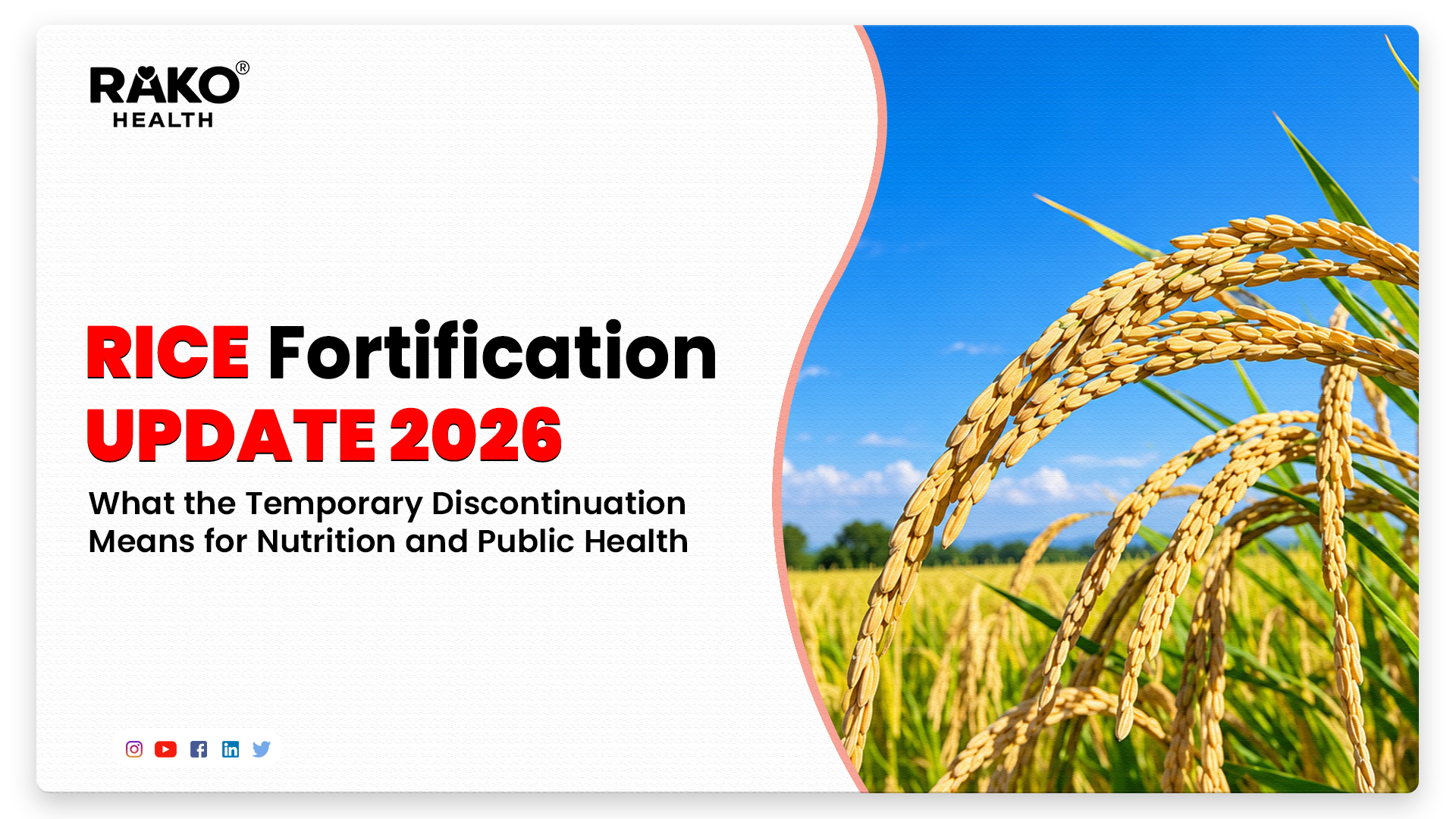
Rice fortification update 2026 highlights an important change in India's nutrition strategy, with potential implications for food security, micronutrient intake, and public health. The decision to temporarily discontinue fortified rice distribution under the Pradhan Mantri Garib Kalyan Anna Yojana (PMGKAY) and related welfare schemes reflects concerns about nutrient stability during prolonged storage.
For families, children, pregnant women, and individuals who depend on subsidised food grains, understanding this change is essential. At RAKO Health, we believe nutrition awareness helps people make informed dietary choices and maintain better health through balanced, practical eating habits.
Referral article: Recalibration of Nutrition Intervention – Temporary Discontinuation of Rice Fortification
What Is Rice Fortification?
Rice fortification involves adding essential micronutrients to rice to improve its nutritional value. Manufacturers typically blend regular rice with fortified rice kernels containing selected vitamins and minerals.
These nutrients may include:
- Iron, which supports healthy red blood cell production.
- Folic acid, which supports cell growth and development.
- Vitamin B12, which helps maintain healthy nerves and blood cells.
- Other micronutrients, depending on the fortification standards.
Fortified rice aims to help address nutritional deficiencies among populations that consume rice regularly. However, the effectiveness of this approach depends on nutrient levels remaining stable throughout storage, transportation, and distribution.
Why Has Fortified Rice Distribution Been Temporarily Discontinued?
According to a press release dated February 27, 2026, an assessment by IIT Kharagpur examined fortified rice kernels and fortified rice under storage conditions across different agroclimatic regions.
The findings highlighted several factors that can affect nutrient stability and shelf life.
1. Prolonged Storage
Rice stocks may remain in storage for two to three years because of procurement volumes and distribution requirements. During this period, certain micronutrients may decline.
2. Temperature and Humidity
High temperatures and relative humidity can affect the stability of fortified rice kernels. Moisture levels also influence how well these products retain their nutritional properties.
3. Packaging and Handling
Packaging materials, transportation, and routine handling can influence product quality. Consequently, fortified rice may lose some nutrients before reaching consumers.
These findings raised concerns about whether the intended nutritional benefits would remain consistent throughout the distribution process.
What Does the Rice Fortification Decision Mean for Indian Families?
The temporary discontinuation does not reduce existing foodgrain entitlements. It also does not stop distribution operations under the Public Distribution System (PDS), Integrated Child Development Services (ICDS), or the Mid-Day Meal Scheme.
During the transition, states and union territories can supply fortified or non-fortified rice for specified stock categories, considering their operational and logistical requirements.
For consumers, the key points are:
- Foodgrain entitlements remain unchanged.
- Rice distribution through the specified programmes continues.
- The nutritional composition of supplied rice may vary.
- Families should maintain dietary variety rather than rely on one fortified food source.
Therefore, consumers should follow local distribution updates and seek reliable nutrition guidance when planning their diets.
How Can Families Maintain Micronutrient Intake Without Fortified Rice?
Rice provides energy, but a varied diet helps supply the vitamins and minerals needed for overall health. Families can combine everyday staples with nutrient-rich foods that suit their budgets and preferences.
Consider these practical options:
- Include iron-rich foods: Add lentils, chickpeas, beans, leafy greens, and other suitable iron sources.
- Combine plant-based iron with vitamin C: Pair pulses with tomatoes, lemon, guava, or amla to support iron absorption.
- Eat a variety of protein sources: Include dals, beans, dairy products, eggs, fish, or other suitable options.
- Choose whole grains regularly: Rotate rice with millets, whole wheat, oats, or other locally available grains.
- Plan balanced meals: Combine grains, protein-rich foods, vegetables, and fruit according to individual needs.
However, food choices alone may not correct every nutritional deficiency. People with persistent fatigue, suspected anaemia, or other concerning symptoms should consult a qualified healthcare professional.
Why Nutrition Planning Matters for Children and Pregnant Women
Children require adequate nutrients for growth, learning, and development. Pregnant women also need sufficient iron, folate, protein, and other essential nutrients.
Consequently, families should pay particular attention to dietary variety during these life stages. School meals and community nutrition programmes remain important sources of support for eligible beneficiaries.
Parents should avoid starting iron or vitamin supplements without appropriate professional advice. A qualified clinician can assess individual needs and recommend suitable interventions when necessary.
How RAKO Health Supports Better Nutrition Awareness
At RAKO Health, we encourage practical, evidence-informed nutrition choices that reflect each person's health needs, lifestyle, food preferences, and cultural background.
Our nutrition-focused approach can help individuals understand balanced eating, improve meal planning, and identify areas where professional dietary guidance may be useful.
For people managing excess weight or other nutrition-related concerns, personalized guidance may offer a more practical approach than following restrictive diets or generic online advice.
Explore our related resources:
- Best Dietician in Hyderabad – Start exploring nutrition support and personalised dietary guidance.
- Best Dietician for Weight Loss – Learn more about sustainable weight management and balanced eating.
Frequently Asked Questions
1. Has fortified rice distribution been permanently stopped?
No. The announcement describes a temporary discontinuation while a more effective nutrient-delivery mechanism is developed and implemented.
2. Will families receive less rice because of this decision?
No. The announcement states that existing foodgrain entitlements will not decrease.
3. Why can fortified rice lose nutrients during storage?
Moisture, temperature, humidity, packaging, and handling can affect nutrient stability. Prolonged storage may reduce certain micronutrient levels.
4. Can ordinary rice provide all essential nutrients?
Ordinary rice supplies energy and some nutrients, but it cannot provide every essential micronutrient in sufficient quantities. A varied diet helps improve overall nutrient intake.
5. What can families eat to support better nutrition?
Include pulses, vegetables, fruits, whole grains, and suitable protein sources. Individual requirements may vary with age, health status, and life stage.
6. Where can readers find reliable nutrition information?
Readers can consult qualified nutrition professionals and reputable health resources, including the World Health Organization, for general healthy-diet guidance.
Staying Informed About Nutrition and Food Quality
The rice fortification update highlights why nutrient stability, food quality, and effective delivery systems matter in public nutrition programmes. Meanwhile, families can support everyday nutritional health through diverse meals, informed food choices, and appropriate professional guidance.
RAKO Health encourages readers to explore our nutrition resources and personalised dietary services to learn more about balanced Indian meals, micronutrient-rich foods, and sustainable approaches to everyday wellness.
Related Blogs

How to Choose the Best Diet for Weight Loss According to Nutrition Experts
How AI Is Improving the Personalized Diet: A Smarter Approach to Nutrition
Gut Microbiome Health: How Cereals and Pseudocereals May Improve Gut Health
How to Choose the Best Diet for Weight Loss According to Nutrition Experts
How AI Is Improving the Personalized Diet: A Smarter Approach to Nutrition
Gut Microbiome Health: How Cereals and Pseudocereals May Improve Gut Health
How to Choose the Best Diet for Weight Loss According to Nutrition Experts
How AI Is Improving the Personalized Diet: A Smarter Approach to Nutrition
Gut Microbiome Health: How Cereals and Pseudocereals May Improve Gut Health
How to Choose the Best Diet for Weight Loss According to Nutrition Experts
How AI Is Improving the Personalized Diet: A Smarter Approach to Nutrition