
Thyroid and Foods to Avoid: What Science Really Says


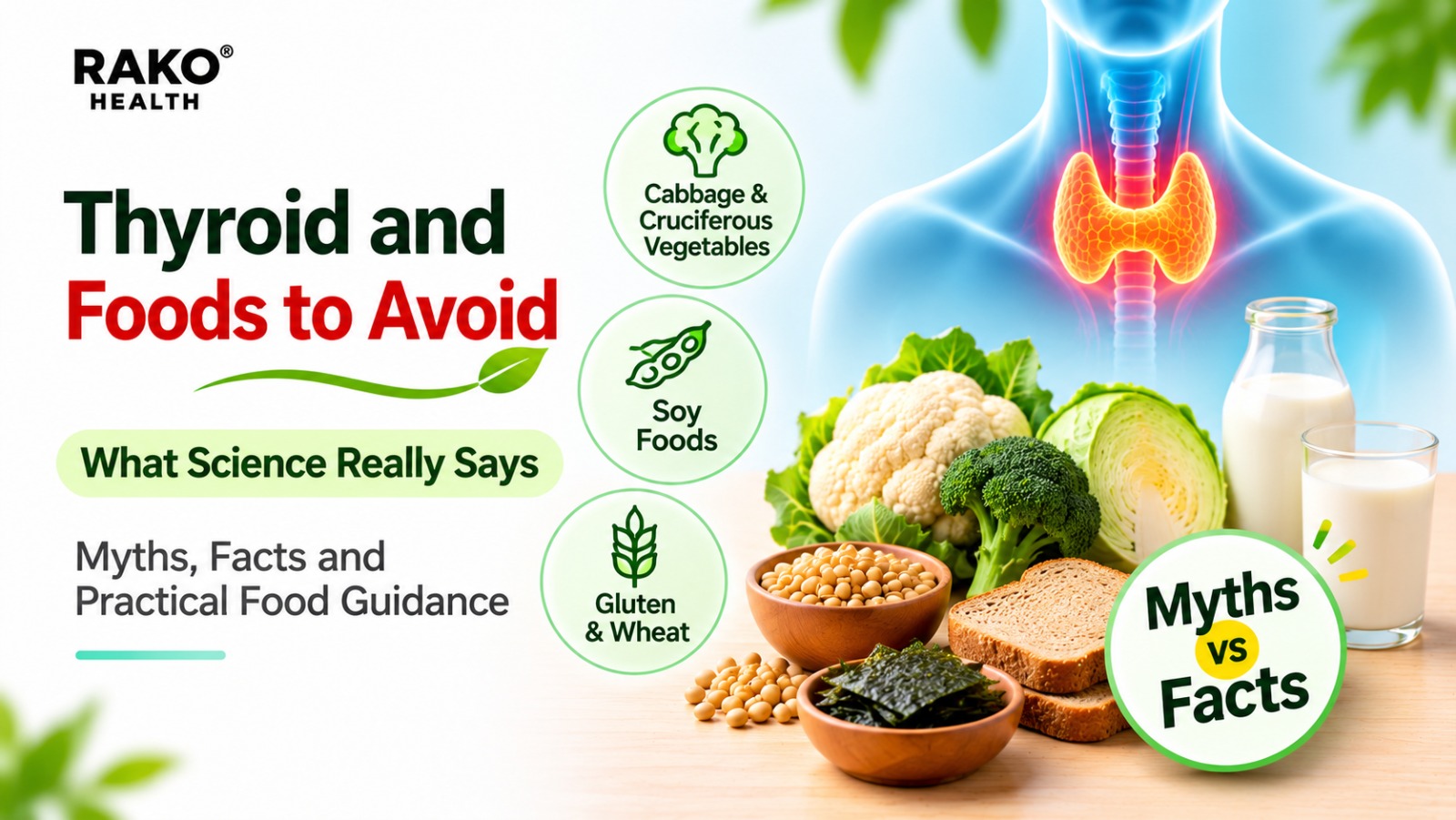
Thyroid and Foods to Avoid is a common search among people managing hypothyroidism or Hashimoto's thyroiditis. Many people worry about eating cabbage, cauliflower, soy, wheat, rice, or dairy products. However, scientific evidence does not support avoiding every food on these lists. Some foods require moderation, while others need proper medication timing. Explore RAKO Health's Thyroid Nutrition Services for personalised, evidence-based dietary guidance.
Understanding Thyroid and Foods to Avoid
People with thyroid disorders often receive conflicting dietary advice. However, most individuals do not need complicated food restrictions.
A 2026 scientific review in the Journal of Endocrinological Investigation examined nutrition and thyroid health. It also discussed common dietary concerns and nutritional myths.
Therefore, understanding which foods to limit, avoid, or eat normally can help you make informed decisions.
7 Foods and Ingredients to Avoid or Limit for Thyroid Health
1. Cabbage, Cauliflower and Broccoli
Cruciferous vegetables contain natural compounds called glucosinolates. Under certain conditions, these compounds can affect iodine utilisation.
However, normal portions rarely cause problems for people with adequate iodine intake. Cooking also reduces the activity of enzymes involved in producing certain goitrogenic compounds.
What should you do?
- Enjoy cooked cabbage, cauliflower, and broccoli.
- Include different vegetables in your meals.
- Avoid excessive raw cruciferous vegetable juices, particularly with inadequate iodine intake.
2. Soy Foods and Thyroid Medication
Soybeans, tofu, and soy milk contain compounds called isoflavones. Researchers have studied their potential effects on thyroid function.
Generally, normal soy consumption does not cause significant thyroid dysfunction when iodine intake remains adequate.
However, soy may interfere with levothyroxine absorption when consumed close to medication.
What should you do? Include soy in moderation and maintain consistent medication timing. Discuss any dietary changes with your healthcare professional.
3. Excess Iodine and Seaweed Supplements
Iodine supports thyroid hormone production. Nevertheless, excessive iodine can disrupt normal thyroid function.
Be cautious with:
- Kelp and concentrated seaweed supplements.
- High-dose iodine tablets.
- Unregulated thyroid-support supplements containing iodine.
What should you do? Use regular iodized salt in recommended quantities. Avoid iodine supplements unless your doctor recommends them.
4. Gluten, Wheat and Roti
Many people with Hashimoto's thyroiditis consider eliminating wheat and gluten. However, current evidence does not support routine gluten restriction for everyone.
A gluten-free diet is necessary for people diagnosed with celiac disease. Certain other medically established gluten-related conditions may also require dietary changes.
What should you do? Continue eating roti and wheat if you tolerate them. Seek medical testing before eliminating gluten when celiac disease is suspected.
5. Milk, Curd and Other Dairy Products
Milk, curd, and paneer provide protein, calcium, and other nutrients. Dairy products can also contribute to iodine intake.
However, lactose intolerance may cause bloating, diarrhoea, and digestive discomfort.
Additionally, calcium supplements can interfere with levothyroxine absorption when taken too close to medication.
What should you do?
- Include dairy if you tolerate it.
- Maintain appropriate medication timing.
- Consider suitable alternatives if lactose intolerance affects digestion.
6. Ultra-Processed Foods and Sugary Drinks
Frequent consumption of packaged snacks, sugary beverages, and refined sweets can affect metabolic health.
People with hypothyroidism may already experience weight gain, fatigue, or cholesterol abnormalities. Therefore, nutrient-poor eating patterns may create additional challenges.
What should you do? Limit sugary drinks and frequent packaged snacks. Instead, prioritise:
- Home-cooked Indian meals.
- Fresh vegetables and seasonal fruits.
- Whole grains and millets.
- Protein-rich foods.
- Healthy fats from nuts and seeds.
7. Coffee, Calcium and Iron Near Thyroid Medication
Sometimes medication timing matters more than food selection. Coffee, calcium, and iron can reduce levothyroxine absorption when consumed too close to medication.
Follow these practical steps:
- Take levothyroxine with water as prescribed.
- Commonly, take it 30–60 minutes before breakfast.
- Separate calcium and iron supplements by at least four hours.
- Maintain consistent medication timing.
- Inform your doctor about major dietary changes.
Thyroid Foods: What to Avoid, Limit or Eat Normally?
Food | Recommendation |
| High-dose iodine supplements | Avoid unless prescribed |
| Cabbage and cauliflower | Eat normally |
| Broccoli | Enjoy cooked or raw in normal portions |
| Soy and tofu | Include with appropriate medication timing |
| Wheat and roti | Eat unless medically restricted |
| Rice | Include in suitable portions |
| Milk and curd | Eat if tolerated |
| Sugary drinks | Limit consumption |
| Coffee | Separate from thyroid medication |
Importantly, avoiding foods for thyroid management should focus on genuine nutritional concerns rather than unnecessary restrictions.
Does Avoiding Certain Foods Reduce Anti-TPO Antibodies?
Anti-thyroid peroxidase (anti-TPO) antibodies commonly indicate autoimmune thyroiditis.
Some studies have examined selenium, vitamin D, and dietary changes for their potential effects on antibody levels.
However, research findings remain inconsistent. Lower antibody levels do not necessarily indicate improved symptoms or thyroid function.
Therefore, thyroid management should consider:
- TSH and free T4 levels.
- Symptoms and medical history.
- Nutritional deficiencies.
- Individual treatment requirements.
Broad food elimination diets currently lack sufficient evidence for routinely reducing anti-TPO antibodies.
What Should You Eat Instead? A Practical Indian Thyroid Diet
Rather than eliminating everyday foods, build a balanced eating pattern.
Include these foods regularly:
- Carbohydrates: Rice, roti, oats, and millets.
- Protein: Dal, chickpeas, eggs, fish, chicken, and paneer.
- Vegetables: Seasonal and colourful vegetables.
- Fruits: Guava, papaya, oranges, and apples.
- Healthy fats: Walnuts, flaxseeds, and chia seeds.
- Dairy: Milk and curd if tolerated.
- Iodine: Normal quantities of iodized salt.
A Mediterranean-style eating pattern also emphasises vegetables, whole grains, healthy fats, and moderate fish consumption. However, further research must establish its direct effects on autoimmune thyroid conditions.
For additional dietary guidance, explore our Diet for Hypothyroidism: Indian Foods and Diet Plan.
Thyroid Nutrition Support for Indians and NRIs
Managing thyroid health can become challenging when living outside India. NRIs may experience different food availability, work schedules, eating habits, and lifestyle routines.
However, you can maintain balanced thyroid nutrition using familiar Indian foods and suitable international alternatives.
At RAKO Health, we focus on personalized, science-based nutrition that complements medical treatment.
Our approach considers:
- Thyroid test results and medical history.
- Body weight and metabolic health.
- Digestive symptoms and nutritional deficiencies.
- Indian and international food preferences.
- Sustainable everyday eating habits.
Learn more about our Best Dietician for Thyroid Issues and Dr. Meram Chalamaih to explore professional nutrition guidance.
Scientific References
- Ruggeri RM, et al. (2026). The role of nutrition on thyroid health and disease: myths and facts. Journal of Endocrinological Investigation. https://doi.org/10.1007/s40618-026-02852-0
- Anselmo J, et al. (2025). Editorial: Thyroid hormones and diet. Frontiers in Endocrinology. https://doi.org/10.3389/fendo.2025.1673729
Medical disclaimer: This article provides general educational information. Dietary changes should complement, not replace, medical treatment for thyroid disorders.
Frequently Asked Questions
1. Which foods should thyroid patients avoid?
Most people can eat everyday foods normally. However, excessive iodine supplements and concentrated seaweed products require caution.
2. Is cabbage bad for hypothyroidism?
No. Normal portions of cabbage, particularly cooked cabbage, are generally safe with adequate iodine intake.
3. Can thyroid patients eat rice?
Yes. Rice does not require elimination because of hypothyroidism. Adjust portions according to individual nutritional needs.
4. Is soy harmful for Hashimoto's thyroiditis?
Normal soy consumption is generally acceptable. However, maintain appropriate timing around levothyroxine medication.
5. Should I avoid gluten if my anti-TPO is high?
Not automatically. Gluten restriction is recommended for celiac disease, not simply elevated anti-TPO antibodies.
6. Can avoiding certain foods cure hypothyroidism?
No. Food restrictions cannot reliably cure hypothyroidism. Appropriate medical treatment and balanced nutrition remain essential.
Final Thoughts
For more evidence-based thyroid nutrition information, visit the American Thyroid Association. You can also explore personalised nutrition guidance and thyroid care options at RAKO Health.
Related Blogs
Best Dietician for Thyroid Issues: Personalized Nutrition Support
Best Diet for Hypothyroidism: Indian Foods, Essential Nutrients and Diet Plan
What Is a Liver Detox Diet? Foods to Eat, Foods to Avoid, and Common Myths
Best Dietician for Thyroid Issues: Personalized Nutrition Support
Best Diet for Hypothyroidism: Indian Foods, Essential Nutrients and Diet Plan
What Is a Liver Detox Diet? Foods to Eat, Foods to Avoid, and Common Myths
Best Dietician for Thyroid Issues: Personalized Nutrition Support
Best Diet for Hypothyroidism: Indian Foods, Essential Nutrients and Diet Plan
What Is a Liver Detox Diet? Foods to Eat, Foods to Avoid, and Common Myths
Best Dietician for Thyroid Issues: Personalized Nutrition Support
Best Diet for Hypothyroidism: Indian Foods, Essential Nutrients and Diet Plan