
Bisleri Water Bottle Unsafe? What the Latest FSSAI Report Reveals


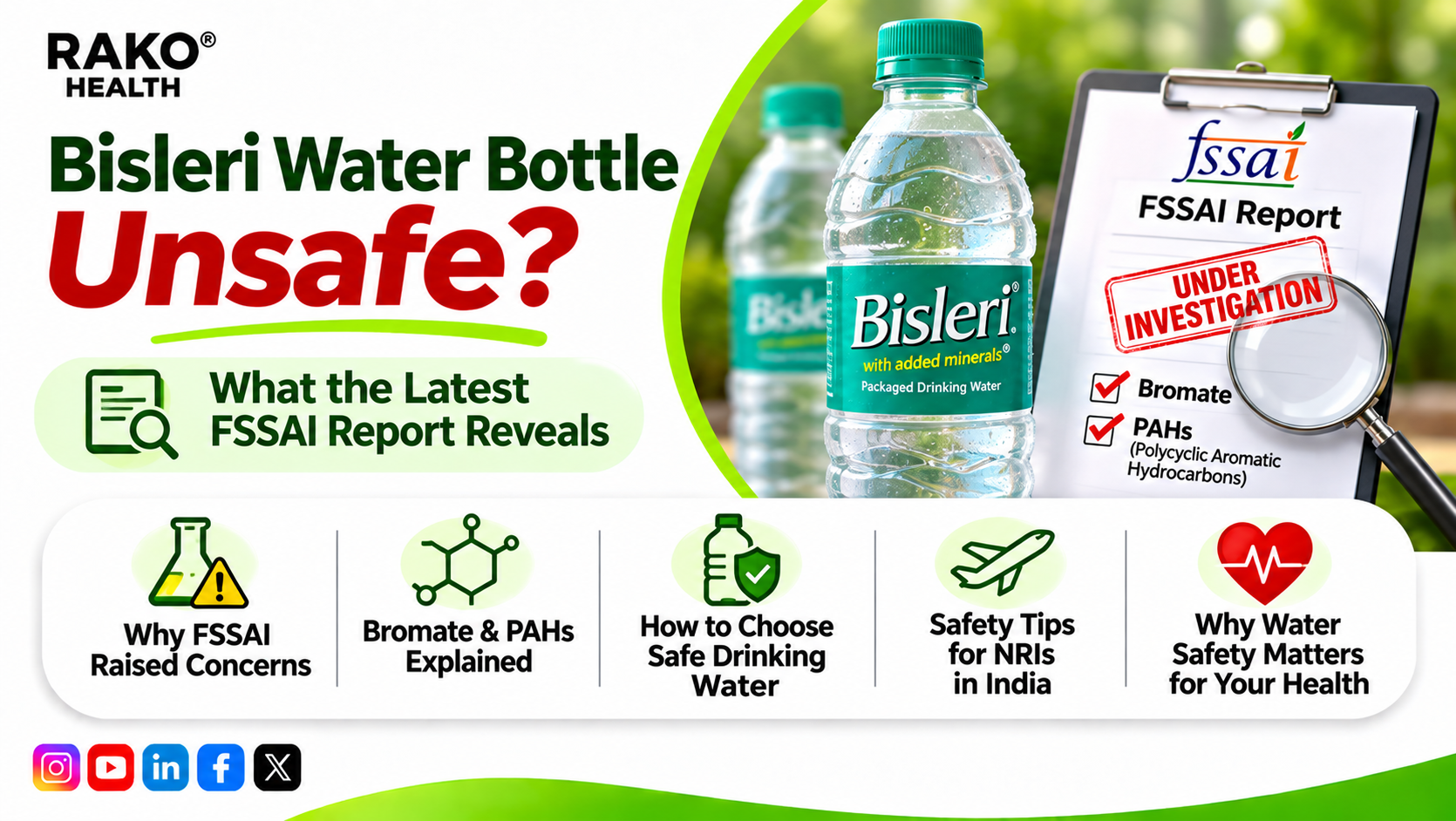
Bisleri water bottle safety has become a major consumer concern following the latest FSSAI action. The Food Safety and Standards Authority of India recently sanctioned prosecution against Bisleri International. The development raises important questions about packaged drinking water quality. Consumers should also understand how to identify safe drinking water. At RAKO Health, we encourage informed food and beverage choices. Explore our Best Dietician in Hyderabad for personalized nutrition guidance.
Why Did FSSAI Declare a Bisleri Water Sample Unsafe?
On 22 November 2026, FSSAI announced prosecution proceedings against Bisleri International Pvt Ltd. The regulator investigated a packaged drinking water sample collected from the company's premises.
According to the regulator, laboratory testing identified two major concerns:
- Bromate: The initial sample failed the prescribed bromate limits.
- Polynuclear aromatic hydrocarbons (PAHs): A referral laboratory subsequently detected these compounds.
Consequently, FSSAI declared the sample unsafe under the Food Safety and Standards Act, 2006. The regulator sanctioned prosecution against the company.
However, these findings concern a specific sample. They do not establish that every Bisleri water bottle currently available is contaminated.
Sources: FSSAI statements reported by The Indian Express and Reuters.
What Is Bisleri's Response to the FSSAI Investigation?
Bisleri has disputed aspects of the laboratory findings and maintained that its products remain safe.
The company stated that the matter involved a batch manufactured in September 2025 at its Goa facility.
According to its response:
- Five of six initially collected samples met applicable standards.
- One sample recorded bromate levels of 12 micrograms per litre.
- The prescribed bromate limit was 10 micrograms per litre.
- Subsequent independent testing reportedly found bromate within the permitted limit.
- The company stated that it would cooperate with regulatory authorities.
Bisleri also highlighted its quality-control procedures. Nevertheless, the regulatory proceedings deserve attention, and consumers should follow verified updates.
Source: Business Standard report, 23 November 2026.
What Are Bromates and PAHs in Drinking Water?
Understanding these substances helps consumers appreciate the importance of water-quality testing.
1. Bromate
Bromate can develop during certain water-disinfection processes involving ozone. Excessive exposure raises health concerns.
The International Agency for Research on Cancer classifies potassium bromate as possibly carcinogenic to humans.
2. Polycyclic Aromatic Hydrocarbons
PAHs represent a group of chemical compounds. Some members can cause cancer following sufficient exposure.
Their detection in drinking water requires appropriate laboratory investigation and regulatory assessment.
Therefore, water manufacturers must maintain strict treatment, testing, and quality-control procedures.
How to Choose a Safe Bisleri Water Bottle or Other Packaged Water
Consumers should check several details before purchasing packaged drinking water.
Follow these practical steps:
- Check the manufacturing and expiry or best-before information.
- Examine the seal before opening the bottle.
- Avoid damaged, leaking, or tampered packaging.
- Check the manufacturer's details and FSSAI licence information.
- Avoid bottles stored under direct sunlight or excessive heat.
- Purchase from reputable retailers.
- Follow official food-safety updates and recall notices.
Additionally, never reuse disposable water bottles repeatedly without appropriate cleaning.
For reliable updates, visit the official FSSAI website.
Is Packaged Drinking Water Safe for NRIs Visiting India?
NRIs visiting Hyderabad, Bengaluru, Mumbai, or other Indian cities often purchase bottled water while travelling.
However, recent developments highlight the importance of checking product quality.
Whether you live in the USA, UK, Canada, Australia, or India, follow these precautions:
- Purchase sealed bottles from established retailers.
- Check packaging and manufacturing information.
- Avoid visibly damaged bottles.
- Use properly maintained drinking-water filters where appropriate.
- Follow local drinking-water advisories.
Furthermore, international travellers should understand that bottled-water safety depends on manufacturing standards and storage conditions.
Why Food and Water Safety Matter for Overall Health
Nutrition involves more than selecting healthy meals. Safe drinking water also supports everyday hydration and general wellbeing.
At RAKO Health, we promote informed nutritional choices and healthier lifestyle habits.
People searching for the Dr. Meram Chalamaiah profile can explore relevant professional information.
Additionally, individuals seeking the Best Dietician for Weight Loss can prioritise qualified guidance and sustainable nutrition practices.
For more information about another important health topic, read our GLP-1 Eye Side Effects blog. People taking GLP-1 medications should discuss new vision changes with their healthcare professionals.
How RAKO Health Promotes Better Nutrition Awareness
RAKO Health believes that informed decisions contribute to healthier lifestyles.
Our nutrition-focused approach encourages people to understand their food choices, hydration habits, and individual nutritional requirements.
Through professional nutrition guidance, individuals can explore:
- Balanced eating habits.
- Healthy hydration practices.
- Personalised nutrition planning.
- Sustainable weight management.
- Better everyday food choices.
Explore RAKO Health to learn more about nutrition guidance and wellness support.
Frequently Asked Questions
1. Is every Bisleri water bottle unsafe?
No. The FSSAI findings concern a particular regulatory sample. They do not establish contamination across every bottle or product.
2. Why did FSSAI take action against Bisleri?
The regulator reported bromate non-compliance and subsequent detection of PAHs. It sanctioned prosecution under the Food Safety and Standards Act, 2006.
3. What is the permitted bromate limit?
The reported prescribed limit in this case was 10 micrograms per litre. The initial sample reportedly recorded 12 micrograms per litre.
4. Can I drink packaged water in India?
Choose properly sealed products from reputable retailers. Check packaging details and follow official safety advisories.
5. Does boiling bottled water remove chemical contaminants?
Boiling does not reliably remove chemical contaminants. Therefore, use water that meets applicable drinking-water standards.
6. What should NRIs check before buying bottled water in India?
NRIs should check bottle seals, manufacturing details, storage conditions, and official safety updates.
7. Where can I find nutrition guidance in Hyderabad?
RAKO Health offers nutrition-focused wellness information. Contact the company to enquire about available consultation services.
Related Blogs

Samantha Ruth Prabhu Baby boy News: Actress Welcomes Baby Boy

MM Keeravani Weight Loss: Oscar-Winning Composer Loses 22 Kg
Rice Fortification Update 2026: What the Temporary Discontinuation Means for Nutrition and Public Health
Samantha Ruth Prabhu Baby boy News: Actress Welcomes Baby Boy
MM Keeravani Weight Loss: Oscar-Winning Composer Loses 22 Kg
Rice Fortification Update 2026: What the Temporary Discontinuation Means for Nutrition and Public Health
Samantha Ruth Prabhu Baby boy News: Actress Welcomes Baby Boy
MM Keeravani Weight Loss: Oscar-Winning Composer Loses 22 Kg
Rice Fortification Update 2026: What the Temporary Discontinuation Means for Nutrition and Public Health
Samantha Ruth Prabhu Baby boy News: Actress Welcomes Baby Boy
MM Keeravani Weight Loss: Oscar-Winning Composer Loses 22 Kg