
GLP-1 Eye Side Effects: FDA Warns of Rare Vision Loss Risk with Ozempic and Wegovy


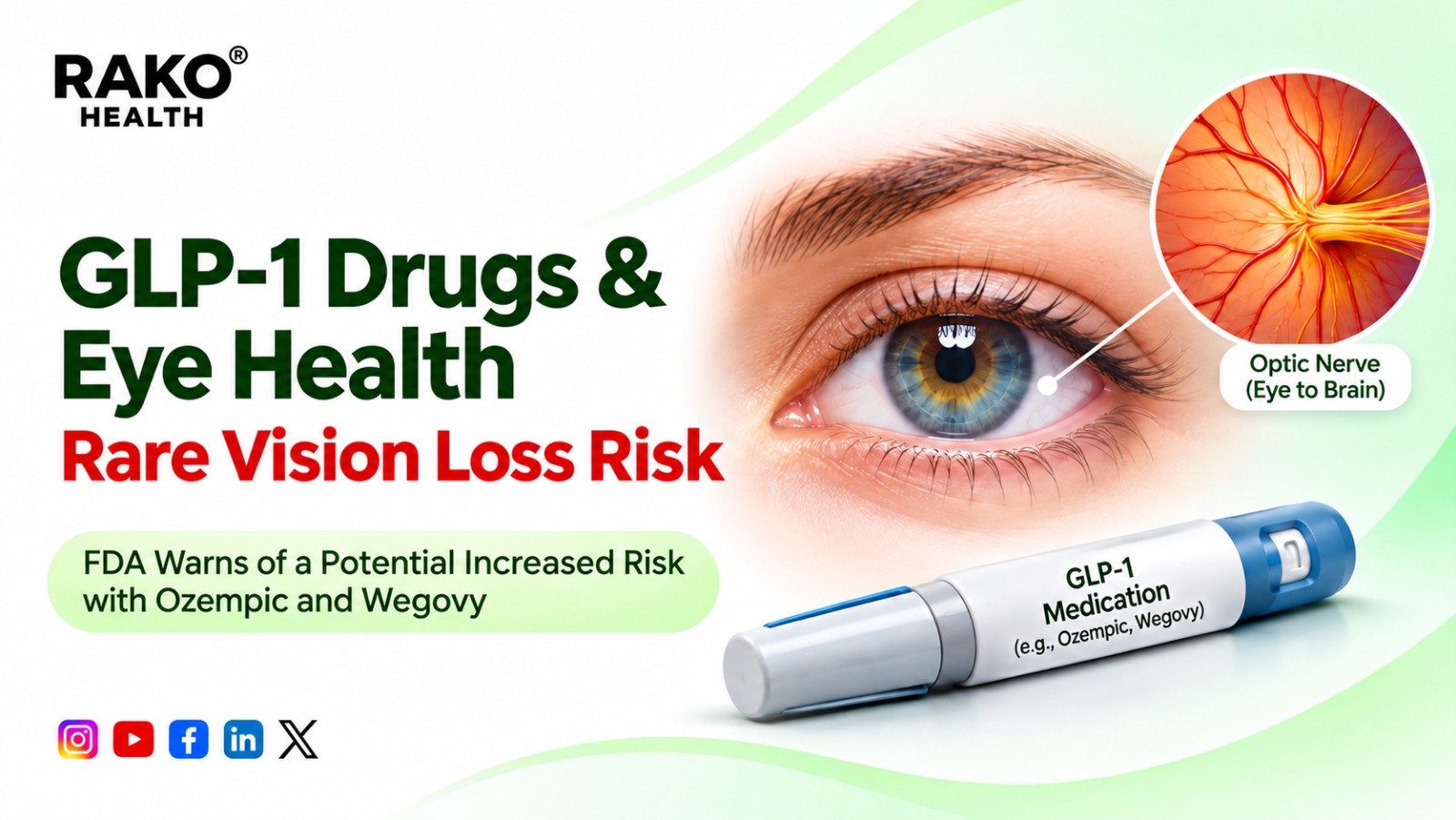
GLP-1 Eye Side Effects have become an important health topic following a new safety announcement from the US Food and Drug Administration (FDA). On November 9, 2026, the FDA announced updated safety-labeling requirements for GLP-1 medications. The announcement highlights a potential increased risk of a rare eye condition called non-arteritic anterior ischemic optic neuropathy (NAION) to GLP-1 medication labels, including Ozempic and Wegovy. People using weight-loss injections or diabetes medications should understand this update. For broader guidance on food based nutrition and sustainable weight management, explore Dr. Meram Chalamaiah – Best Dietician in Hyderabad through RAKO Health.
What Is the Latest FDA Warning About Ozempic and Wegovy?
The FDA has identified a potential association between GLP-1 receptor agonists and non-arteritic anterior ischemic optic neuropathy (NAION).
NAION affects the optic nerve, which carries visual information from the eye to the brain. Reduced blood flow to this nerve can cause sudden vision changes.
Consequently, the FDA requires manufacturers to include information about this potential risk in their medication labels.
However, this announcement does not establish that every GLP-1 user faces vision problems. Instead, it highlights a rare but serious safety concern that deserves attention.
Read the official FDA Drug Safety Communication for the complete announcement.
What Are GLP-1 Medications?
GLP-1 receptor agonists are prescription medications that mimic a naturally occurring intestinal hormone.
They help regulate blood sugar and influence appetite. Therefore, healthcare professionals prescribe certain medications for type 2 diabetes and chronic weight management.
Common medications include:
- Ozempic: Contains semaglutide and treats type 2 diabetes.
- Monjaro: Contains tirzepatide, which acts on GIP and GLP-1 receptors.
- Wegovy: Contains semaglutide and supports long-term weight management.
- Rybelsus: An oral semaglutide medication for type 2 diabetes.
- Saxenda: Contains liraglutide and supports weight management.
- Trulicity: Contains dulaglutide and treats type 2 diabetes.
The FDA communication covers approved GLP-1 receptor agonist products. Importantly, tirzepatide also activates GIP receptors.
Understanding NAION: A Rare Eye Condition
Non-arteritic anterior ischemic optic neuropathy affects the optic nerve through reduced blood supply.
Doctors sometimes describe this condition as an eye stroke. However, it differs from a typical brain stroke.
NAION may cause:
- Sudden, painless vision loss in one eye.
- Blurred vision or missing areas in the visual field.
- Dark spots or tunnel vision.
- Changes in colour perception.
- Reduced sharpness in central vision.
Some patients experience these symptoms after waking up. Furthermore, vision loss may become permanent.
Therefore, sudden vision changes require immediate medical attention.
What Does the FDA Research Say About GLP-1 Eye Risks?
The FDA reviewed evidence from clinical trials, observational studies, animal research and post-marketing reports.
Its analysis included 126 clinical trials involving 134,253 participants.
The clinical trial analysis reported:
- GLP-1 medication users: 6.4 NAION cases per 100,000 person-years.
- Comparison groups: 3.8 NAION cases per 100,000 person-years.
These findings suggest a potential increased risk. However, researchers identified relatively few cases.
Additionally, the FDA acknowledged limitations in interpreting the available evidence. Therefore, these findings do not establish a direct cause-and-effect relationship.
The agency nevertheless considers the potential risk important enough for updated medication labeling.
Who Should Pay Attention to GLP-1 Eye Side Effects?
People using GLP-1 medications should understand their individual health risks.
Certain conditions may increase NAION risk, including:
- Diabetes.
- High blood pressure.
- Sleep apnea.
- Smoking.
- Anaemia.
- Kidney disease.
These conditions can also occur among people receiving GLP-1 treatment.
Therefore, patients should discuss their medical history and existing eye problems with their healthcare professionals.
What Should Patients Taking Ozempic or Wegovy Do?
The FDA does not recommend that everyone stop GLP-1 treatment because of this announcement.
Instead, patients should follow these practical steps:
- Understand the possible eye-related warning signs.
- Attend recommended eye examinations.
- Inform your doctor about existing vision problems.
- Discuss personal risk factors before changing treatment.
- Seek immediate medical attention for sudden vision changes.
If NAION develops, patients should discuss whether to continue treatment with their healthcare professional.
Never discontinue prescribed medication independently.
GLP-1 Medication Safety for NRIs in the US
Many Non-Resident Indians (NRIs) living in the United States use healthcare services across different countries.
Some also seek Indian nutrition professionals for culturally familiar dietary guidance. However, medication management requires coordination with their prescribing healthcare professionals.
NRIs can take these precautions:
- Maintain an updated list of prescribed medications.
- Share relevant medical records during consultations.
- Discuss diabetes and blood pressure management regularly.
- Follow appropriate eye-care recommendations.
- Confirm time-zone compatibility during online nutrition appointments.
Moreover, Indian dietary habits can support practical weight-management routines. Balanced meals containing dal, vegetables, whole grains and appropriate protein sources can complement professional care. To explore more guidance on effective weight management, visit our Weight Loss page.
Frequently Asked Questions
1. Can Ozempic cause vision loss?
The FDA identified a potential association between GLP-1 medications and NAION. This rare condition can cause sudden, painless vision loss. However, a direct causal relationship has not been established.
2. Does Wegovy affect eyesight?
The FDA identified a potential increased risk of NAION among GLP-1 medication users. Patients experiencing sudden vision changes should seek immediate medical attention.
3. What is NAION?
NAION is a rare condition involving reduced blood flow to the front portion of the optic nerve. It can cause sudden, painless vision loss in one eye.
4. Should I stop taking Ozempic after the FDA warning?
Do not stop prescribed medication independently. Discuss your concerns, medical history and treatment options with your prescribing healthcare professional.
5. Are GLP-1 medications safe for long-term weight management?
These medications have approved medical uses and potential benefits. However, their suitability depends on individual health conditions, treatment goals and possible risks.
6. Can NRIs consult Indian nutrition professionals online?
Yes, NRIs can explore online nutrition consultations with qualified Indian professionals. However, confirm credentials, appointment availability and location-specific requirements.
How RAKO Health Supports Healthy Weight Management
At RAKO Health, we believe sustainable wellness starts with informed decisions and practical lifestyle habits.
Medication-related safety concerns also highlight the importance of individualised natural food based health improvement.
Professional nutrition support can help individuals:
Develop balanced eating habits.
Plan nutritious meals around busy schedules.
Understand portion sizes and food choices.
Build sustainable weight-management routines.
Maintain consistency with healthy lifestyle changes.
For individuals in Hyderabad, including NRIs seeking culturally relevant nutrition guidance, Dr. Meram Chalamaiah is a resource to explore for professional dietary support.
Nutrition guidance does not replace medical treatment or specialist eye care. Instead, it can complement an appropriately supervised healthcare plan.
Related Blogs

How to Choose the Best Diet for Weight Loss According to Nutrition Experts
Gut Microbiome Health: How Cereals and Pseudocereals May Improve Gut Health

MM Keeravani Weight Loss: Oscar-Winning Composer Loses 22 Kg
How to Choose the Best Diet for Weight Loss According to Nutrition Experts
Gut Microbiome Health: How Cereals and Pseudocereals May Improve Gut Health
MM Keeravani Weight Loss: Oscar-Winning Composer Loses 22 Kg
How to Choose the Best Diet for Weight Loss According to Nutrition Experts
Gut Microbiome Health: How Cereals and Pseudocereals May Improve Gut Health
MM Keeravani Weight Loss: Oscar-Winning Composer Loses 22 Kg
How to Choose the Best Diet for Weight Loss According to Nutrition Experts
Gut Microbiome Health: How Cereals and Pseudocereals May Improve Gut Health