
A Complete Diet Plan for Weight Loss for Beginners


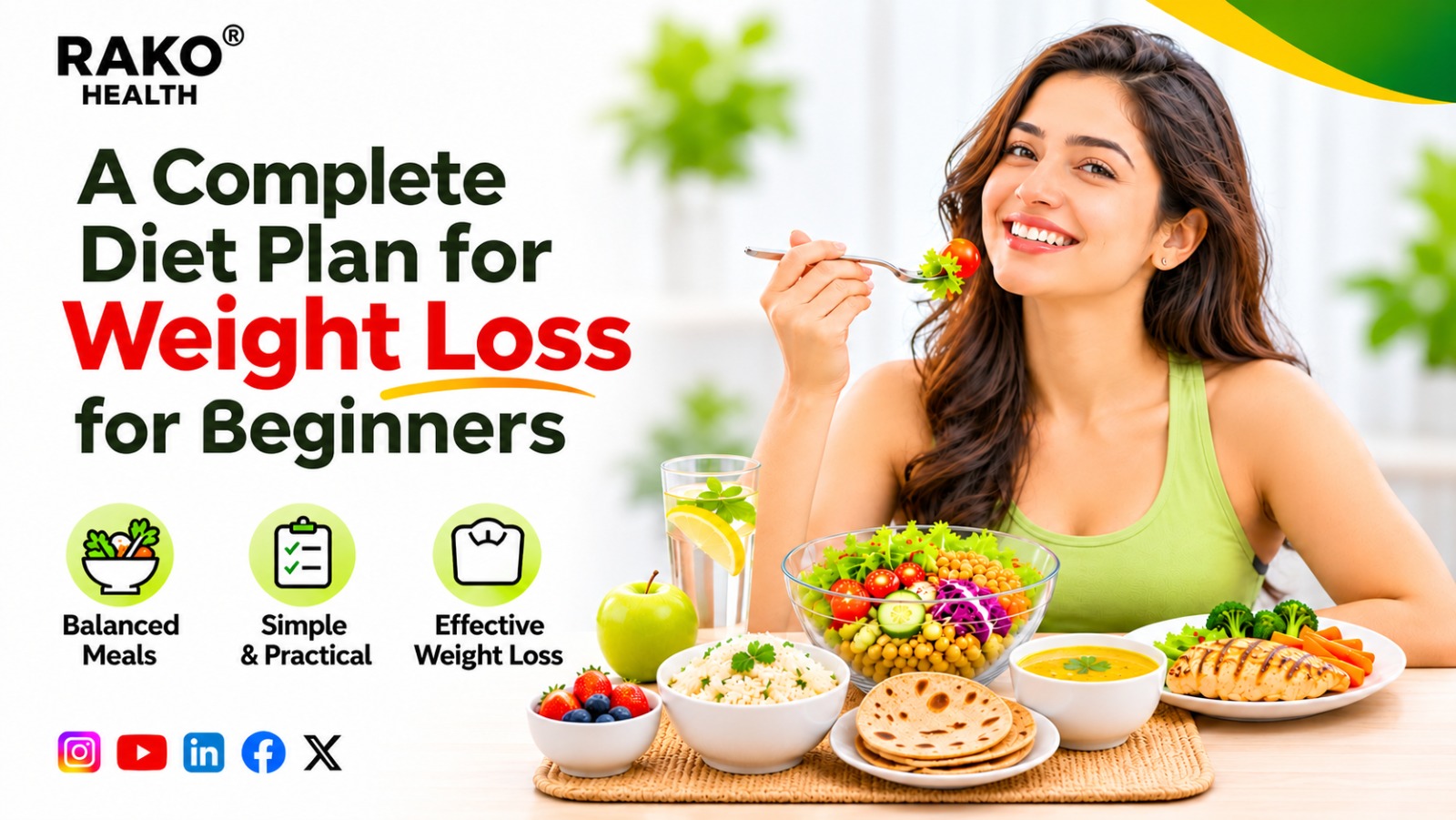
A diet plan for weight loss does not require skipping meals or giving up your favourite foods. Instead, it involves balanced nutrition, mindful portions, and consistent healthy habits. At RAKO Health, we encourage beginners to focus on sustainable lifestyle changes rather than quick-fix diets. If you are confused about traditional Indian meals, explore our guide on rice and roti for weight loss to understand how everyday foods fit into your weight management journey.
Why Do Beginners Need a Structured Diet Plan for Weight Loss?
Starting a weight loss journey can feel overwhelming. However, a structured eating routine makes healthy choices easier.
A balanced diet plan for weight loss helps you:
- Maintain a healthy calorie balance.
- Improve energy levels and overall well-being.
- Preserve muscle while losing excess body fat.
- Reduce unnecessary cravings.
- Develop sustainable eating habits.
Moreover, combining nutritious meals with regular physical activity supports long-term results.
A Simple Indian Diet Plan for Weight Loss for Beginners
Indian meals offer plenty of nutritious ingredients. Therefore, beginners can achieve their goals without abandoning familiar foods.
Here is a sample daily diet plan:
| Meal | Recommended Food Options |
| Early morning | Water and 5 soaked almonds |
| Breakfast | Vegetable poha, idli with sambar, or oats |
| Mid-morning | One seasonal fruit |
| Lunch | 2 rotis or a moderate rice portion, dal, vegetables, and curd |
| Evening snack | Roasted chana, sprouts, or unsweetened buttermilk |
| Dinner | Vegetable khichdi, paneer, dal, or grilled chicken with vegetables |
| Before bed | Water or unsweetened herbal tea, if preferred |
Rice and Roti for Weight Loss: Which Is Better?
Many Indians believe that rice causes weight gain and roti automatically supports weight loss. However, neither food directly determines your weight.
Both rice and roti provide carbohydrates and energy. Your overall calorie intake and portion sizes matter more.
Consider these practical tips:
- Choose whole-wheat rotis when suitable.
- Prefer moderate portions of rice.
- Combine carbohydrates with protein and fibre.
- Include dal, vegetables, curd, or lean protein.
- Avoid excessive oil and ghee.
Furthermore, choose foods based on your nutritional needs and preferences. Read our detailed guide: Rice and Roti for Weight Loss.
Weight Loss Diet Tips for NRIs Living Abroad
For Non-Resident Indians (NRIs), maintaining traditional Indian eating habits can become challenging. Busy schedules, limited access to familiar ingredients, and frequent restaurant meals often affect food choices.
Nevertheless, healthy Indian eating remains possible abroad.
Here are practical tips for NRIs:
- In the USA: Choose whole-grain wraps, Greek yoghurt, lentils, and fresh vegetables.
- In the UK: Include oats, brown rice, eggs, and homemade vegetable curries.
- In Australia: Explore locally available vegetables, lean proteins, and whole grains.
- In the Middle East: Prefer home-cooked meals and control portions when eating out.
Additionally, prepare meals in advance to avoid frequent takeaway orders. Frozen vegetables, canned beans, and convenient protein options can simplify meal preparation.
7 Healthy Habits That Support Sustainable Weight Management
A healthy diet works best alongside consistent lifestyle changes.
- Eat balanced meals: Include protein, fibre, healthy fats, and carbohydrates.
- Drink enough water: Maintain hydration throughout the day.
- Exercise regularly: Combine walking, strength training, and other enjoyable activities.
- Prioritise sleep: Maintain a consistent sleeping schedule.
- Control portions: Avoid eating beyond your hunger and fullness signals.
- Manage stress: Practise meditation, breathing exercises, or relaxing activities.
- Track your progress: Monitor habits and overall improvements instead of focusing only on weight.
Want to develop better routines? Explore 7 Healthy Weight Management Habits for additional practical guidance.
How RAKO Health Supports Your Weight Loss Journey
At RAKO Health, we believe successful weight management starts with understanding individual nutritional needs.
Our approach focuses on practical dietary guidance, sustainable habits, and informed health decisions.
Whether you are an Indian beginner or an NRI managing your health overseas, professional guidance can help you make better food choices.
Explore our Weight Loss Services to learn more about available support.
You can also explore insights from Dr. Meram Chalamaiah for additional health and nutrition guidance.
For additional evidence-based nutrition guidance, visit the World Health Organization's Healthy Diet Guidelines. These recommendations offer useful insights into balanced eating, nutritional variety, and healthier food choices.
Looking for a practical starting point? Explore more expert insights from RAKO Health and take the next step towards healthier everyday choices.
Frequently Asked Questions
1. What is the best diet plan for weight loss for beginners?
A balanced diet containing vegetables, fruits, whole grains, lean proteins, and healthy fats is a good starting point. Choose portions that suit your individual calorie requirements.
2. Can I eat rice during weight loss?
Yes. Rice can be part of a healthy diet. Focus on appropriate portions and combine rice with protein-rich foods and vegetables.
3. Is roti better than rice for losing weight?
Neither is automatically better. Both provide carbohydrates. Your portion sizes, preparation methods, and overall dietary balance matter.
4. Can NRIs follow an Indian diet plan abroad?
Absolutely. NRIs can prepare balanced Indian meals using locally available ingredients, including lentils, vegetables, whole grains, and lean proteins.
5. Should beginners skip dinner to lose weight?
No. Skipping dinner is unnecessary for weight loss. A balanced dinner with suitable portions can support your nutritional requirements.
6. How can I maintain weight loss results?
Follow consistent eating habits, exercise regularly, sleep adequately, and monitor your progress. Avoid extreme diets and unrealistic expectations.
Related Blogs
Rice and Roti for Weight Loss: Can You Eat Both and Manage Your Weight?
Diet Plan for Busy Professionals: A Practical Guide to Healthy Weight Loss

How Can I Lose 10 kg in 30 Days? A Practical Guide from RAKO Health
Rice and Roti for Weight Loss: Can You Eat Both and Manage Your Weight?
Diet Plan for Busy Professionals: A Practical Guide to Healthy Weight Loss
How Can I Lose 10 kg in 30 Days? A Practical Guide from RAKO Health
Rice and Roti for Weight Loss: Can You Eat Both and Manage Your Weight?
Diet Plan for Busy Professionals: A Practical Guide to Healthy Weight Loss
How Can I Lose 10 kg in 30 Days? A Practical Guide from RAKO Health
Rice and Roti for Weight Loss: Can You Eat Both and Manage Your Weight?
Diet Plan for Busy Professionals: A Practical Guide to Healthy Weight Loss