
Personalized Diet Plan for PCOD: 7-Day Indian Meal Plan for Better Hormonal Health


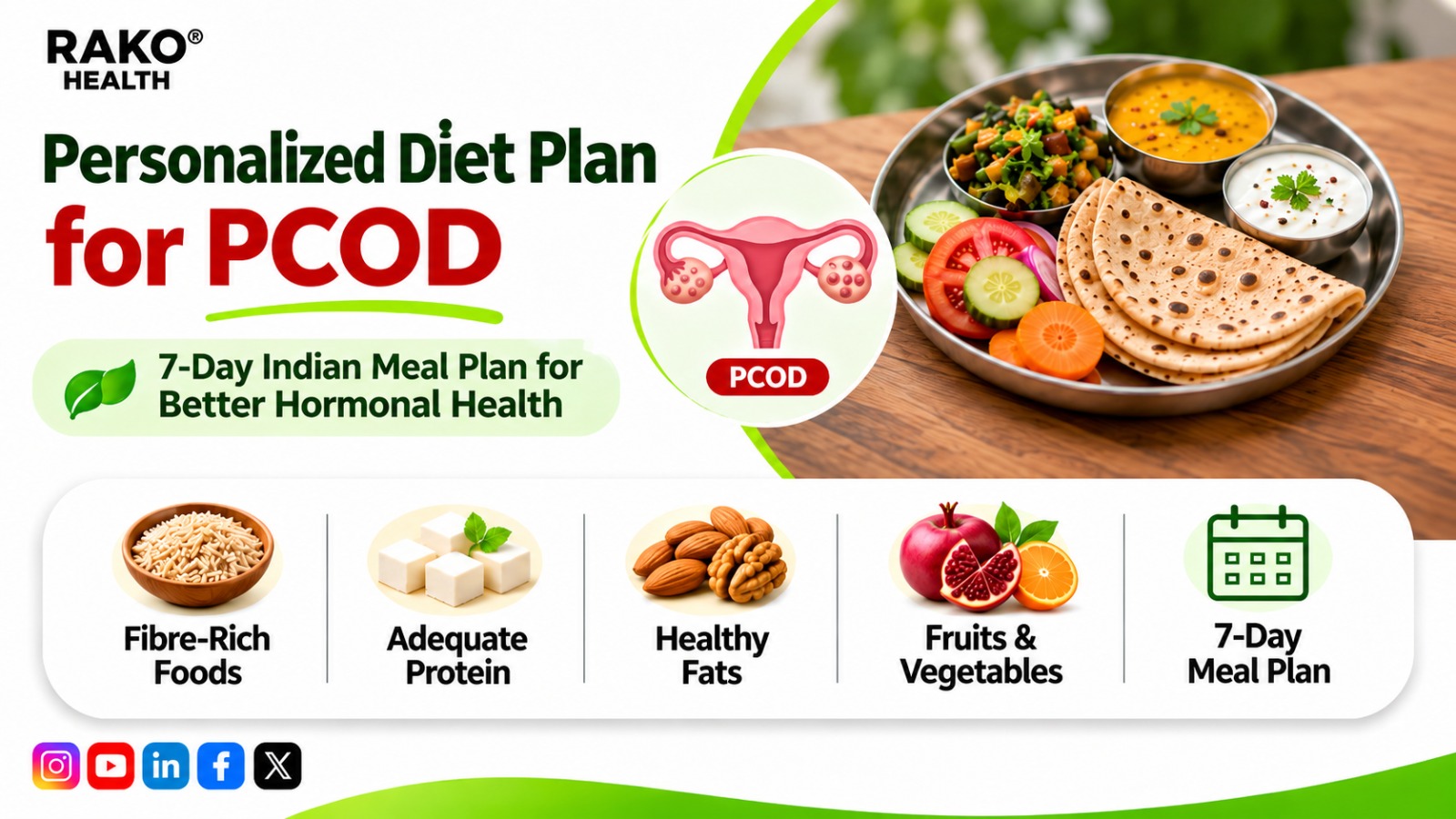
Personalized Diet Plan for PCOD helps women manage hormonal health through balanced nutrition and sustainable eating habits. Whether you live in India or abroad, the right food choices can support insulin sensitivity, menstrual health, and weight management. At RAKO Health, we believe every woman's nutritional needs deserve individual attention. Explore our best dietician for PCOD services for expert guidance and personalised nutrition support.
Why Do You Need a Personalized Diet Plan for PCOD?
Polycystic Ovarian Disease (PCOD) can affect menstrual cycles, metabolism, skin health, and fertility. However, the right dietary approach can help manage common symptoms.
A personalized approach considers your health history, lifestyle, food preferences, and nutritional requirements.
Benefits of an Indian PCOD Diet Plan
- Better insulin management: Choose fibre-rich foods and balanced meals.
- Healthy weight management: Maintain sustainable eating habits without crash diets.
- Hormonal support: Include essential nutrients and healthy fats.
- Improved digestion: Add vegetables, fruits, and whole grains.
- Better energy levels: Eat regular, balanced meals throughout the day.
Importantly, diet supports PCOD management but does not replace medical treatment.
Personalized Diet Plan for PCOD: 7-Day Indian Meal Plan
Here is a practical Indian PCOD Diet Plan featuring familiar ingredients. Adjust portions according to your nutritional needs and activity levels.
| Day | Breakfast and Morning Meal | Lunch, Evening Snack and Dinner |
| Monday | Vegetable oats and curd | Lunch: Brown rice, dal, and vegetables. Snack: Roasted chana. Dinner: Multigrain roti with paneer bhurji. |
| Tuesday | Moong dal chilla with mint chutney | Lunch: Roti, palak dal, and cucumber salad. Snack: Apple and almonds. Dinner: Vegetable khichdi with curd. |
| Wednesday | Idli with sambar | Lunch: Millet rice, rajma, and salad. Snack: Buttermilk and walnuts. Dinner: Roti with mixed vegetable curry. |
| Thursday | Vegetable poha with peanuts | Lunch: Brown rice, sambar, and beans. Snack: Guava and pumpkin seeds. Dinner: Paneer tikka with vegetable soup. |
| Friday | Besan chilla with curd | Lunch: Roti, chana masala, and salad. Snack: Sprouts chaat. Dinner: Vegetable dalia with curd. |
| Saturday | Ragi dosa with sambar | Lunch: Millet roti, dal, and bhindi. Snack: Plain Greek yoghurt or curd. Dinner: Vegetable pulao with raita. |
| Sunday | Vegetable upma with boiled eggs | Lunch: Rice, fish curry or dal, and vegetables. Snack: Fruit and mixed nuts. Dinner: Roti with tofu or paneer curry. |
Important Foods to Include in Your PCOD Diet
A balanced Personalized Diet Plan for PCOD should include different food groups.
1. High-Fibre Foods
- Oats, millets, and whole wheat.
- Beans, chickpeas, and lentils.
- Broccoli, spinach, and carrots.
2. Protein-Rich Foods
- Paneer, tofu, and eggs.
- Fish and lean chicken.
- Dal, sprouts, and Greek yoghurt.
3. Healthy Fats
- Almonds and walnuts.
- Flaxseeds and chia seeds.
- Olive oil and moderate amounts of traditional cooking oils.
4. Foods to Limit
- Sugary beverages and packaged juices.
- Frequent bakery products and refined carbohydrates.
- Deep-fried snacks and highly processed foods.
- Excessive sweets and added sugar.
You do not need to eliminate rice, wheat, or traditional Indian foods completely. Instead, focus on balanced portions and food combinations.
Personalized Diet Plan for PCOD for NRIs
Indian women living in the USA, UK, Canada, Australia, and other countries often face different food environments.
However, maintaining an Indian-style eating pattern remains possible.
Here are some practical suggestions for NRIs:
- Choose quinoa, brown rice, or wholegrain bread when needed.
- Find frozen spinach, okra, and mixed vegetables at local supermarkets.
- Prepare dal, chilla, and vegetable curries in batches.
- Choose unsweetened yoghurt instead of flavoured varieties.
- Carry nuts or roasted chickpeas for convenient snacks.
- Maintain regular meal timings despite changing work schedules.
Additionally, RAKO Health supports individuals seeking nutrition guidance that considers Indian food preferences and overseas lifestyles.
How RAKO Health Supports Women with PCOD
Every woman experiences PCOD differently. Therefore, following a generic diet chart may not address individual nutritional requirements.
RAKO Health focuses on practical nutrition strategies and sustainable lifestyle improvements.
Our personalised nutrition support can help you:
- Understand your dietary requirements.
- Build balanced Indian meal combinations.
- Develop realistic weight-management habits.
- Improve consistency with healthier food choices.
- Track progress and adjust your eating routine.
If PCOD and weight concerns occur together, explore our weight loss service page. You can also consult the best dietician for weight loss for structured nutritional guidance.
For additional information, visit our PCOD page.
Lifestyle Tips to Support Your Indian PCOD Diet Plan
Food choices work best alongside healthy daily habits.
- Exercise regularly: Aim for 150 minutes of moderate activity weekly, if medically appropriate.
- Prioritise sleep: Maintain a consistent sleep schedule.
- Manage stress: Try yoga, meditation, or breathing exercises.
- Stay hydrated: Drink sufficient water throughout the day.
- Monitor symptoms: Discuss menstrual changes and metabolic health with your doctor.
For reliable medical information, refer to the Office on Women's Health – PCOS.
Frequently Asked Questions
1. What is the best diet plan for PCOD in India?
A balanced diet containing vegetables, whole grains, lean proteins, healthy fats, and fibre can support PCOD management. Personalise portions according to your health requirements.
2. Can I eat rice if I have PCOD?
Yes. You can include rice in moderate portions. Pair it with dal, vegetables, and protein for a balanced meal.
3. Which breakfast is best for PCOD?
Moong dal chilla, vegetable oats, ragi dosa, and besan chilla are nutritious options. Choose meals containing protein and fibre.
4. Can a PCOD diet help with weight loss?
A balanced diet can support sustainable weight management. Results depend on individual metabolism, activity, sleep, and overall health.
5. Is an Indian PCOD Diet Plan suitable for NRIs?
Yes. NRIs can follow Indian-inspired meals using locally available ingredients. Adjust recipes according to food availability and personal preferences.
6. How long should I follow a Personalized Diet Plan for PCOD?
PCOD nutrition management requires consistency and individual adjustments. Review your progress regularly with a qualified dietitian.
7. Does every woman with PCOD need the same diet?
No. Nutritional needs differ based on health history, metabolic factors, food preferences, and lifestyle. Individualised guidance helps address these differences.
Related Blogs
Online Dietician Consultation for PCOD: Personalised Diet Plan for Women
Best Dietician for PCOD/PCOS: Personalized Nutrition for Hormonal Wellness
Rice and Roti for Weight Loss: Can You Eat Both and Manage Your Weight?
Online Dietician Consultation for PCOD: Personalised Diet Plan for Women
Best Dietician for PCOD/PCOS: Personalized Nutrition for Hormonal Wellness
Rice and Roti for Weight Loss: Can You Eat Both and Manage Your Weight?
Online Dietician Consultation for PCOD: Personalised Diet Plan for Women
Best Dietician for PCOD/PCOS: Personalized Nutrition for Hormonal Wellness
Rice and Roti for Weight Loss: Can You Eat Both and Manage Your Weight?
Online Dietician Consultation for PCOD: Personalised Diet Plan for Women
Best Dietician for PCOD/PCOS: Personalized Nutrition for Hormonal Wellness