
Natural Treatment for High BP Without Medication: What Diet and Lifestyle Can Do


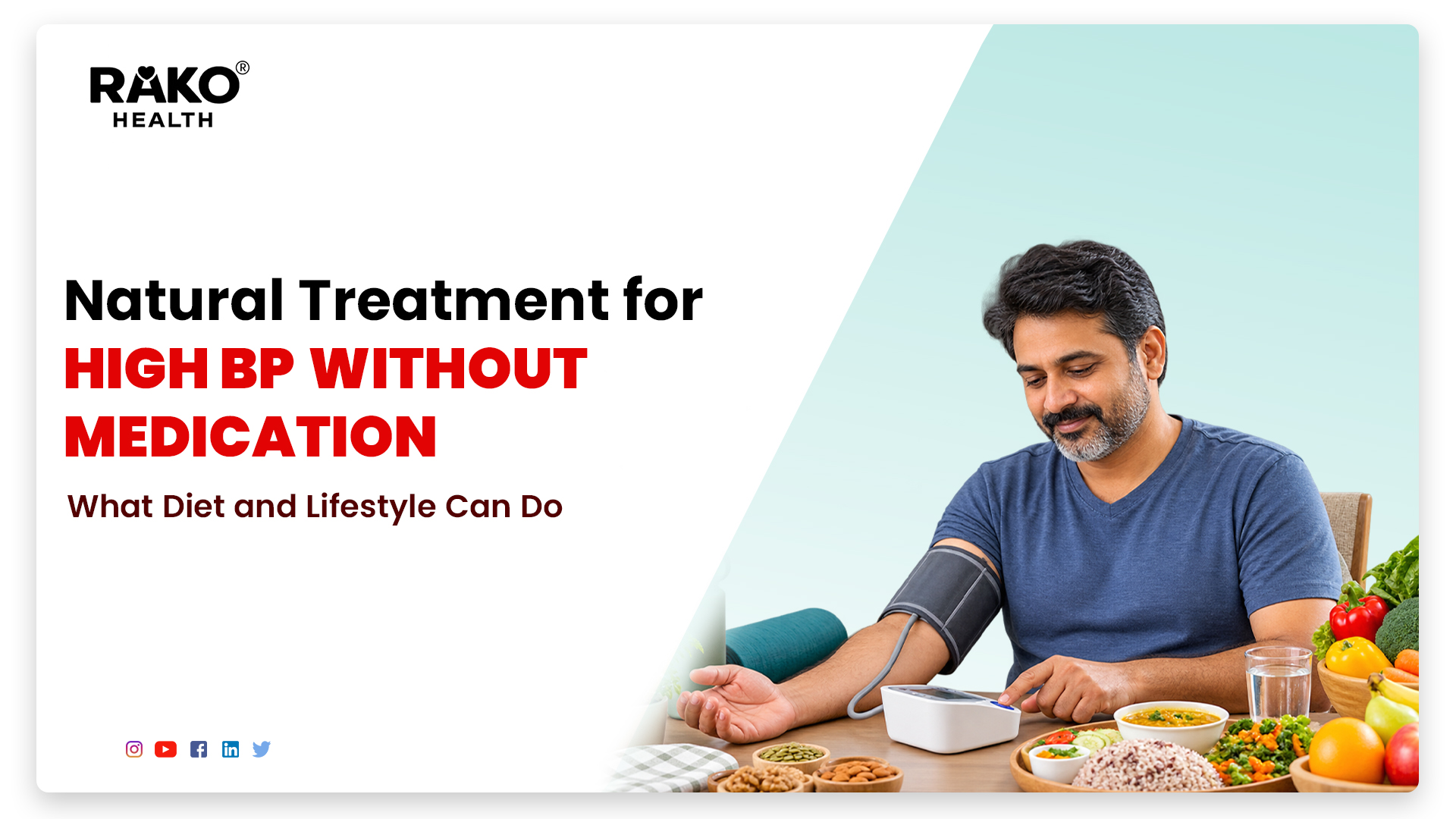
Natural Treatment for High BP Without Medication can help improve blood pressure through healthier eating, regular exercise, and sustainable lifestyle changes. However, natural methods cannot replace medication for everyone. RAKO Health promotes evidence-based nutrition and personalized care to support long-term cardiovascular health.
Can You Control High Blood Pressure Naturally?
High blood pressure, also known as hypertension, increases the risk of heart disease, stroke, and kidney complications. Because it often causes no symptoms, regular blood pressure checks remain important.
Lifestyle changes can lower blood pressure and improve overall health. However, treatment depends on your readings, medical history, and cardiovascular risk. Never stop prescribed medication without consulting your doctor.
5 Natural Treatments for High BP Supported by Science
1. Follow a heart-healthy diet
The DASH eating pattern emphasises vegetables, fruits, whole grains, pulses, nuts, and low-fat dairy. Additionally, it limits excess sodium, added sugar, and saturated fat.
Indian meals can follow these principles. Choose dal, vegetable sabzi, whole-wheat roti, oats, and unsalted nuts.
2. Reduce salt intake
Excess sodium can increase blood pressure. Therefore, reduce pickles, papad, salted snacks, and heavily processed foods.
- Use less salt when preparing curries and chutneys.
- Compare sodium levels on packaged food labels.
- Choose fresh ingredients whenever practical.
The American Heart Association recommends limiting sodium to 2,300 mg daily, with 1,500 mg as an ideal target for many adults.
3. Exercise regularly
Aim for at least 150 minutes of moderate-intensity aerobic activity each week, if medically appropriate. Brisk walking, cycling, swimming, and dancing offer practical options.
Start gradually if you have been inactive. Moreover, regular exercise supports weight management and cardiovascular fitness.
4. Improve sleep and manage stress
Stress can influence blood pressure and encourage unhealthy habits. Try yoga, meditation, controlled breathing, or other relaxing activities.
Additionally, maintain a regular sleep schedule. Ask your doctor about sleep apnoea if you snore heavily or experience persistent daytime sleepiness.
5. Maintain a healthy weight
For people with overweight or obesity, gradual weight loss can help lower blood pressure. Also, avoid smoking and limit alcohol consumption.
Consult your healthcare professional before using herbal remedies or supplements. Some products interact with medication or increase blood pressure.
Expert Insights: Dr. Meram Chalamaih and Hypertension Care
Dr. Meram Chalamaih can be introduced in this section as part of RAKO Health’s hypertension education content, subject to confirmation of his professional role and credentials.
Effective hypertension management requires more than dietary changes alone. Regular monitoring, medical assessment, personalised nutrition, and sustainable lifestyle habits help people make informed decisions.
For that reason, patients should discuss their blood pressure readings and treatment options with a qualified healthcare professional. Lifestyle changes may complement prescribed treatment, but they do not automatically eliminate the need for medication.
Simple Indian Diet Plan for High Blood Pressure
- Breakfast: Vegetable oats or moong dal chilla.
- Mid-morning snack: One whole fruit, such as an apple, orange, or guava.
- Lunch: 2 whole-wheat rotis, dal, vegetable sabzi, and salad.
- Evening snack: A handful of unsalted nuts or roasted chana.
- Dinner: Vegetable khichdi or 2 rotis with vegetable sabzi and tofu.
- Drinks: Drink plenty of water and choose unsweetened beverages.
- Salt intake: Reduce salt and avoid salty foods such as pickles, papad, and packaged snacks.
- Portion control: Eat balanced meals in moderate portions.
- Important note: People with kidney disease should consult a healthcare professional before increasing potassium-rich foods or using salt substitutes.
Natural Treatment for High BP for NRIs
NRIs can adopt the same heart-healthy principles while adapting meals to local ingredients.
- USA: Choose oats, beans, frozen vegetables, and low-sodium packaged foods.
- UK: Prepare lentil soups, wholegrain meals, and vegetable-based dishes.
- Canada: Include legumes, seasonal produce, and unsalted nuts.
- Middle East: Choose grilled proteins, salads, lentils, and less salty restaurant meals.
Meanwhile, planning meals ahead can reduce dependence on takeaway food during busy workweeks.
How RAKO Health Supports Hypertension Nutrition
RAKO Health encourages practical nutrition strategies tailored to individual health needs, food preferences, and lifestyle goals.
Explore our Hypertension Service Page to learn about available support. You can also read our Best Dietician for Hypertension guide for guidance on choosing qualified nutrition professionals.
For additional medical guidance, consult the American Heart Association’s recommendations for managing high blood pressure.
Frequently Asked Questions
1. Can high blood pressure return to normal naturally?
Some people improve their readings through diet, exercise, and weight management. However, others still need medication and regular monitoring.
2. What foods help lower blood pressure?
Vegetables, fruits, pulses, whole grains, unsalted nuts, and low-fat dairy support a heart-healthy eating pattern. Additionally, reducing sodium can help.
3. Can I stop blood pressure medication after changing my diet?
Never stop medication independently. Your doctor can review your readings and determine whether treatment adjustments are appropriate.
4. When does high blood pressure require urgent care?
If your reading exceeds 180/120 mm Hg, wait one minute and measure again. If it remains that high, contact a healthcare professional immediately. Seek emergency care if you also experience chest pain, breathlessness, weakness, vision changes, or difficulty speaking.
Final Thoughts
Explore RAKO Health’s hypertension resources to learn more about personalised nutrition, expert guidance, and sustainable ways to support cardiovascular health.
Related Blogs
How to Treat High Blood Pressure Naturally: A Practical Guide to Diet and Lifestyle
How to Cure Constipation Naturally: Why Fiber Alone Isn't Enough
Best Dietician in Hyderabad - Dr. Meram Chalamaiah
How to Treat High Blood Pressure Naturally: A Practical Guide to Diet and Lifestyle
How to Cure Constipation Naturally: Why Fiber Alone Isn't Enough
Best Dietician in Hyderabad - Dr. Meram Chalamaiah
How to Treat High Blood Pressure Naturally: A Practical Guide to Diet and Lifestyle
How to Cure Constipation Naturally: Why Fiber Alone Isn't Enough
Best Dietician in Hyderabad - Dr. Meram Chalamaiah
How to Treat High Blood Pressure Naturally: A Practical Guide to Diet and Lifestyle
How to Cure Constipation Naturally: Why Fiber Alone Isn't Enough